
July 30, 2026
The Acquired Eye: A Portrait of Hotel Norman, Paris
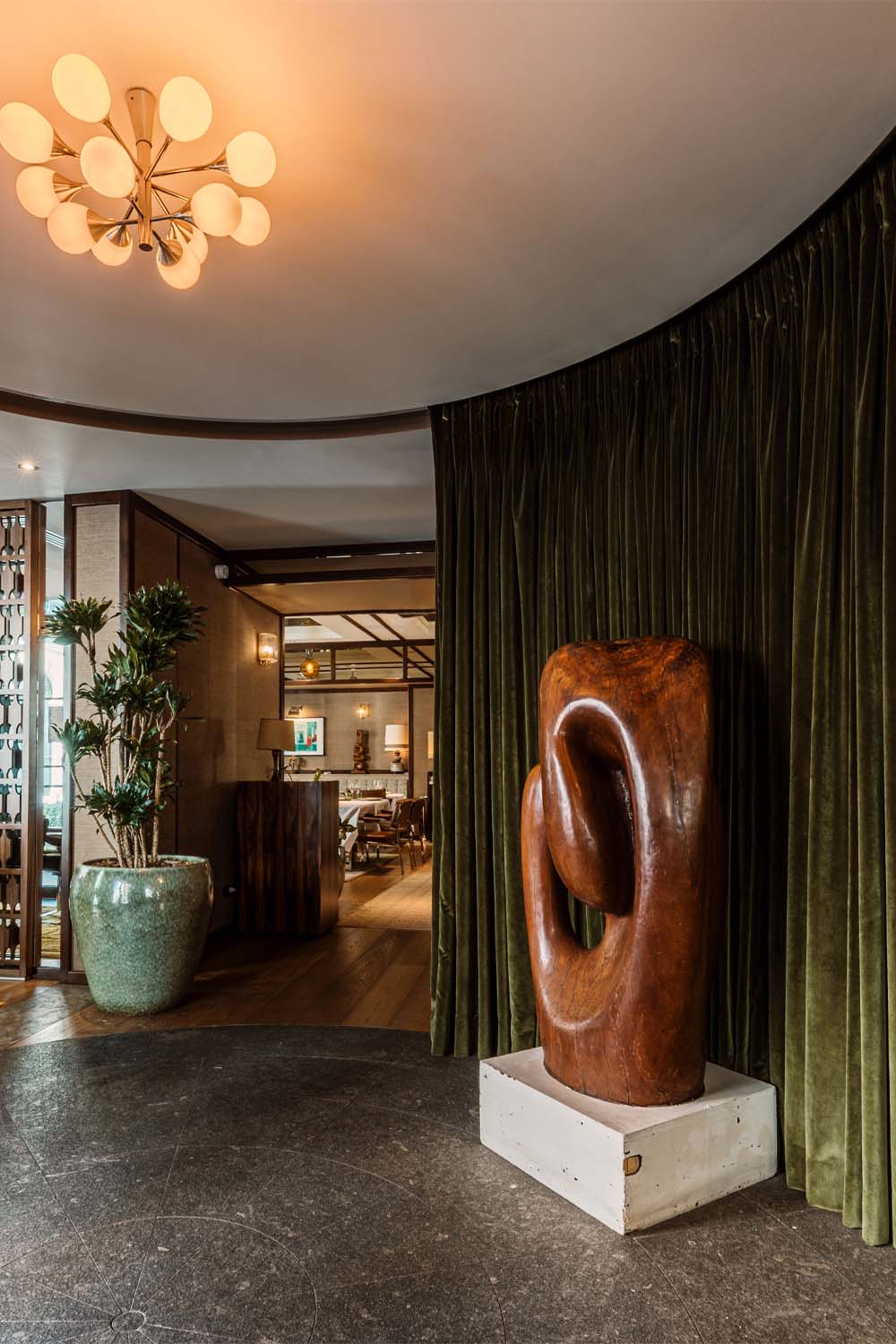
The reception at Norman is easy to miss. Push through the rotunda door, part a heavy velvet curtain, and what greets you instead is a library, firelight, low conversation, the particular hush of a room that feels inhabited rather than assembled. A vintage sofa here, a mid-century Brazilian armchair there, an abstract canvas hung slightly off-centre, as if by someone who simply liked it where it was. It takes a moment to register that this is, in fact, a hotel.
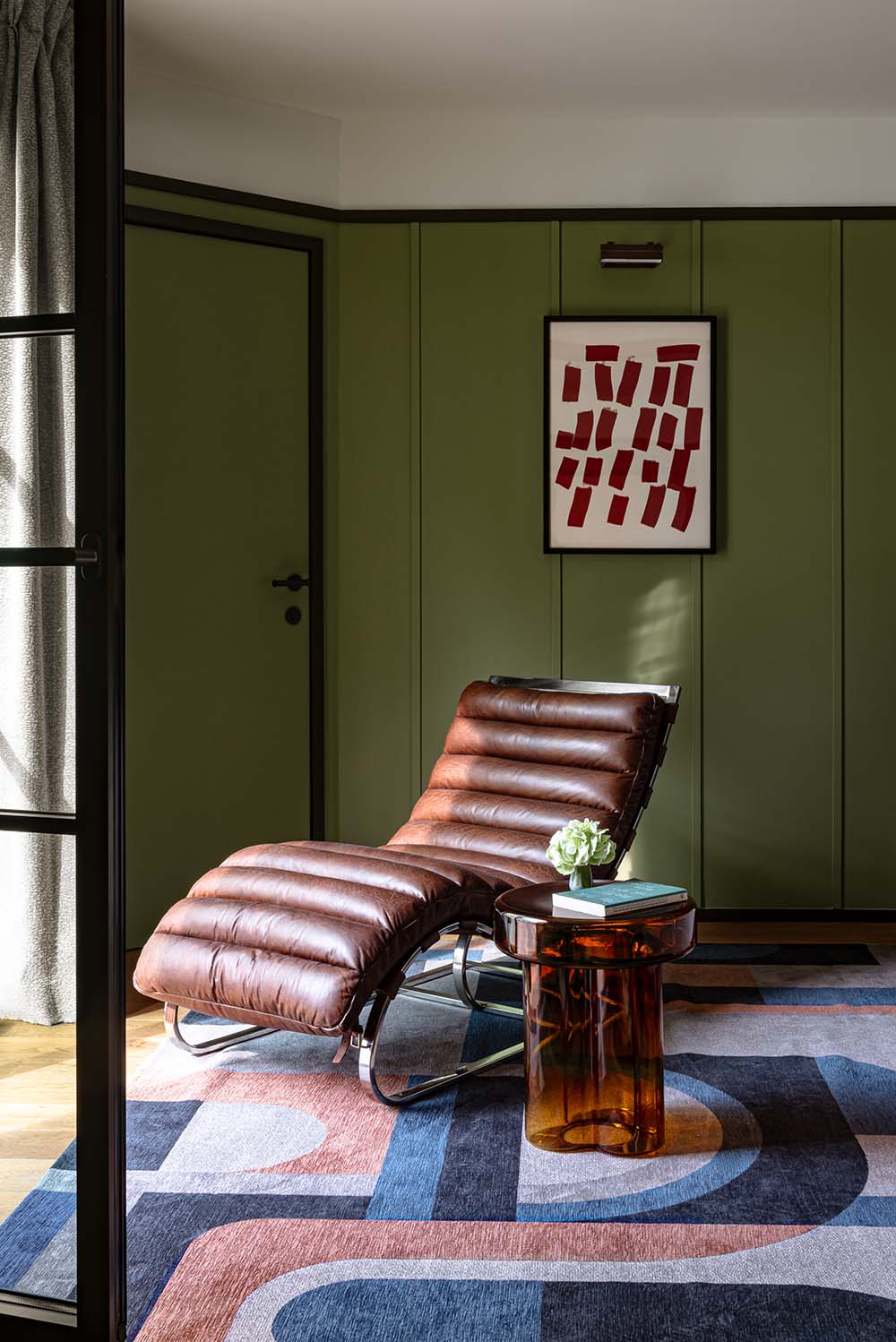
The hotel takes its name and its sensibility from Norman Ives — an American painter, graphic designer, and Yale professor whose work, rooted in the disciplines of the Bauhaus, helped define mid-century American modernism: bold colour, clean geometry, a belief that good design should also be functional. Architect Thomas Vidalenc built the hotel as a kind of homage to that eye, translating Ives’s visual language into three-dimensional space, not as a literal tribute, with gallery walls of his prints, but as something closer to a borrowed instinct, applied to every surface of a quietly contemporary building on the corner of Rue Balzac and Rue de Châteaubriand, at the hushed top of the Champs-Élysées, where the avenue’s tourist energy gives way to the residential calm of the 8th arrondissement.
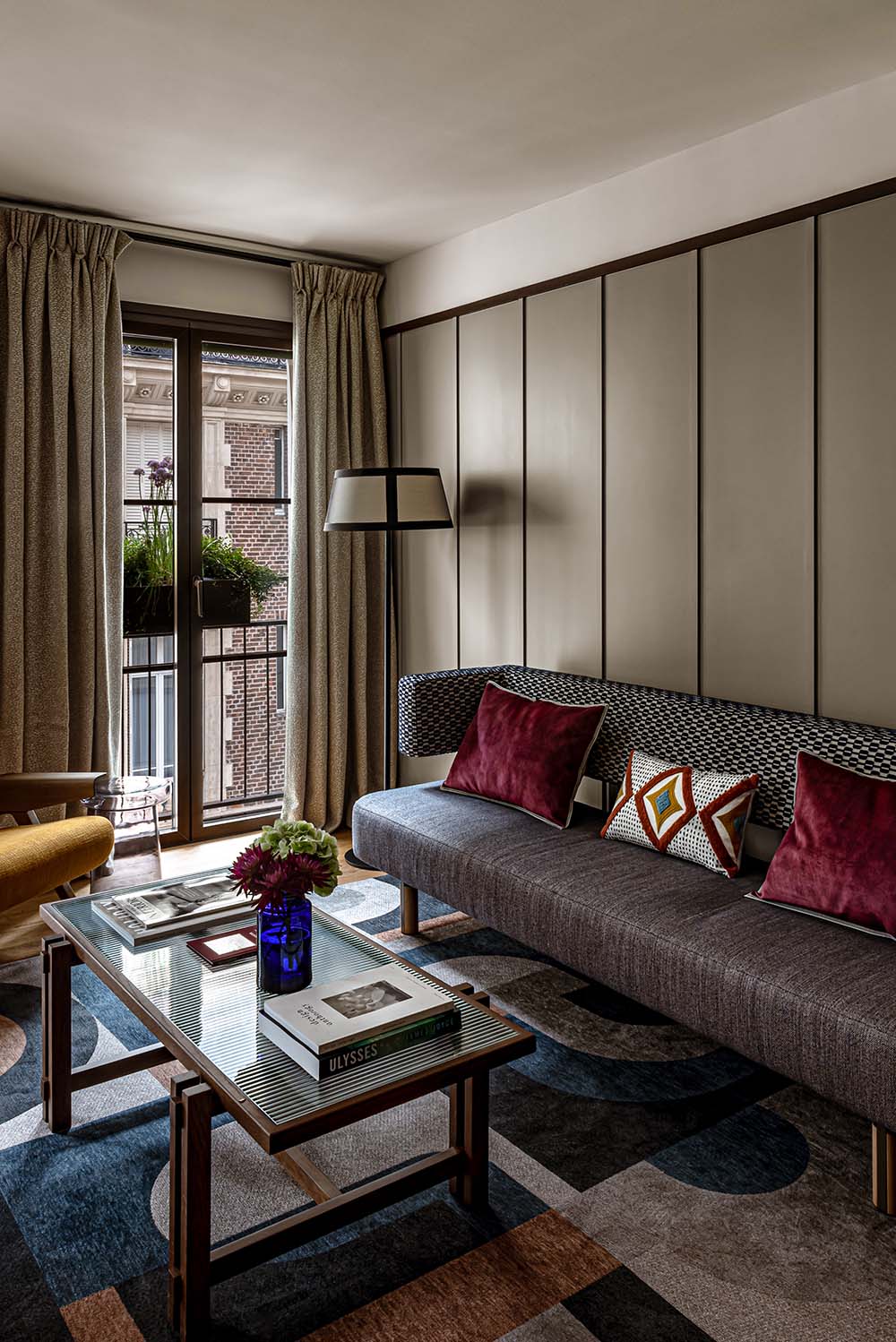
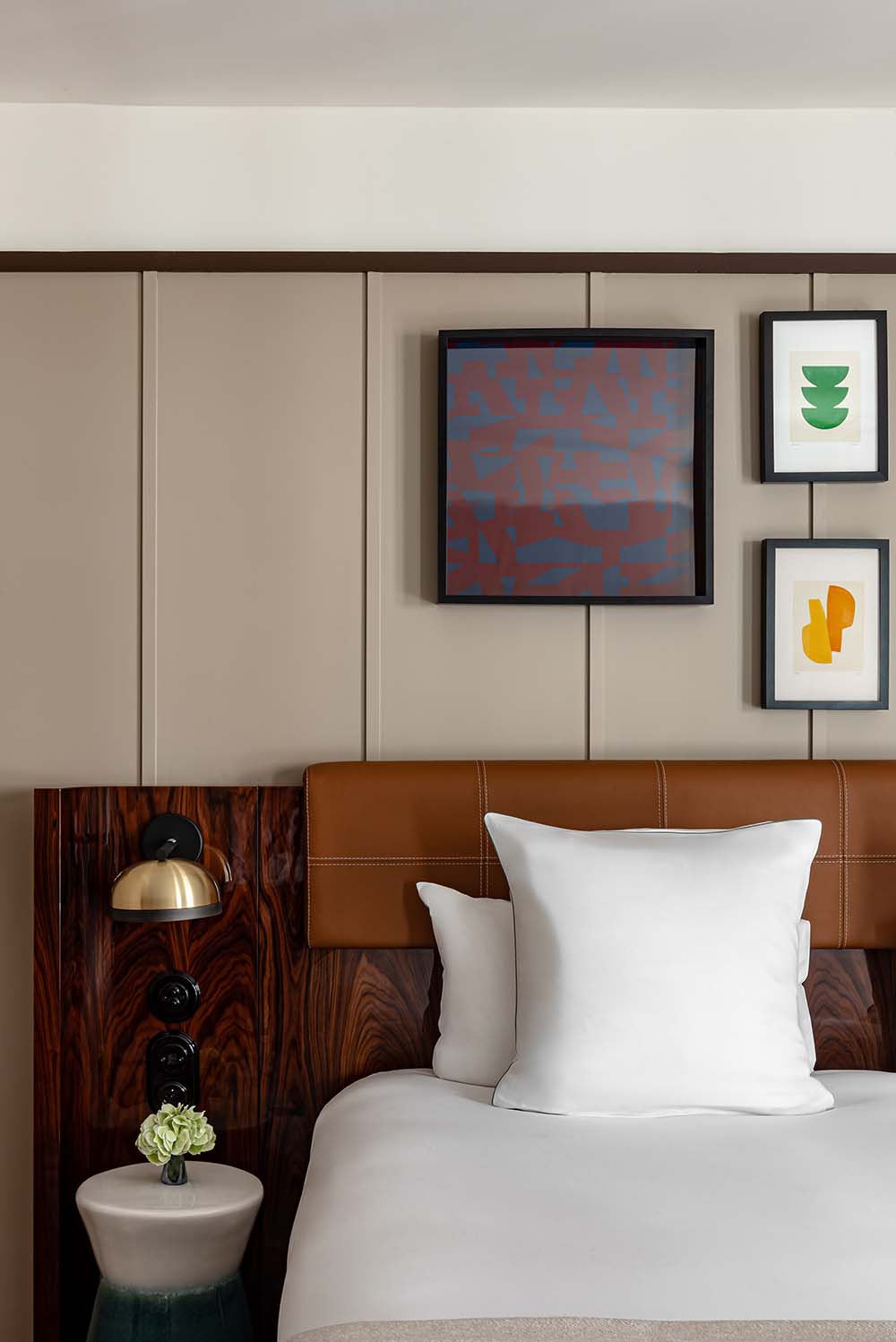
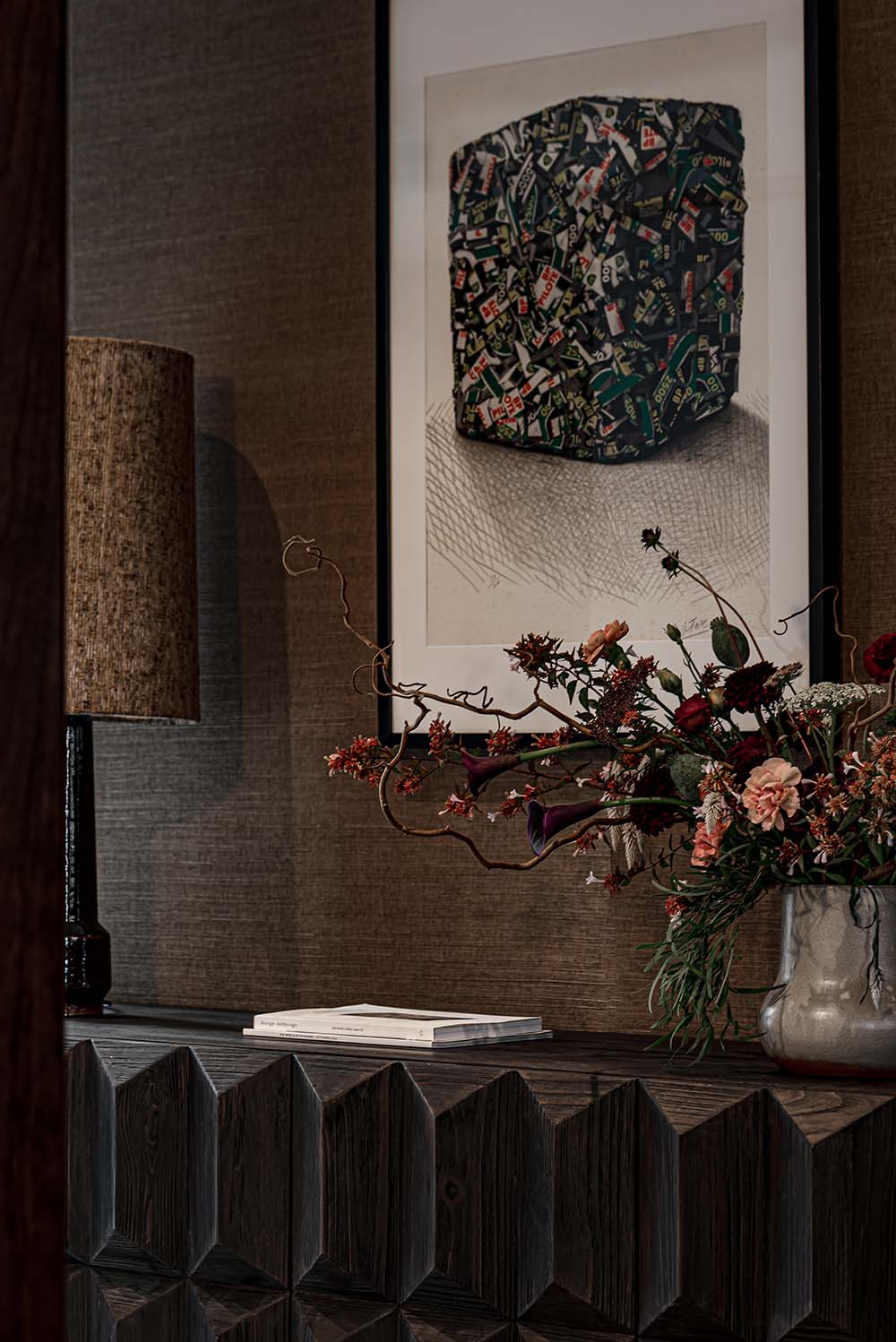
Vidalenc has described designing Norman “in the style of a club”, rosewood, oak, stone, leather, a touch of stainless steel, concrete, and strong, confident colour, threaded through every space with what he calls a “very personal ambiance, far removed from artificial Parisian codes.” The effect, on the ground floor, is closer to an inherited apartment than a hotel lobby: decades and continents layered without apology. Brazilian mid-century pieces sit beside 1950s furniture; geometric prints hang near American paintings from the 1970s; objects clearly sourced from antique dealers, rather than ordered in bulk from a single supplier, give every corner the specificity of a real collection assembled slowly, by someone with very particular taste.
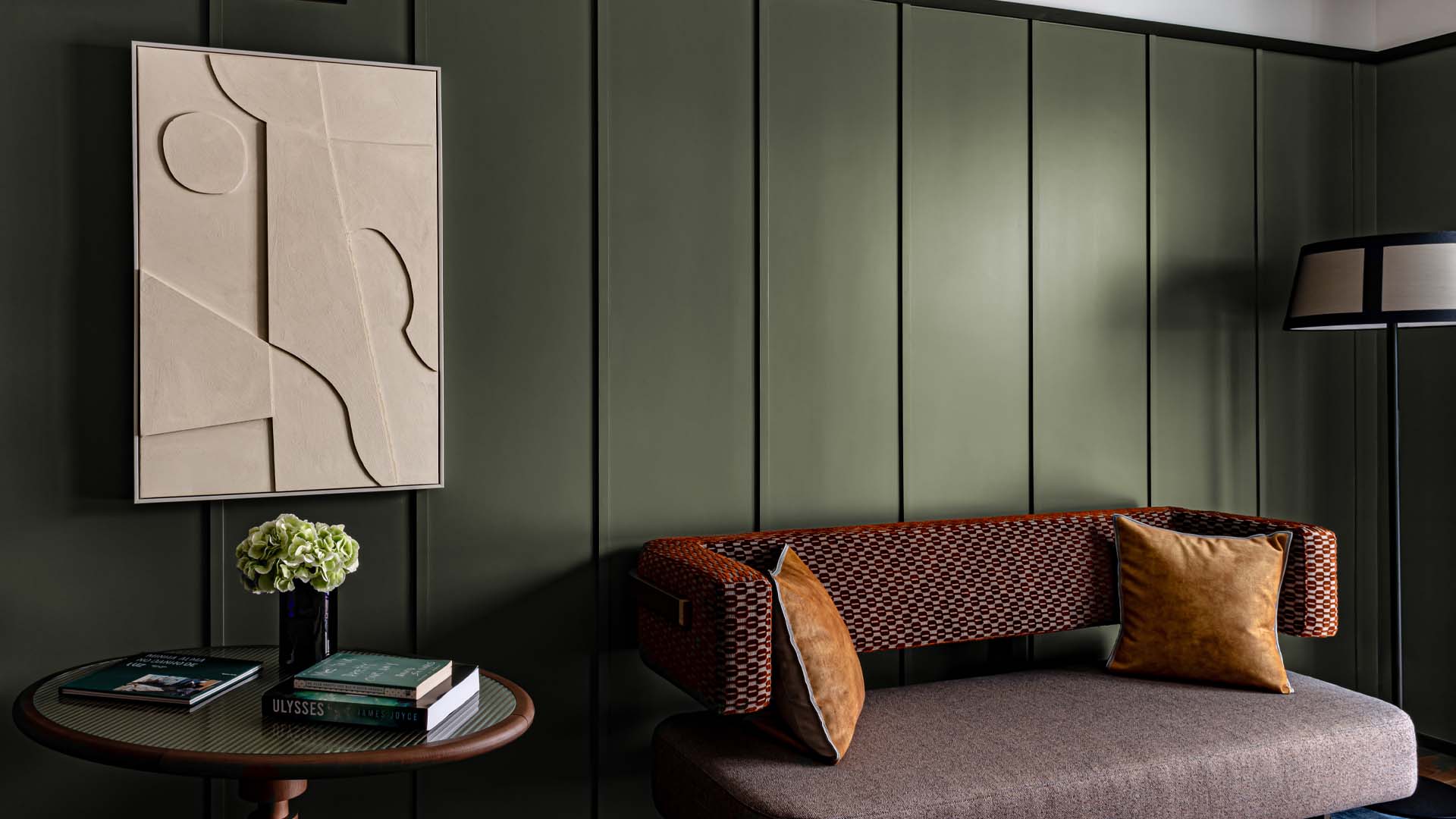
Abstract paintings recur throughout; quiet nods to Ives’s own visual signature, never explained, never needing to be.
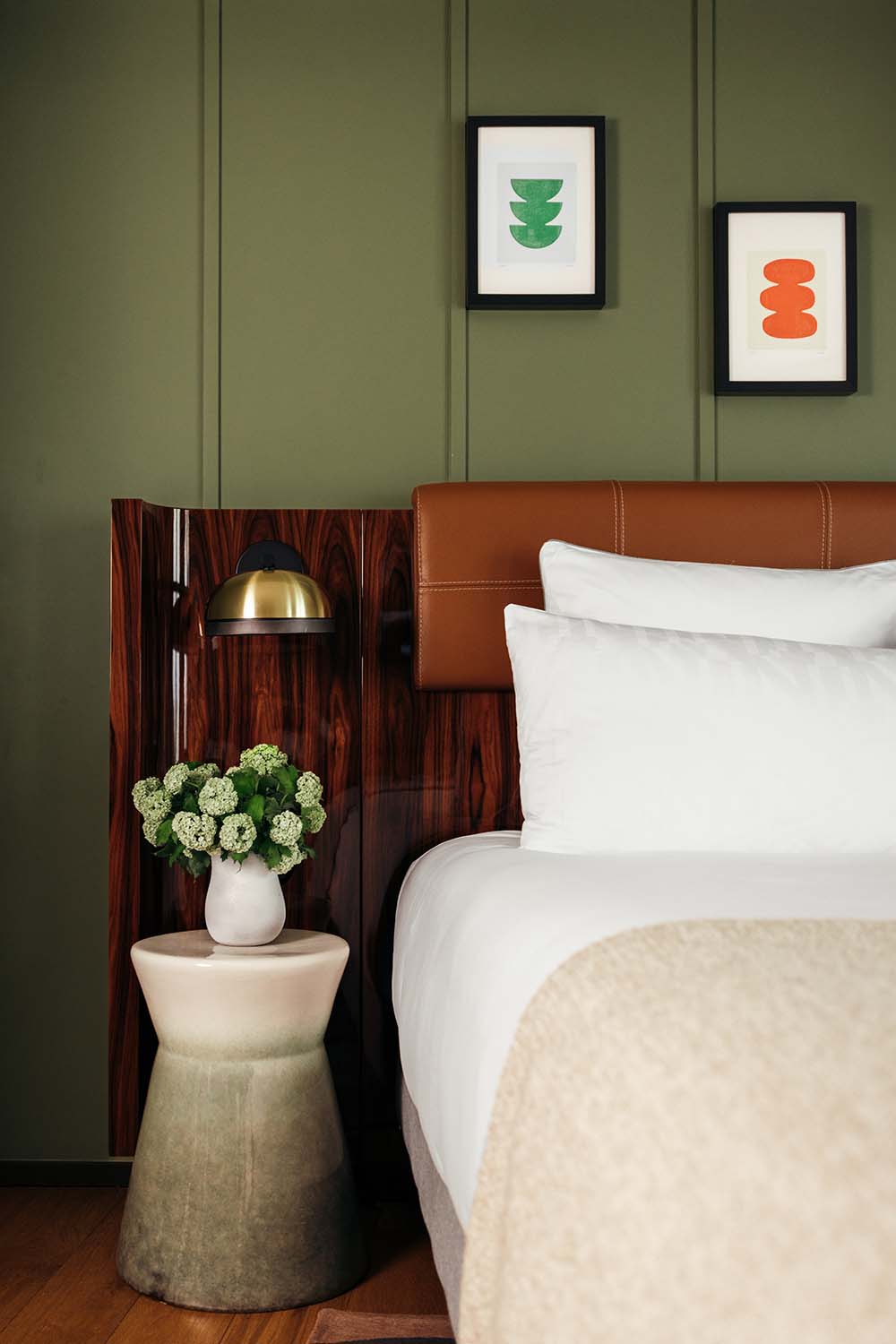
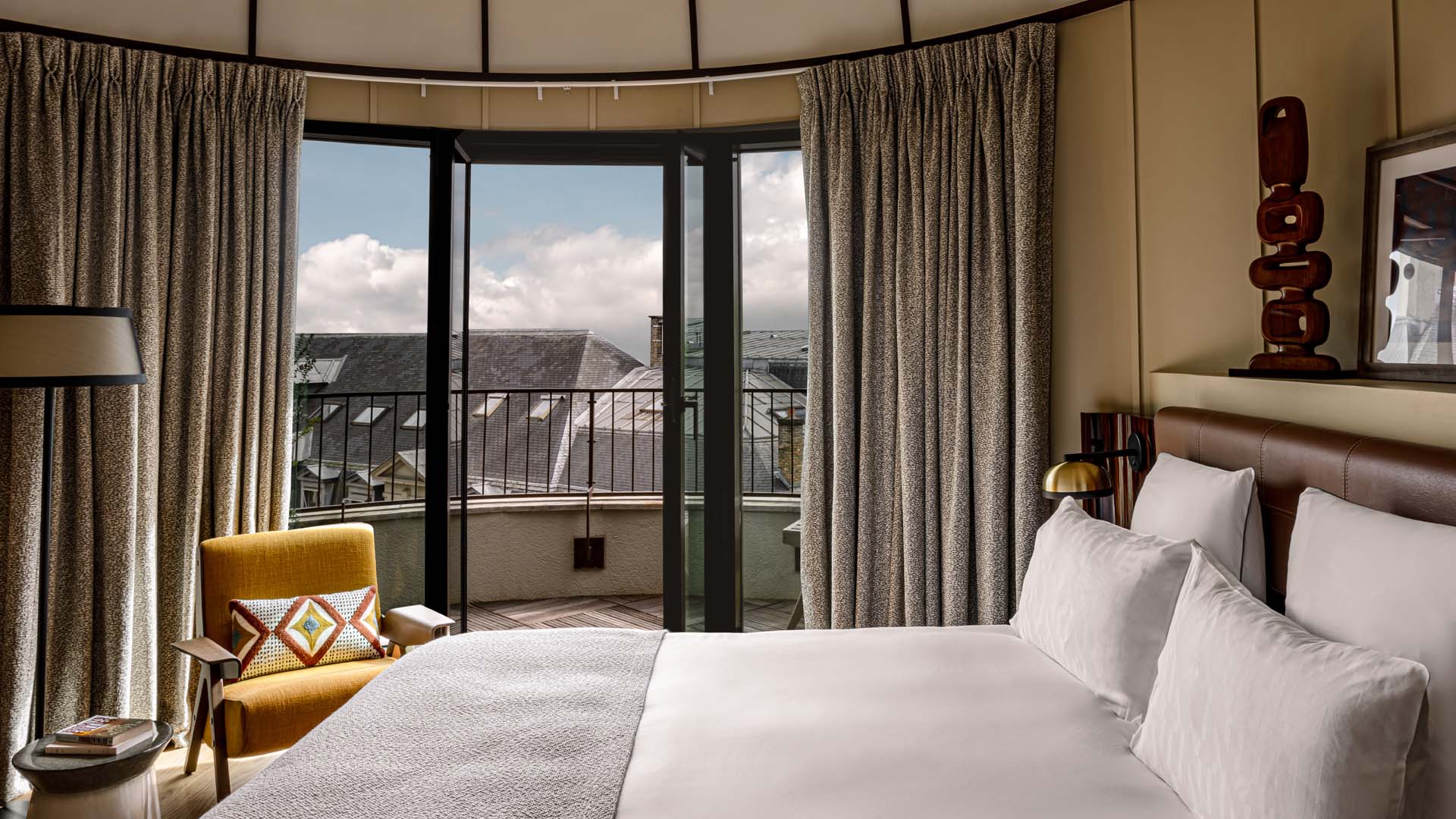
Norman keeps things deliberately small: 29 rooms, 8 suites, 37 keys in total and treats that scale as the real luxury. Many rooms open onto a private balcony, an unusual feature in a neighbourhood where most hotels prefer to seal guests in from the street; the best of them catch a glimpse of the Eiffel Tower in the distance, and a two-storey rooftop suite, wrapped in its own balconies, offers an unobstructed view across the city’s roofline — the kind of vantage point that makes you forget you’re meant to be checking emails. Inside, the material language stays consistent with the lobby below: rosewood headboards, heavy wool drapes, leather detailing, geometric carpets laid over parquet, a built-in minibar tucked into oak drawers. Bathrooms continue the theme in miniature: ceramic mosaic walls, a marble basin set into rosewood, glass, and steel. Connecting rooms make the hotel surprisingly workable for families, but its real talent is making a solo or couple’s stay feel less like a transaction and more like borrowing someone’s very well-appointed apartment for a few days.
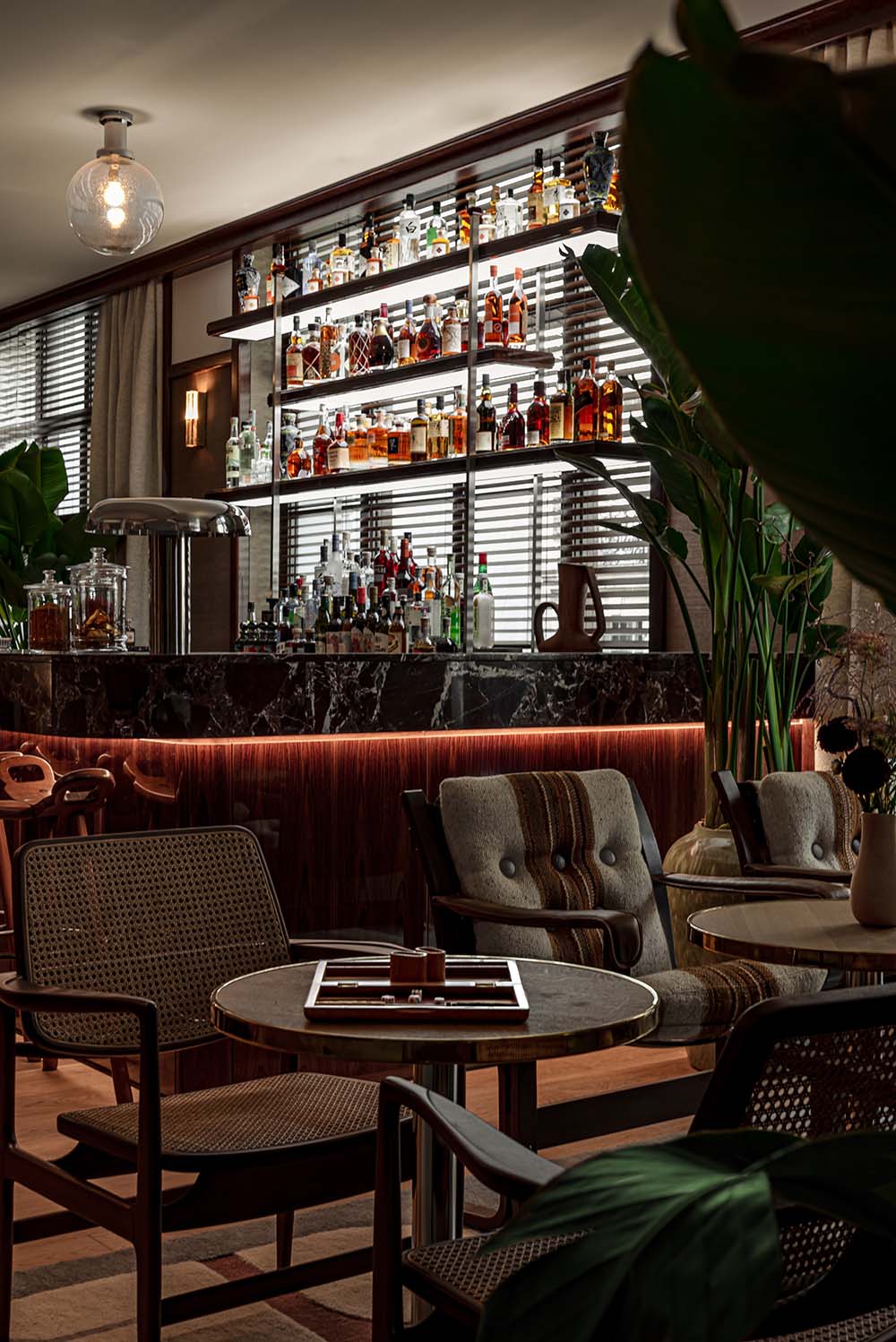
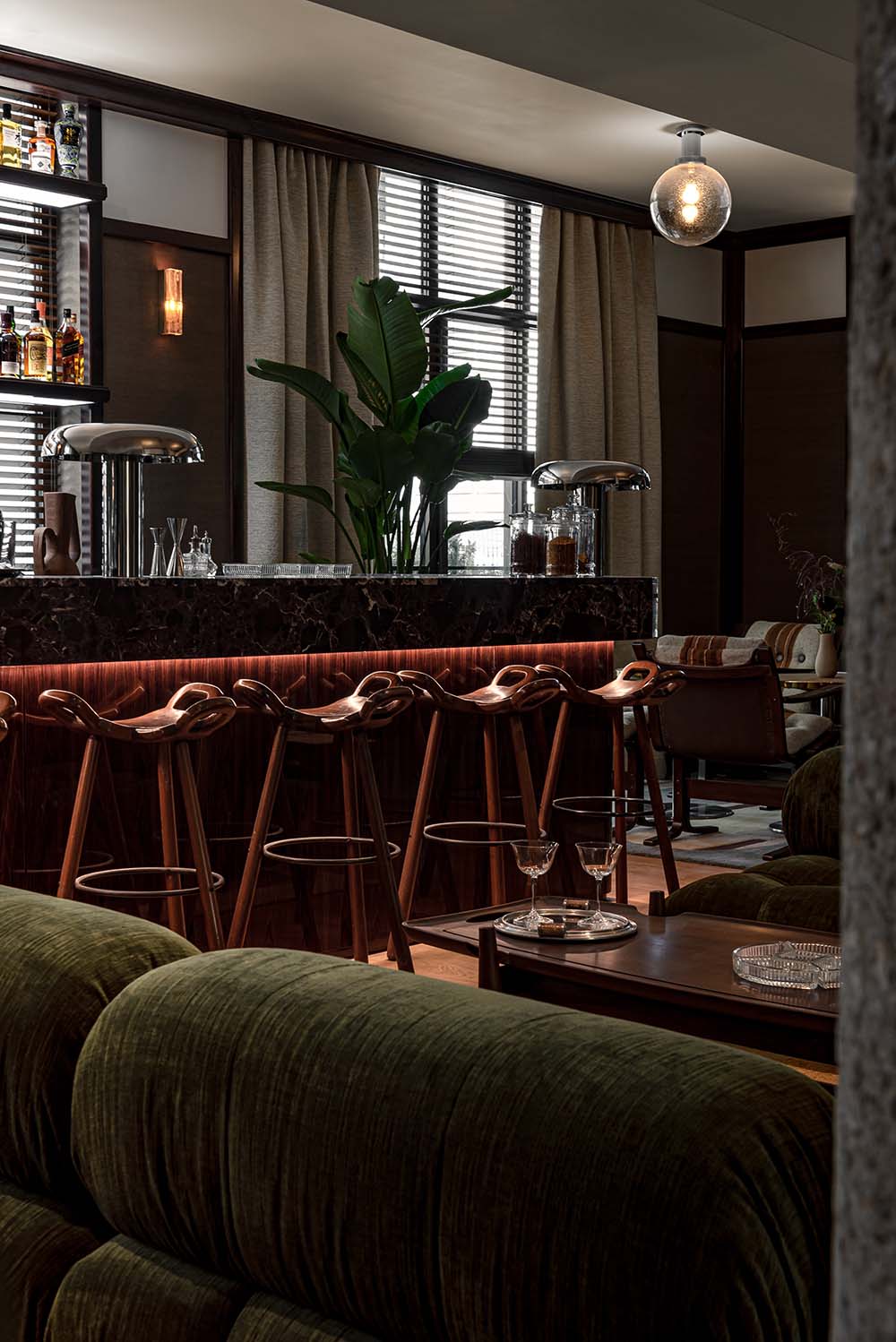
The bar functions as the hotel’s social centre of gravity; a tight, lively room where guests, neighbourhood regulars, and the occasional gallery-hopper from Avenue Montaigne end up trading seats by the second round. Its cocktail list has a loyal following independent of the hotel itself, which says something about how Norman has positioned itself within the neighbourhood rather than simply on top of it.
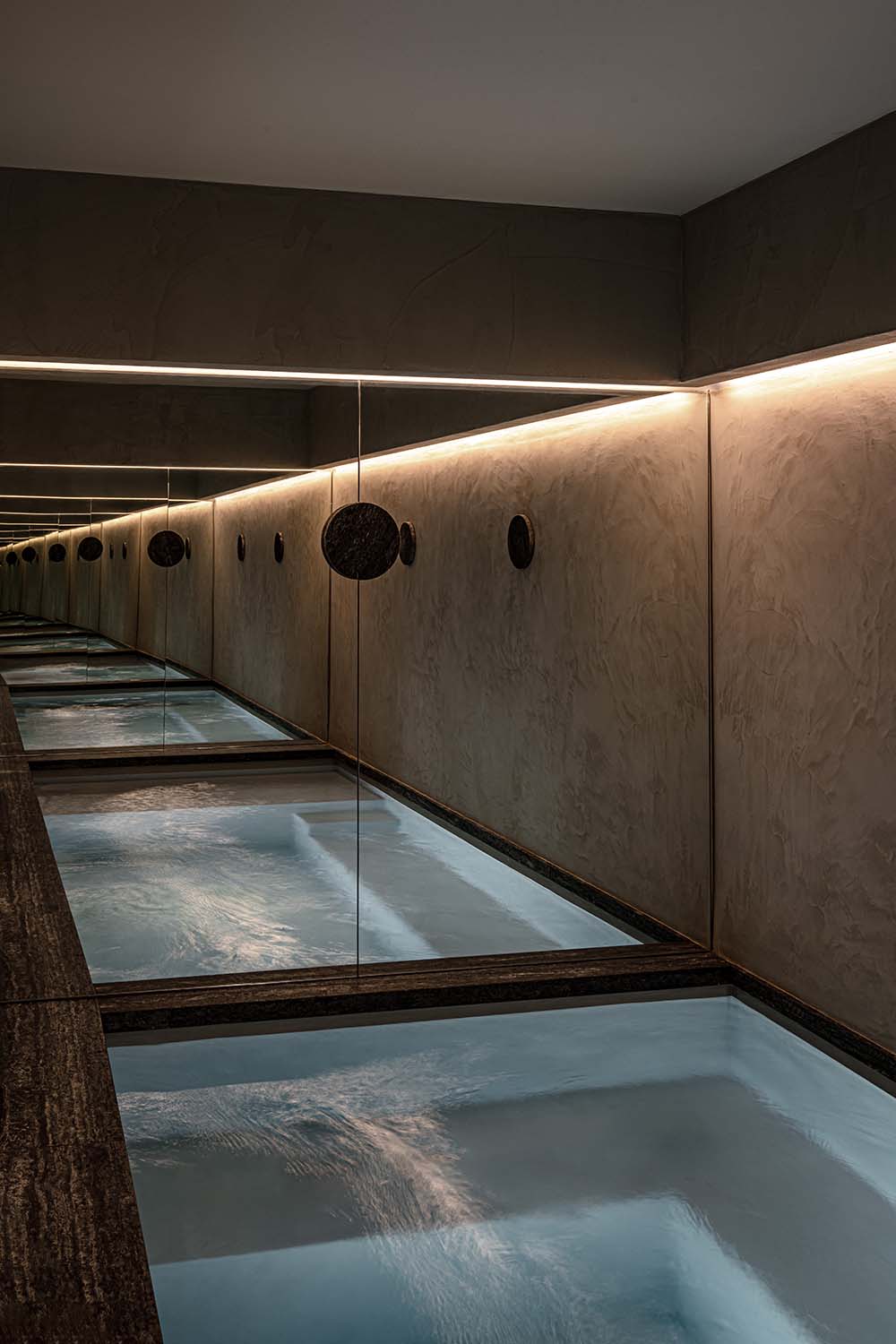
Downstairs, the spa by Omnisens operates at a different register entirely: a streamlined, mineral-toned space with a lap pool, sauna, and two private treatment cabins, built around the protocols of a French cosmetics house known for a holistic approach to skin and body care. It is intentionally low-key, no scheduling drama, no crowd, the kind of spa that exists for people who actually want quiet, rather than people who want to be seen wanting it. (The hotel’s French-Thai restaurant, helmed by Chef Thiou, runs as its own distinct universe, worth knowing about, though most guests come to Norman for everything that surrounds it.)
Step outside and the geography does a lot of the talking. Norman sits at the hushed top of the Champs-Élysées, close enough to the Arc de Triomphe to feel its gravity but far enough to avoid its crowds. Walk five minutes one way and you’re in couture territory, Avenue Montaigne’s flagship houses, a concentration of fashion history dense enough to make window-shopping feel like a museum visit. Walk the other way and the energy shifts toward smaller, more idiosyncratic galleries, exactly the kind of art-world wandering Vidalenc had in mind when he said he wanted guests to “experience Paris like a local.” This is not the postcard 8th arrondissement of double-decker tour buses. It’s the version locals actually move through between meetings, between exhibitions, between a coffee and the next thing.
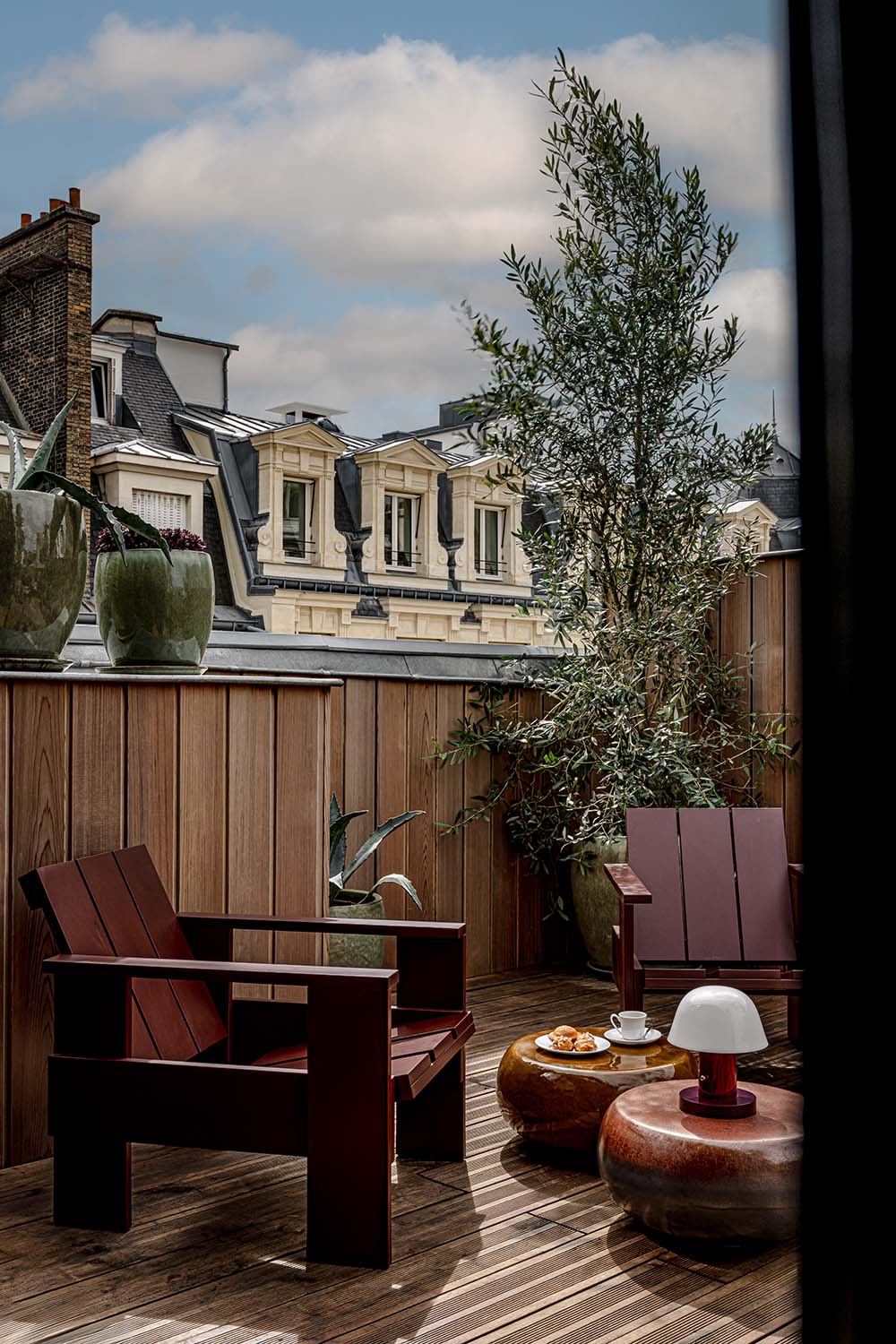
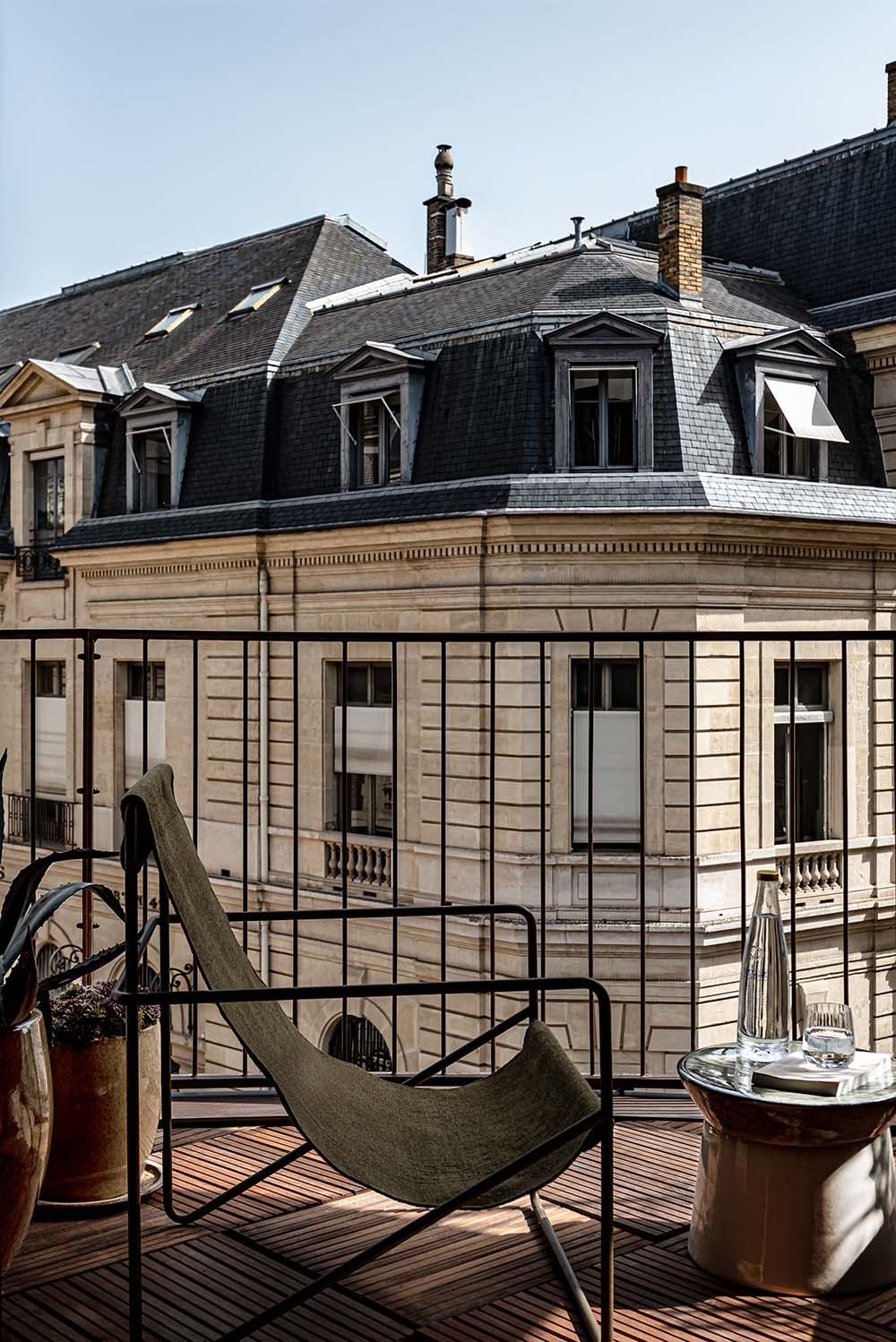
Norman is not for travellers chasing the grandest lobby in Paris, or the most decorated history. It’s for the ones who’d rather feel like they live somewhere, briefly, who want art they can actually look at rather than admire from behind a velvet rope, a balcony to drink their coffee on, a bar worth lingering in past the point of necessity. It rewards curiosity over ceremony. For a certain kind of guest, that’s the entire definition of luxury.
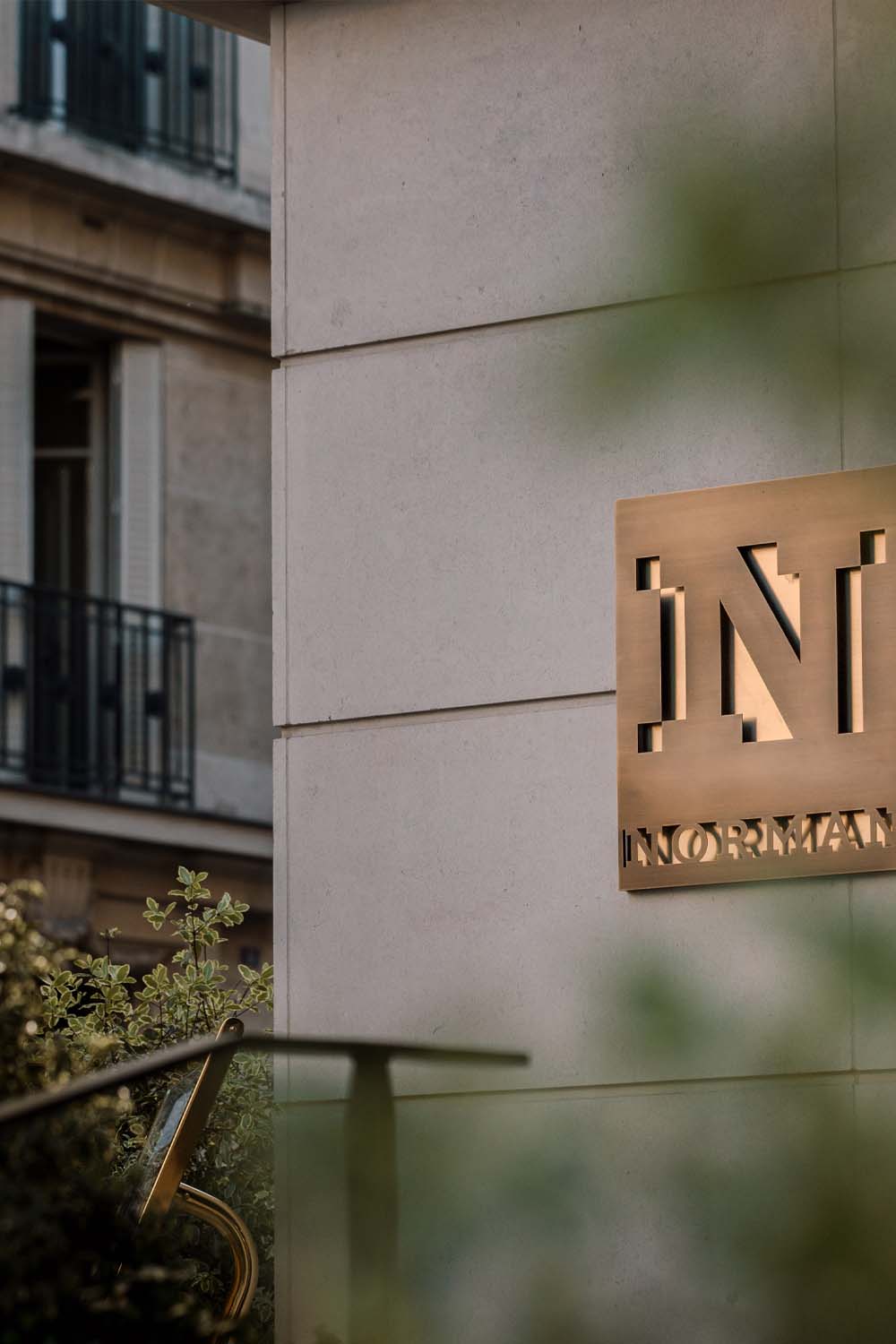
Hôtel Norman, 9 Rue Balzac, 75008 Paris.
author PRIYAM MISHRA
images COURTESY