

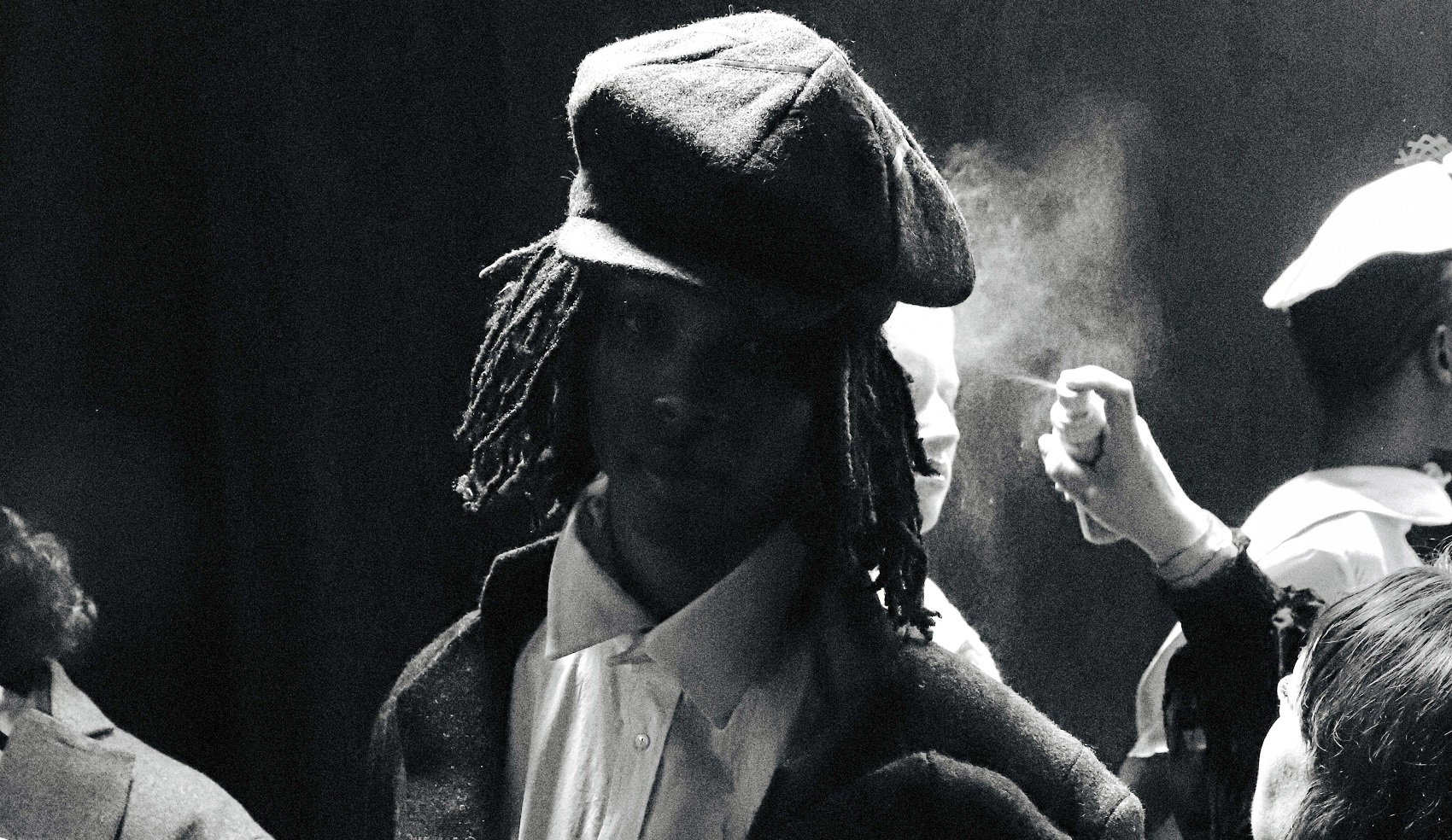
The new guard of Central Saint Martins: A deep dive
The atelier, the fittings, the quest for perfection. Swiss native image maker Luca Bass and London-based journalist Wesley Bray gain access behind the scenes to the celebrated graduate show at London Fashion Week.
It is the night before the much-anticipated annual Central Saint Martins (CSM) MA fashion show. There’s an energy in the room, but the designers are calm and focused. They have been preparing for this moment for a long time.
The MA fashion show is a highlight of the London Fashion Week schedule. Key industry figures queue up to see the talent that the course produces. It’s the most monitored student fashion show globally – which means the stakes are high. Everyone’s watching.
Numéro Switzerland secured a rare opportunity to shadow and interview five of the designers in the countdown to the show, from final studio adjustments to the buzzing last moments before the catwalk.
What stands out is the intensity of the research process in the creation of their collections and the extent to which they draw on their personal experience and diverse backgrounds. The designers are also experts at turning unexpected or discarded materials into something very new. Artisanal techniques are on full display.
Ivan Delogu Senes
Il Peso della Luna, or The Weight of the Moon, is the title of Delogu Senes’ collection. The Sardinian designer highlights the influence that the moon has on space, environments and bodies. “My collection is very emotional, but it’s more about Sardinian consciousness than Sardinian folklore,” he says. “I took a lot of found artefacts in Sardinia and then translated them into shapes. These artefacts were meant to be spiritual – I wanted my collection to have that sense of a ritualistic object.”
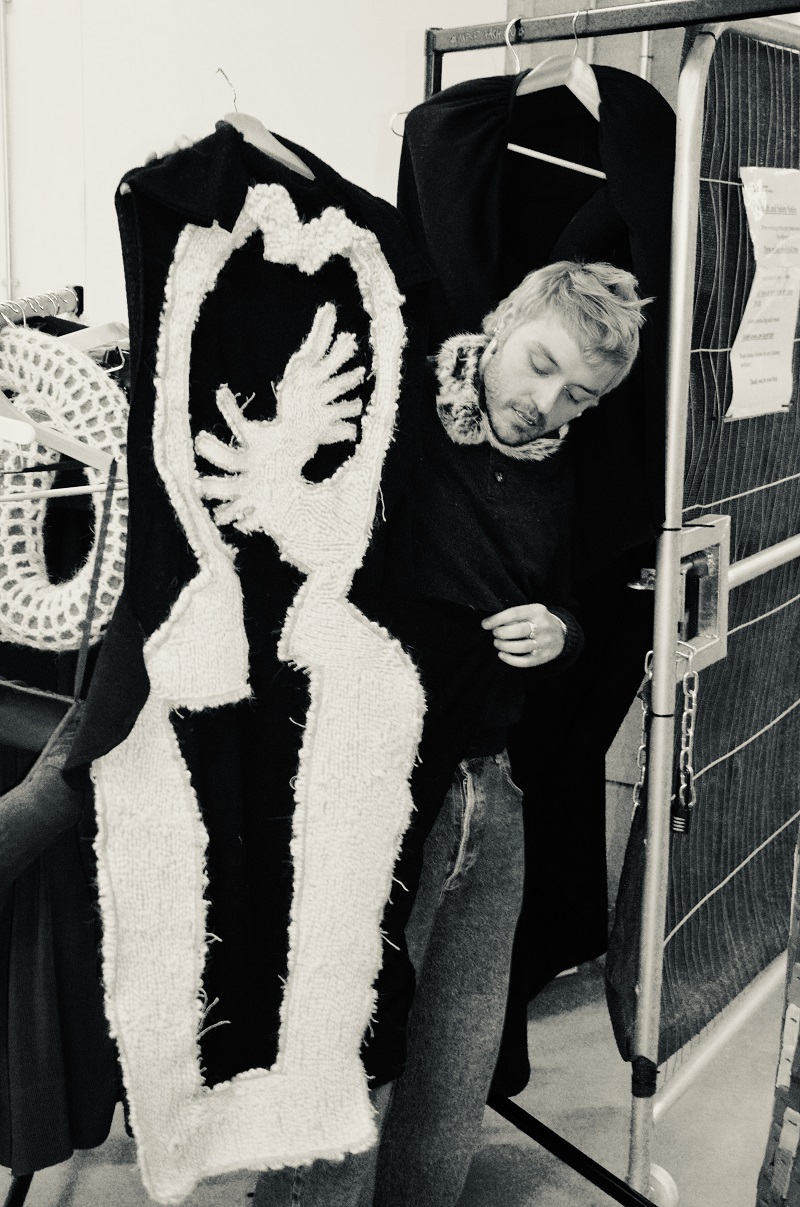
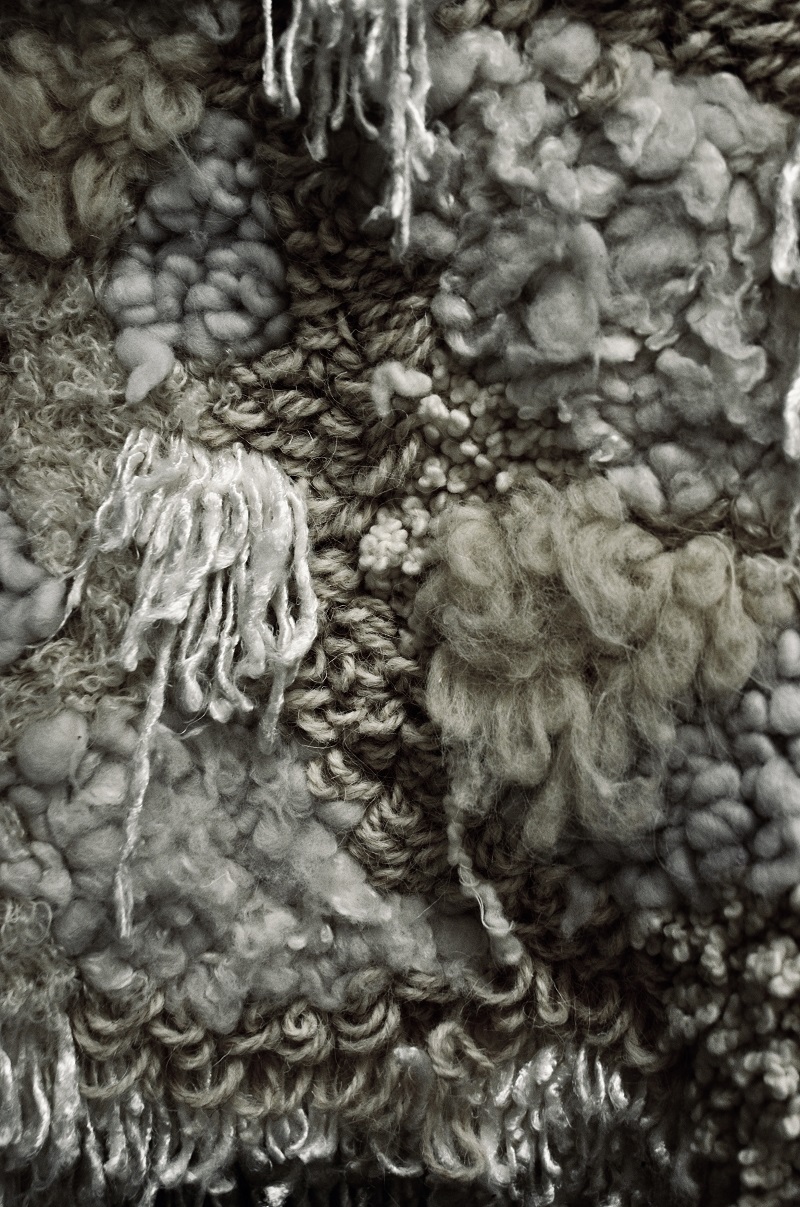
In Delogu Senes’ work, finishings are often left unfinished, a deliberate choice. This is echoed in the use of raw leather and raw wool, as well as the earthy tones throughout the collection. “I went for a lunar palette,” he says. “I am using deep black, ivory, navy, and different shades of brown because I want to focus on the materiality and the silhouettes without getting distracted by colour.”
The collection features upcycled traditional shawls and skirts donated by women from Delogu Senes’ community. “Everything is about past memory and transporting that through generations. Everything is new, but I wanted to work against the feeling of newness. Sustainability in my collection is also approached as an act of care and memory rather than as a buzzword,” he says.
A standout look, a leather gown, features offcuts that could no longer be worked with. The look is inspired by mosquito curtains in Sardinia, typically located at the entrance to meat and fish markets during the summer. “I was always attracted to the unique design of these curtains and wanted to reproduce it in leather.”
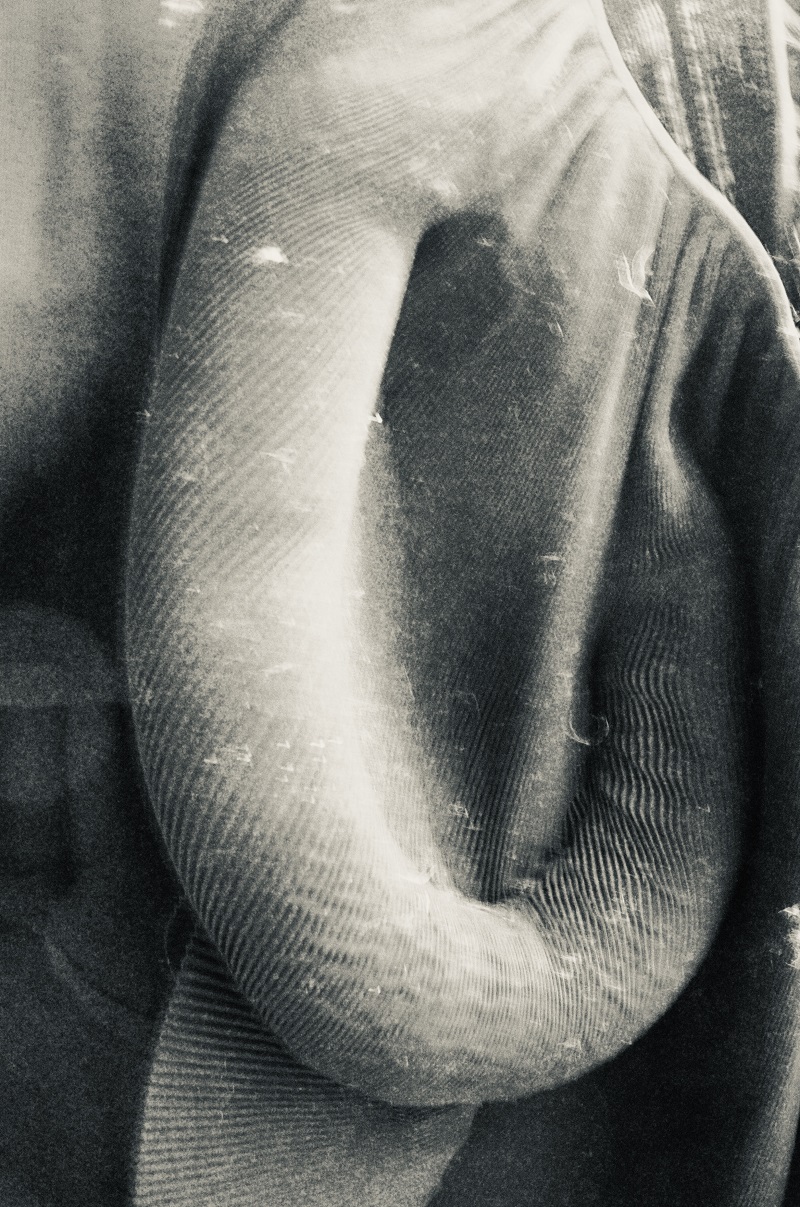
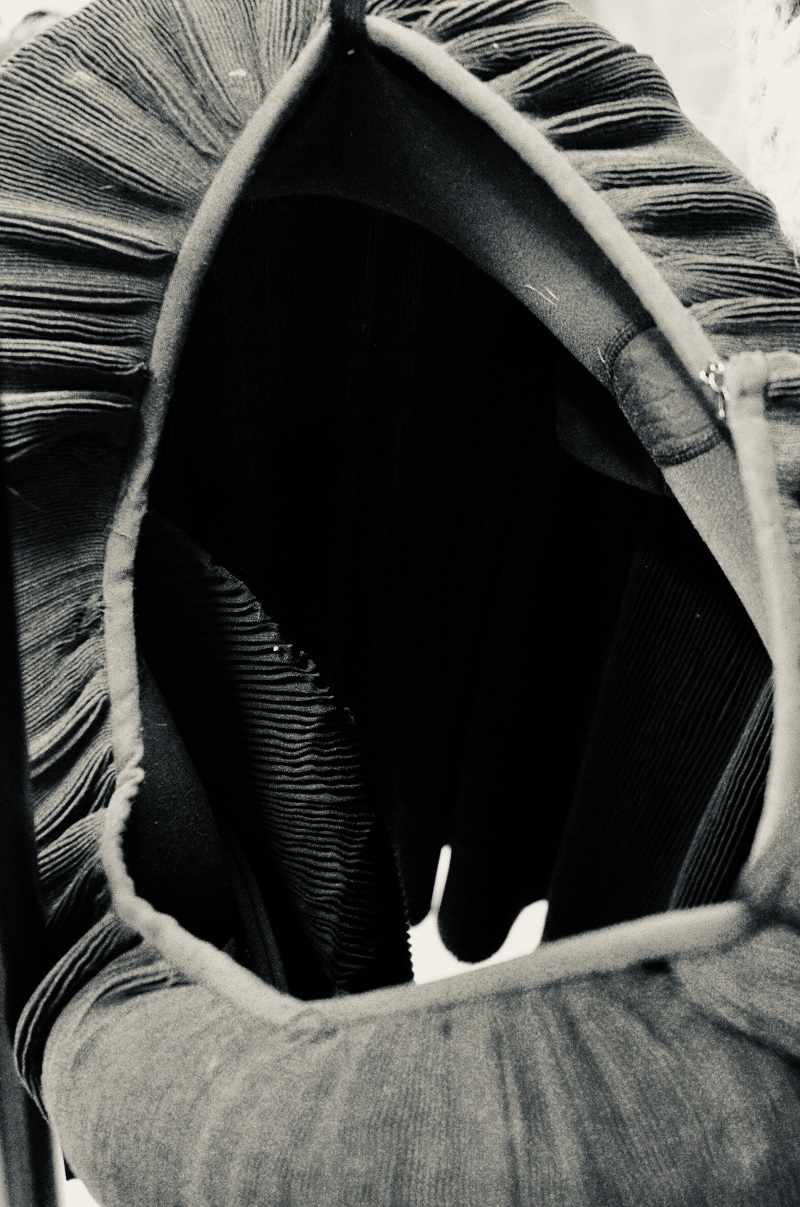
The collection pushes for a new Mediterranean aesthetic. “I also reference my agropastoral roots because my family have been shepherds for many generations,” he adds. He used what he describes as a kind of eco-fur, made from banana yarn and raw Sardinian wool that comes directly from his family’s livestock.

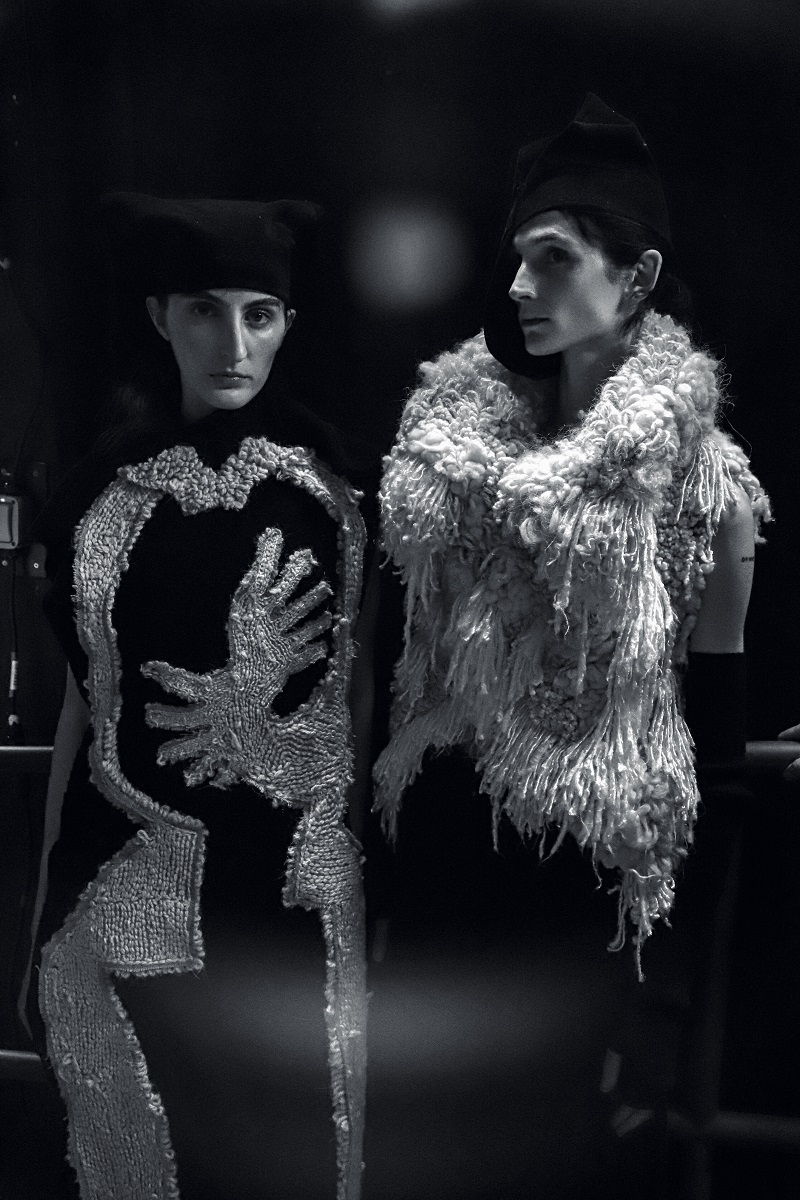
Delogu Senes has favoured crocheting and embroidery in the past, but for this collection he researched a style of embroidery that reflected the mood. Carpetmaking became a focus, which led to the creation of a standout look featuring raw, unfinished, tufting techniques. He intentionally used the ‘incorrect’ side of the tufting to enhance the level of rawness he wanted to capture in the garment. “You can clearly tell it is all about slow processes. Not everything is perfect, but that’s the beauty of it. It’s more truthful.”
Kai Ghattaura
Ghattaura’s collection is titled Seminomadic, a word that frequently came up while he was researching hidden tribes of India. “The collection reflects on post-colonial India. I myself am mixed British-Indian and this collection let me learn more about my heritage through making.”
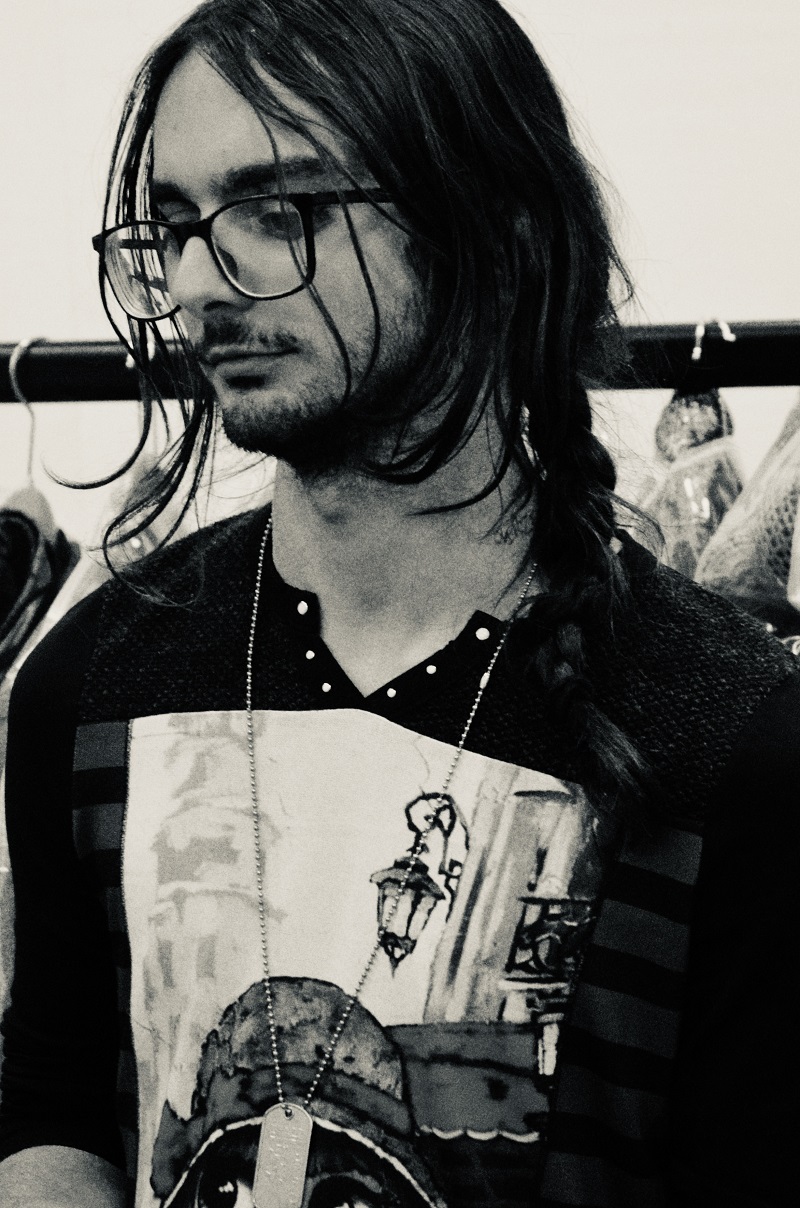
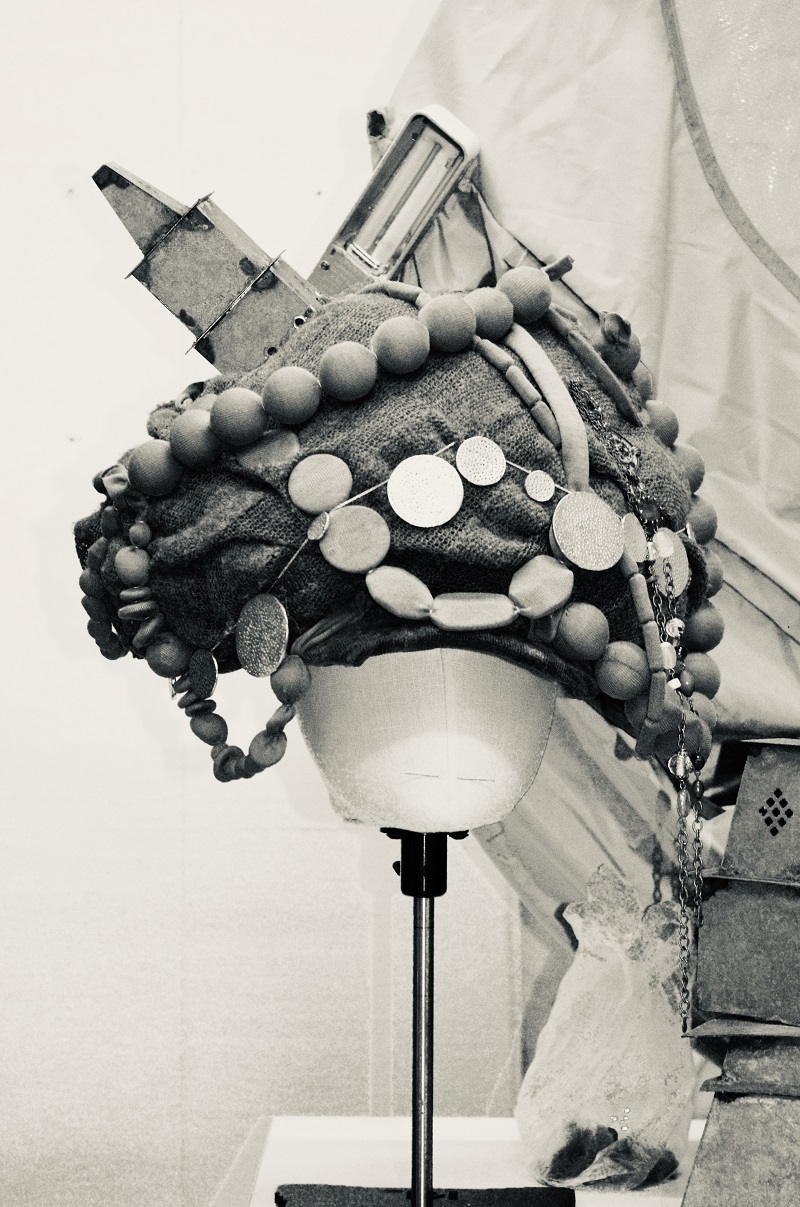
Ghattaura explains that the collection is about the imagined experience of nomadic communities coming across discarded British garments and reclaiming them through the merge of traditional adornments. “One of the pieces is literally a Nike tech fleece that has been bedazzled with traditional Indian woodblock prints, which I developed with my own motifs,” he says.
The collection takes inspiration from traditional Indian attire such as the dhoti, an unstitched cloth that becomes a garment by wrapping and knotting it around the body. “In all the trousers, the fly and the waistband have been removed and there are no belt loops,” he says. “All the closure is done through a tying system at the back. They’re all knotted and adjustable to pretty much any body type.”
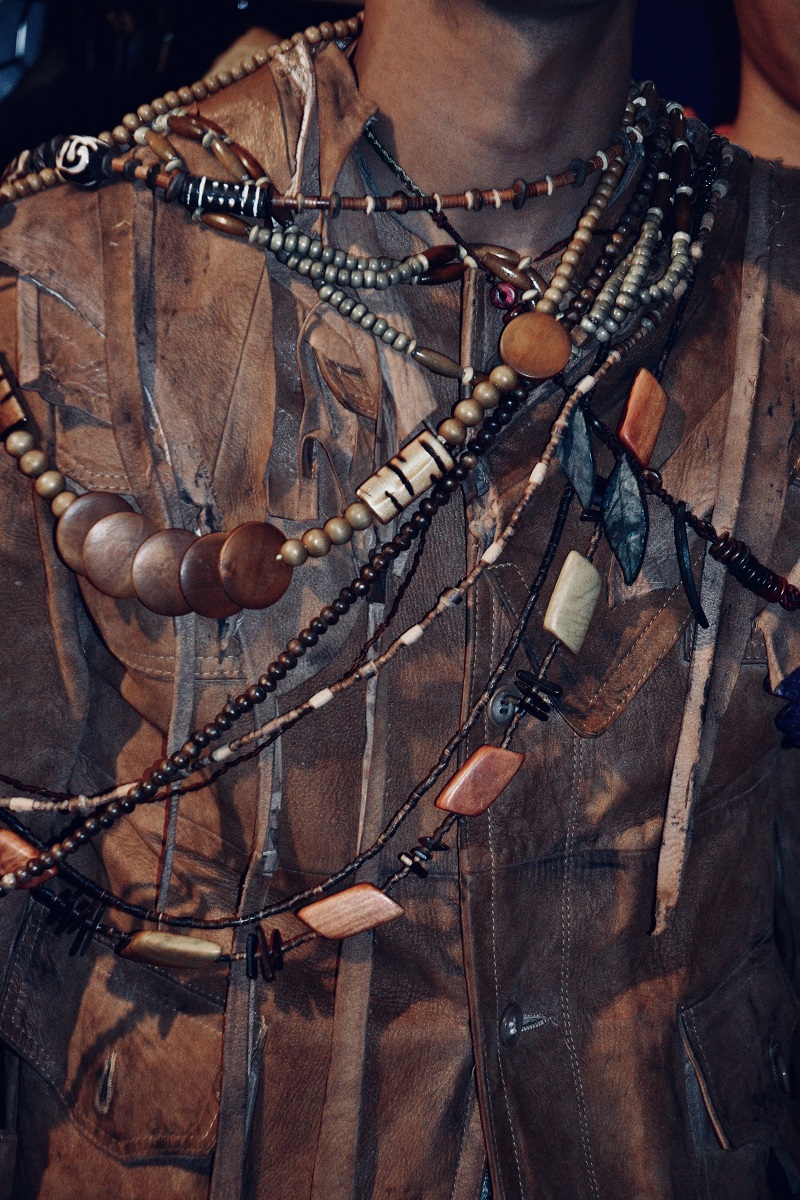
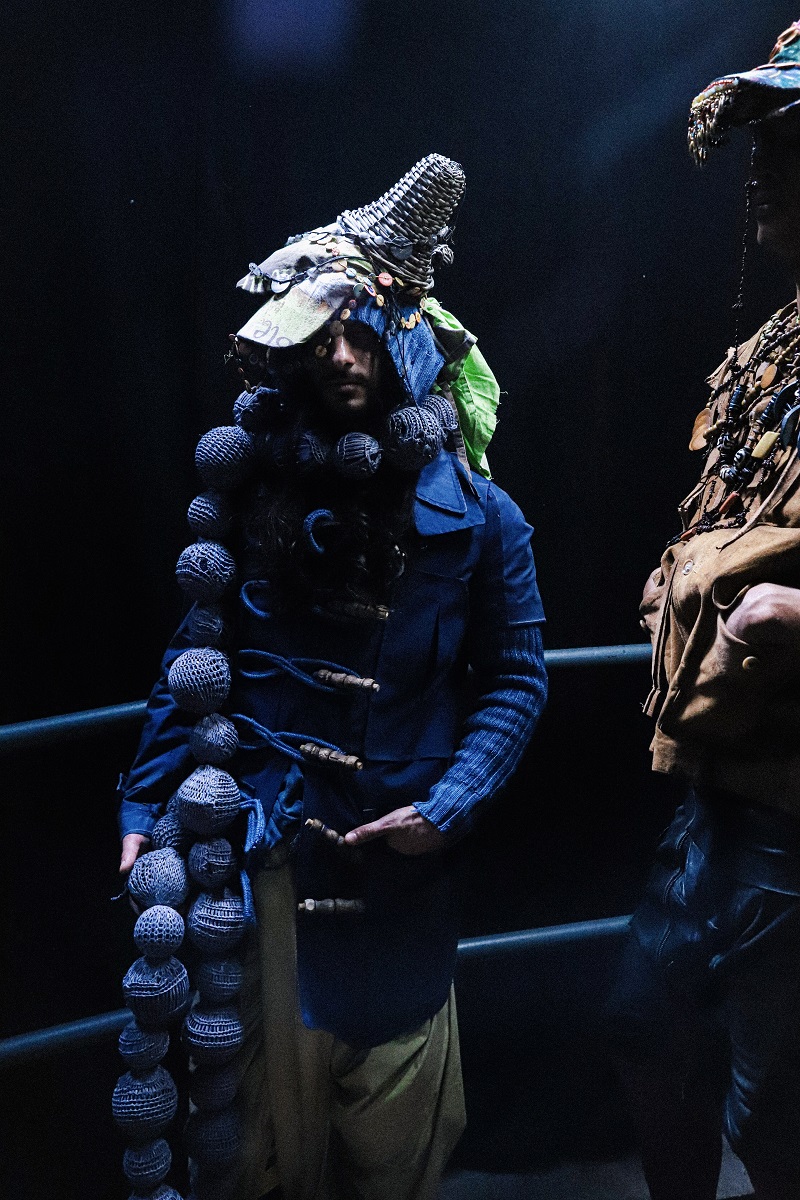
Ghattaura’s clothes are a colour blast. “All the references are colourful,” he says. “Low- and high-class references in India are always extremely colourful… You don’t have a lot of control with colour when you’re using pre-existing garments. The way we made it work was through dying and incorporating woodblock prints to add enriched colour and texture.”
Other standout details include transparent beads worked into two pairs of the trousers in the collection. “I wanted to reference the draping of beads seen in Indian wear,” he says. “I draped real beads around the legs, hand drew them onto the trousers and then stitched them with a see-through fabric, adding layers to the garment.”
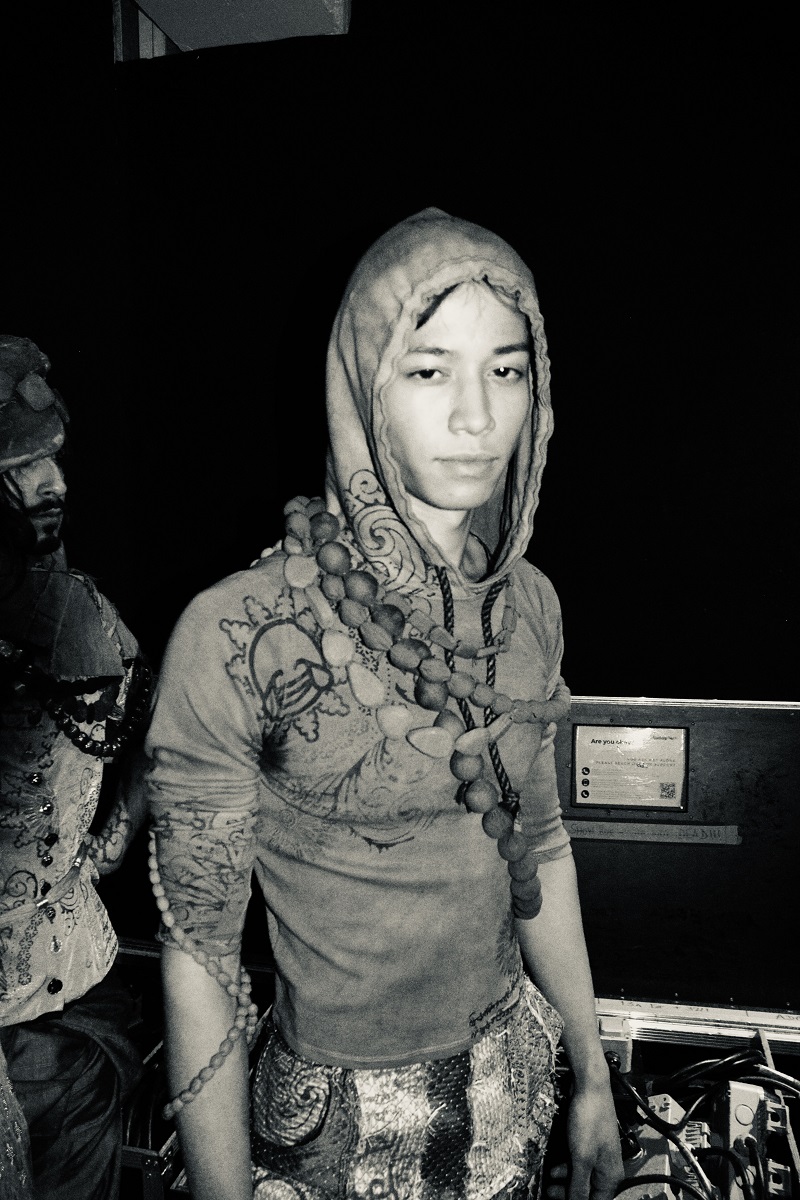
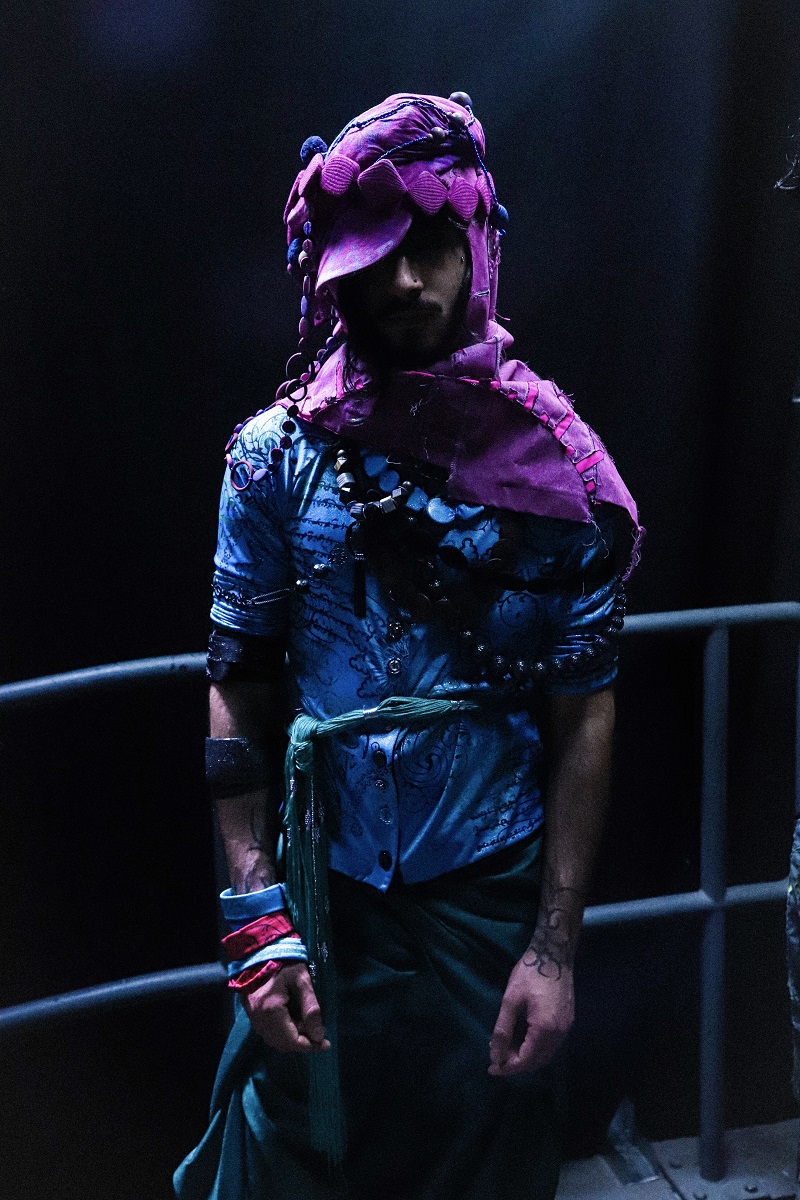
Ghattaura wants to explore what happens to clothing when it is removed from its cultural and material context. All the material used was acquired for free, typically from reject piles. “These fabrics inherently have no value, but we as designers try to add value to them through our collections,” he says.
Macy Grimshaw
Seasoned CSM student Macy Grimshaw, who studied for her foundation and BA at the fashion school, presented “’M’ by Macy Grimshaw” as part of her MA showcase. The collection is inspired by her grandmother’s experience with Alzheimer’s.
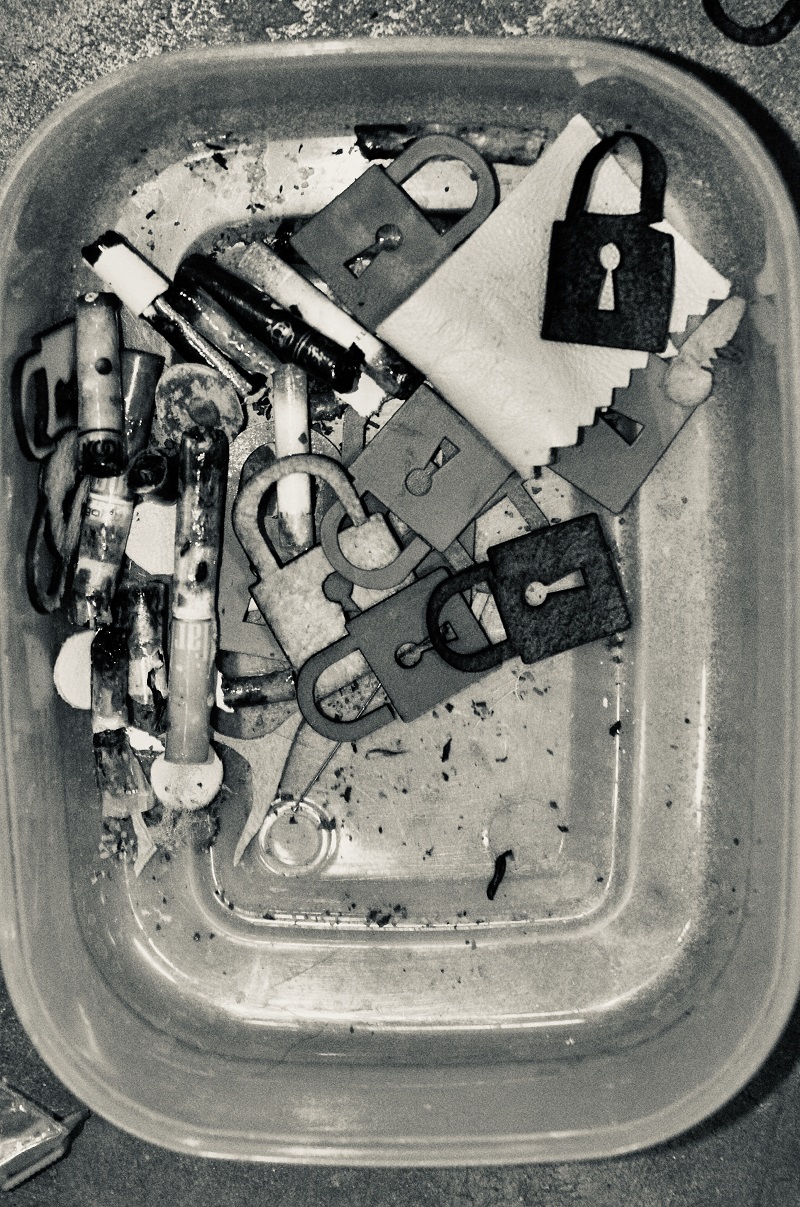
“Through this collection, I am trying to mimic how someone with Alzheimer’s would see the world,” she says. “There is a sense of familiarity, but also unfamiliarity. When people look at my garments, I want them to wonder, are those feathers? And when they get closer, they realise it’s actually leather.”
This is evident in a standout look that consisted of a leather ‘pencil sharpening’ jacket and a ‘denim’ pencil skirt. At first glance, it’s hard to recognise that the garment is made out of leather. Grimshaw’s collection is all about changing viewer’s perspectives and making them see something familiar in an unfamiliar way.
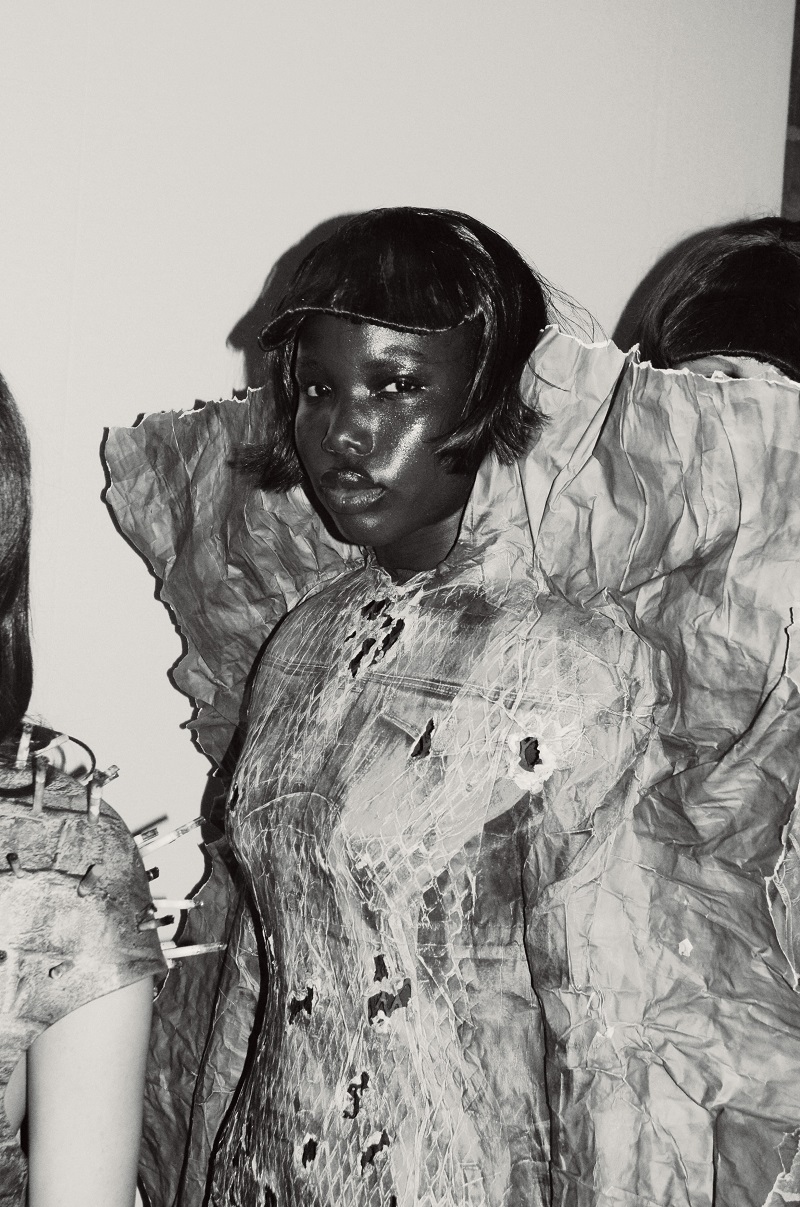
Another standout is an engraved leather dress attached surreally to a cap through braiding techniques. With this look Grimshaw plays with form but also subverts the familiar – hair – into something more peculiar. Here, the hair becomes literal shoulder straps for the garment.
“This collection is also inspired by my time in London,” she explains. “I am always inspired by the streets and I photograph really small details and textures I see. These elements then become the garments. The collection is very much my view as an observer of this city.”
Leather is a primary material, with leather moulding in most of the looks. “A lot of them were first tries, so I was really happy with how they turned out,” she admits.
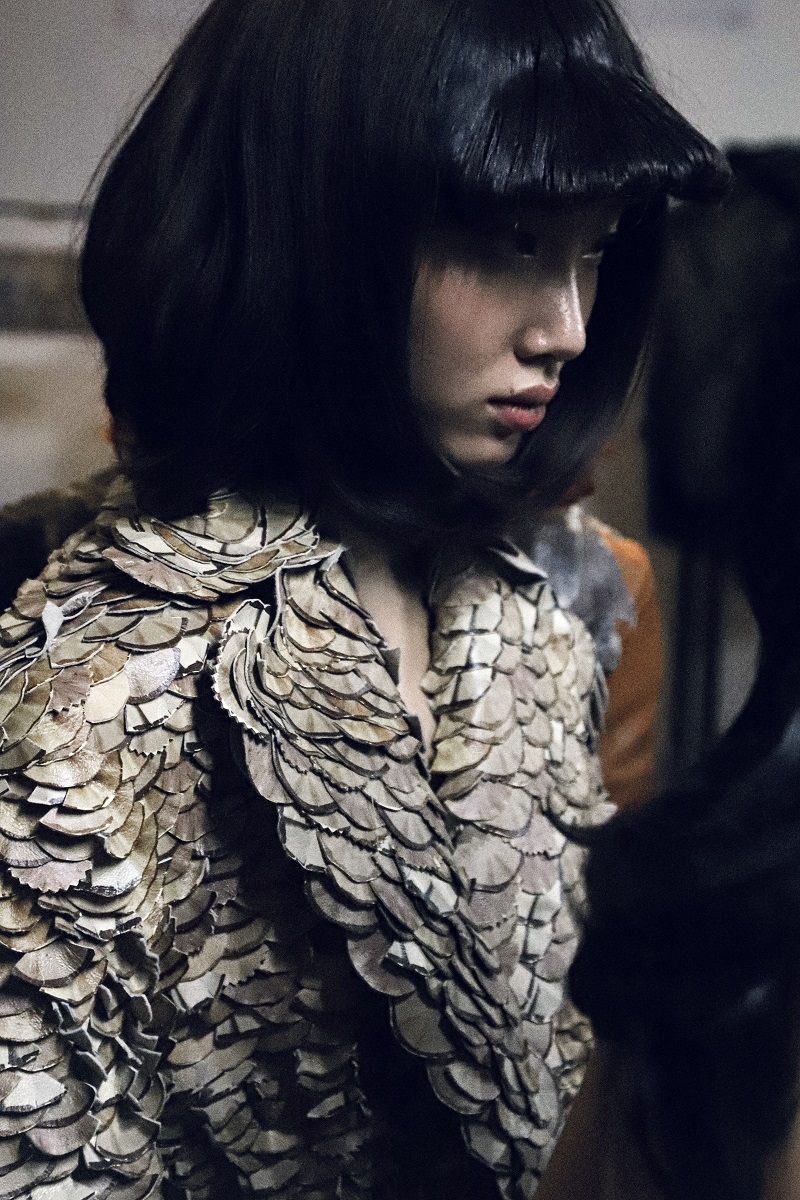
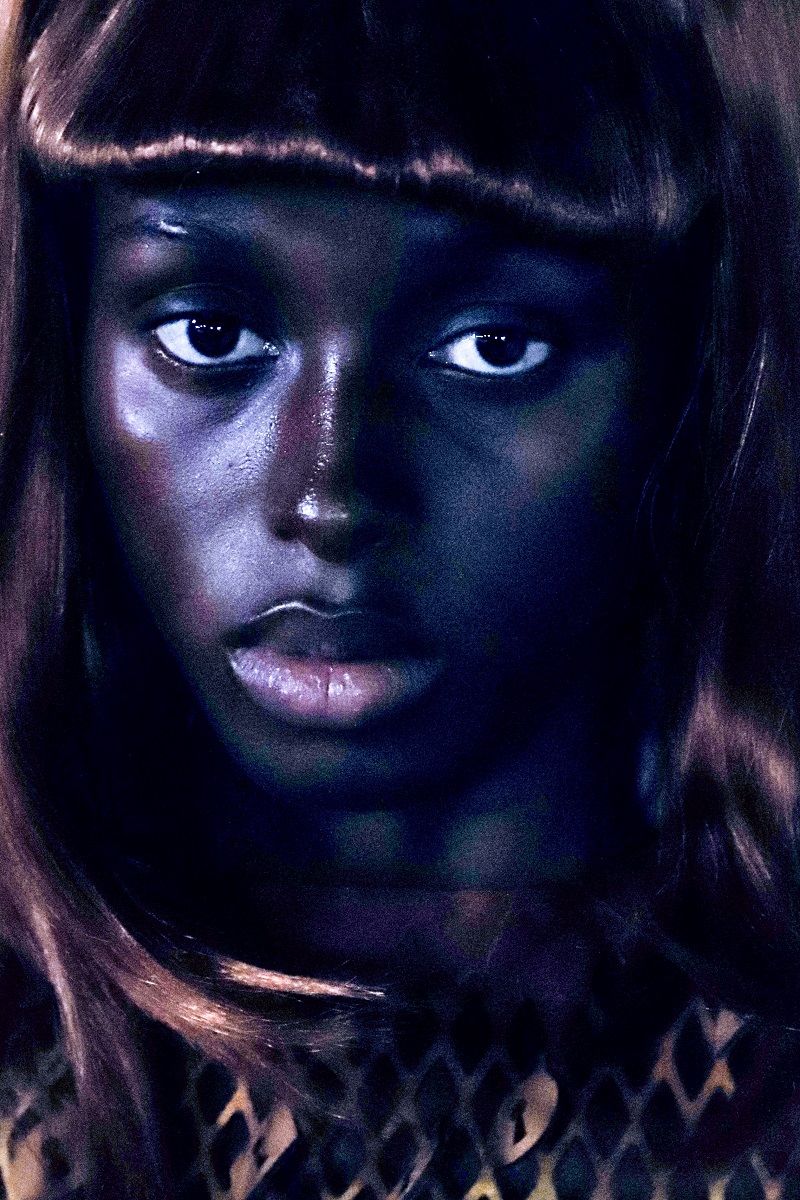
Leather is also used experimentally to make a pair of jeans. These ‘gridlock jeans’ have two layers of leather, both with the same print, but one layer is laser cut to create a grid. Grimshaw also plays with proportion, with the denim print enlarged and pockets and buttons oversized.
“I love playing with trompe l’oeil prints, paper and leather and making people question appearances,” she says. “I like focusing on very mundane objects and amplifying them. Boring things that people don’t really notice can be beautiful and we should appreciate everything we have around us.”
Mè Mè Yin
The starting point of Yin’s collection was his connection to his hometown, Dongguan, in the south of China. “I went through a lot of street photography referencing the way people live in my hometown,” he says. “In Dongguan, there are a lot of people who ride motorbikes, but it rains a lot there. People end up wearing raincoats and gloves to ride the bikes, so that’s where the inspiration comes from.”
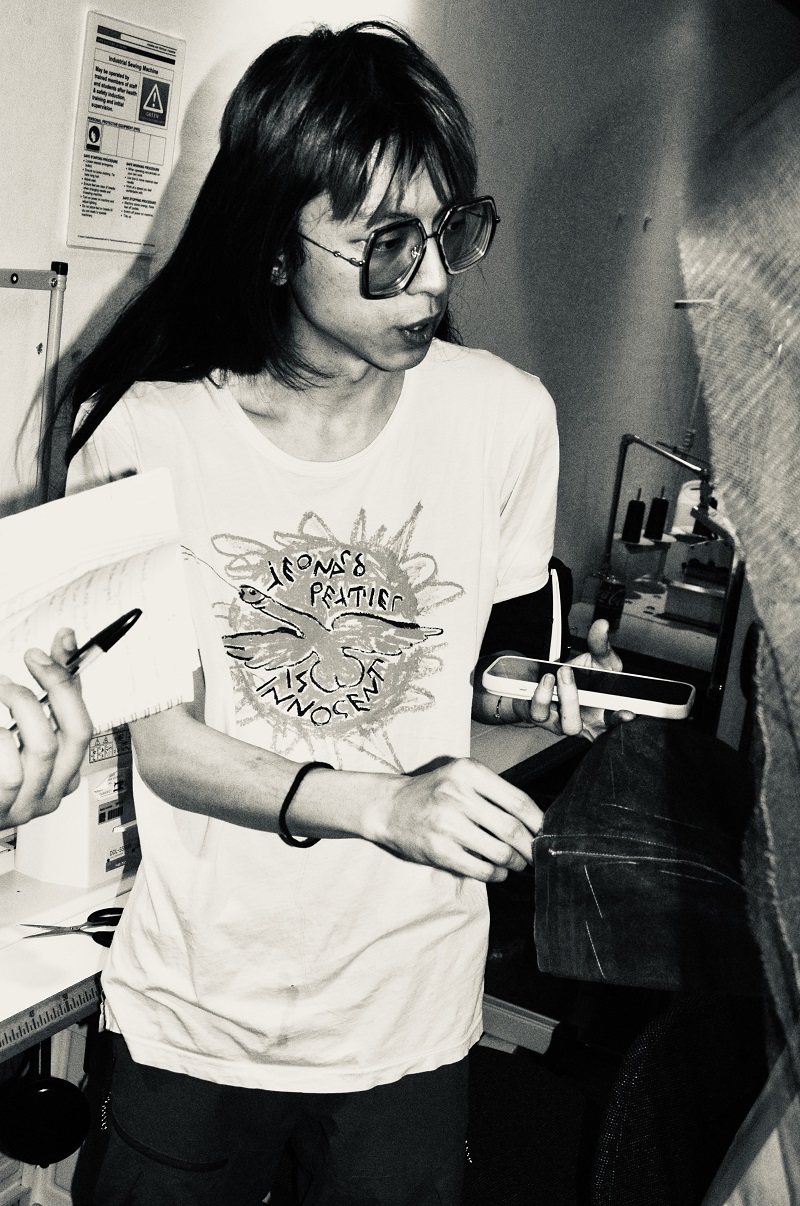
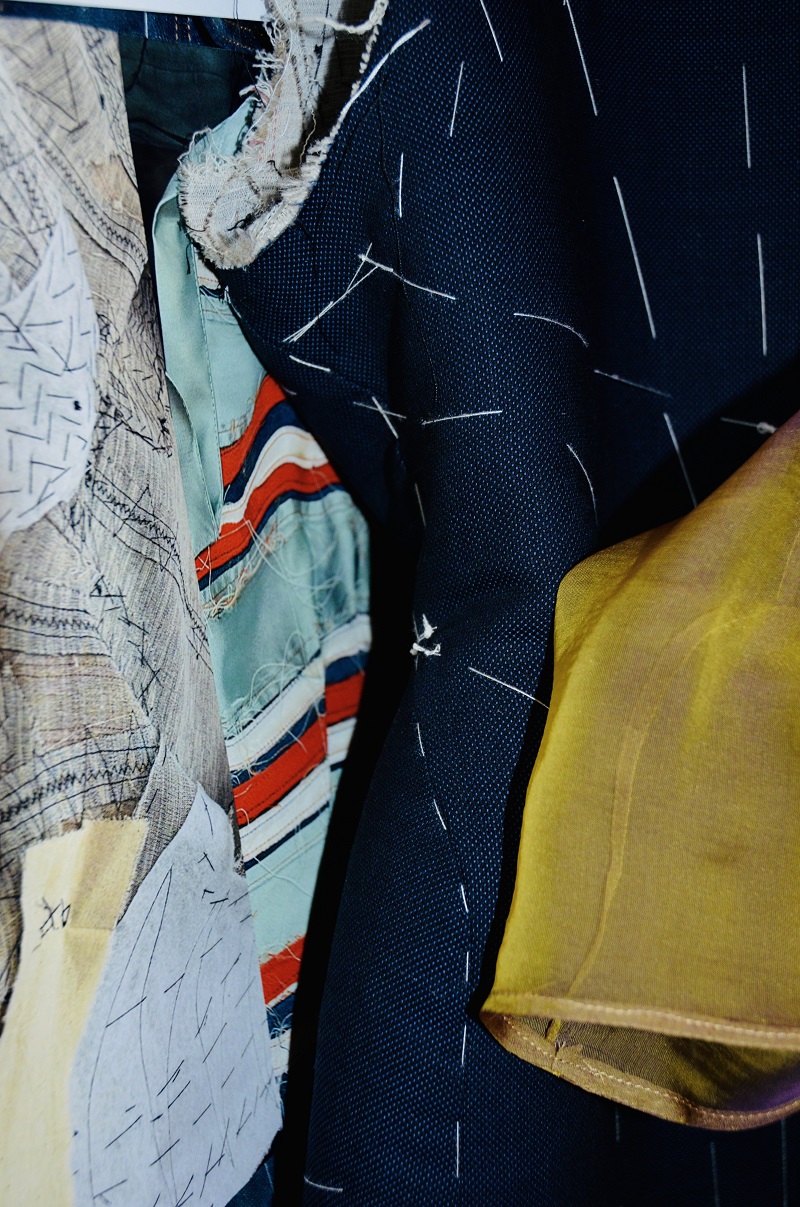
In Yin’s garments, shape is not a constant. Owing to the light nature of the tulle that he works with, the clothes have a life of their own structurally when they are in motion. “I love playing with transparency. Lots of sheer fabrics, soft tulle, stiff tulle, chiffon. I love the movement they allow.”
Collars are suggestive of polo shirts. Yin has not always been a fan. “Polo shirts are a type of fashion I hated for a long time, but in this collection, I ended up making loads of polo shirts and I low-key love them now.”
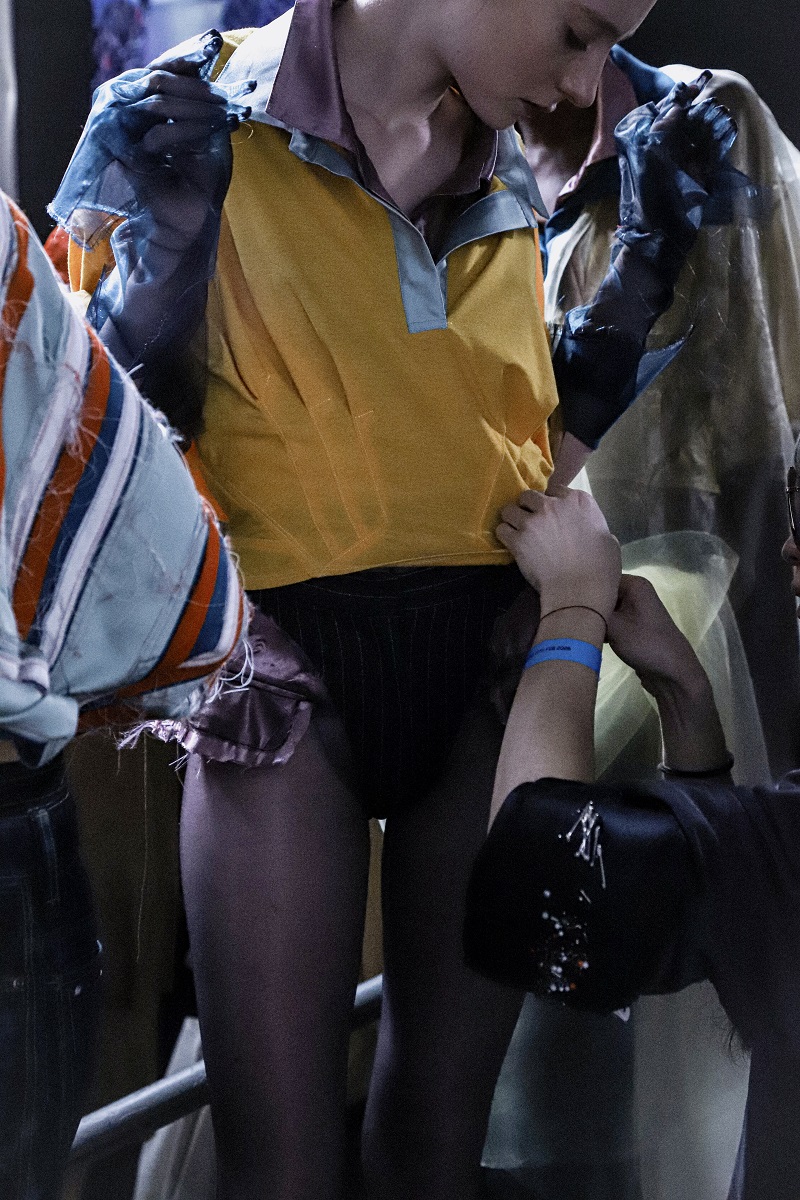
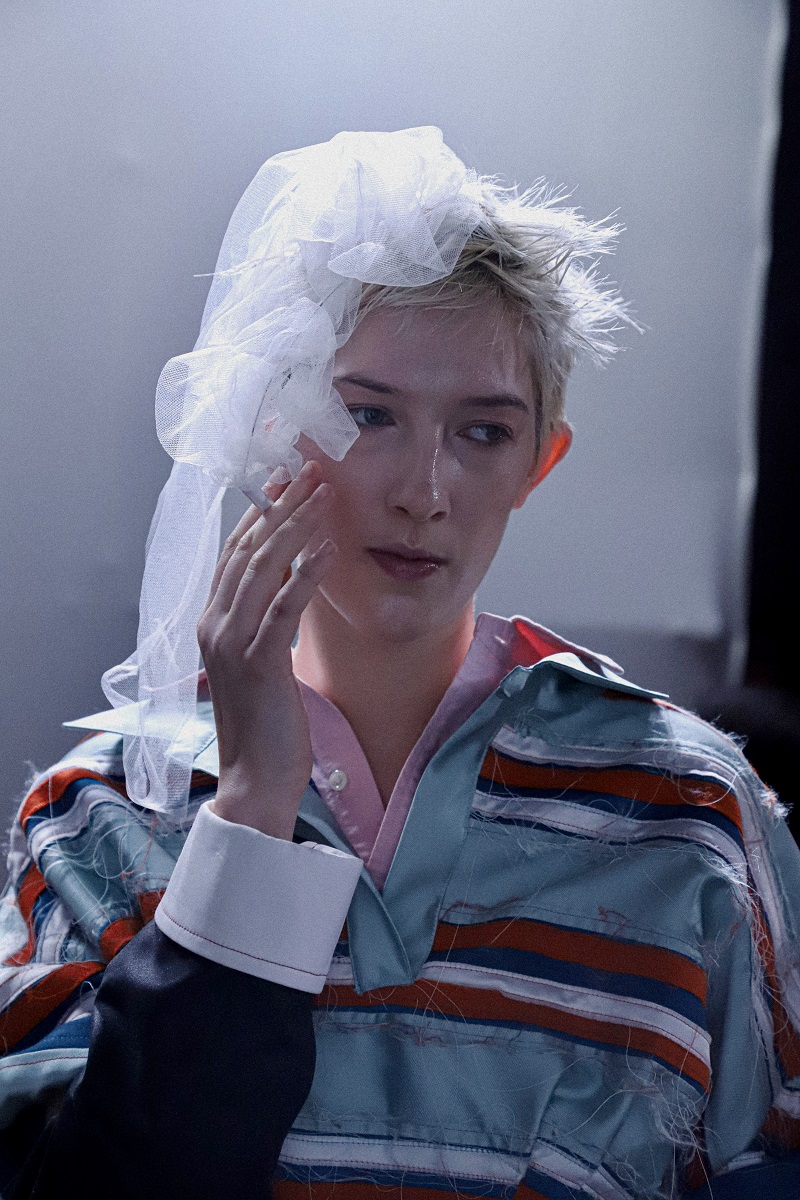
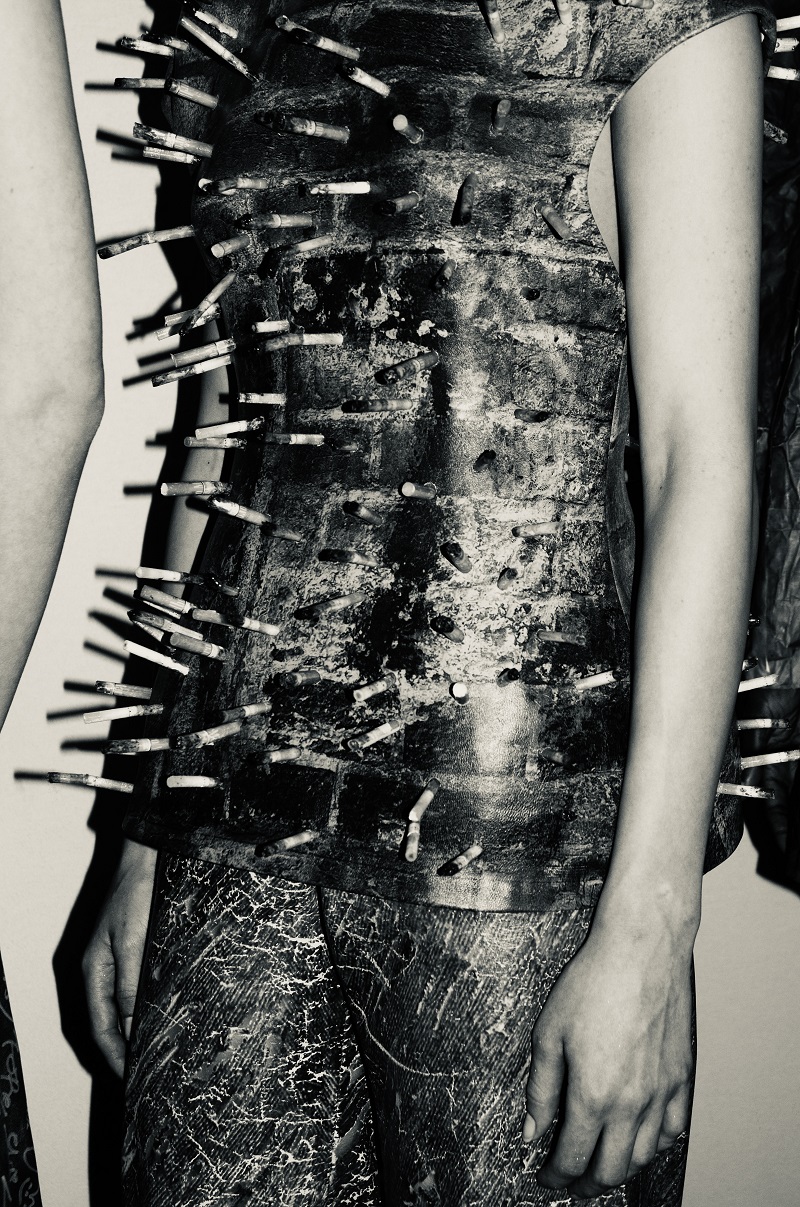
Cigarettes make an appearance through a headpiece constructed with tulle to represent the smoke. Yin was influenced by a book by photographer, Thomas Sauvin, which captured the culture of sharing cigarettes at Chinese weddings.
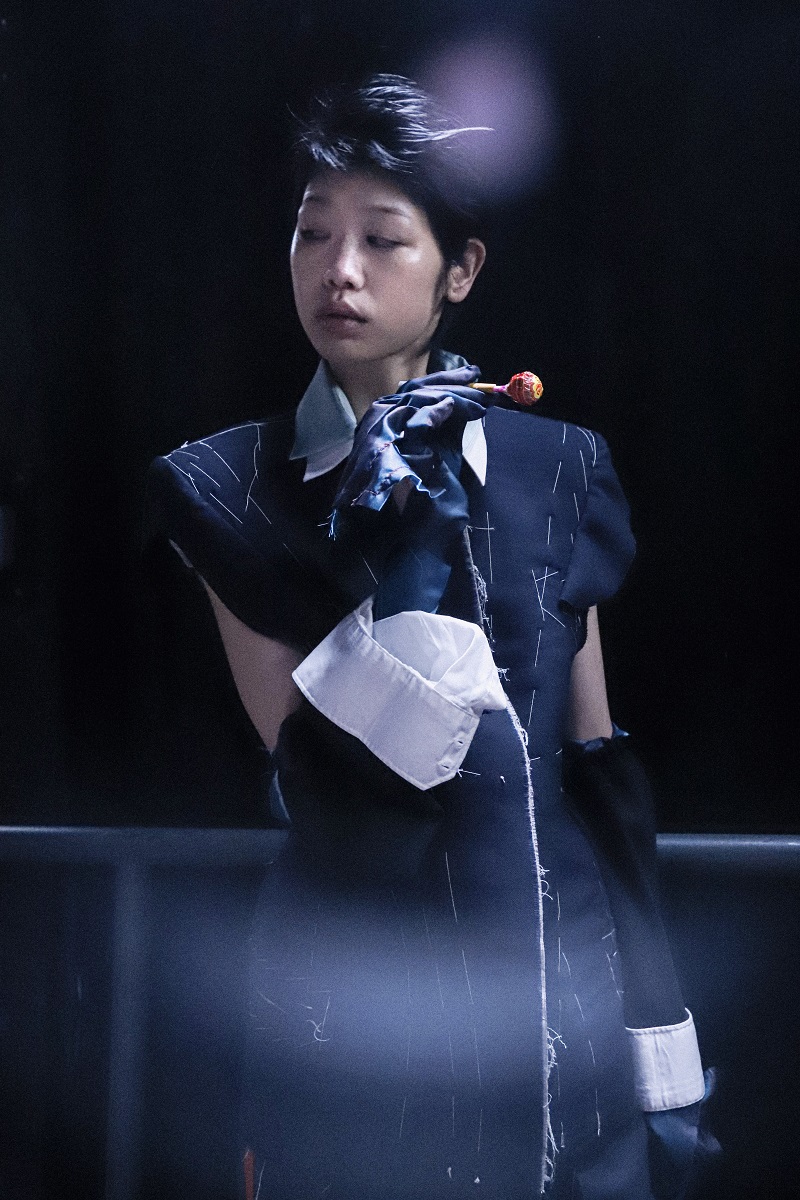
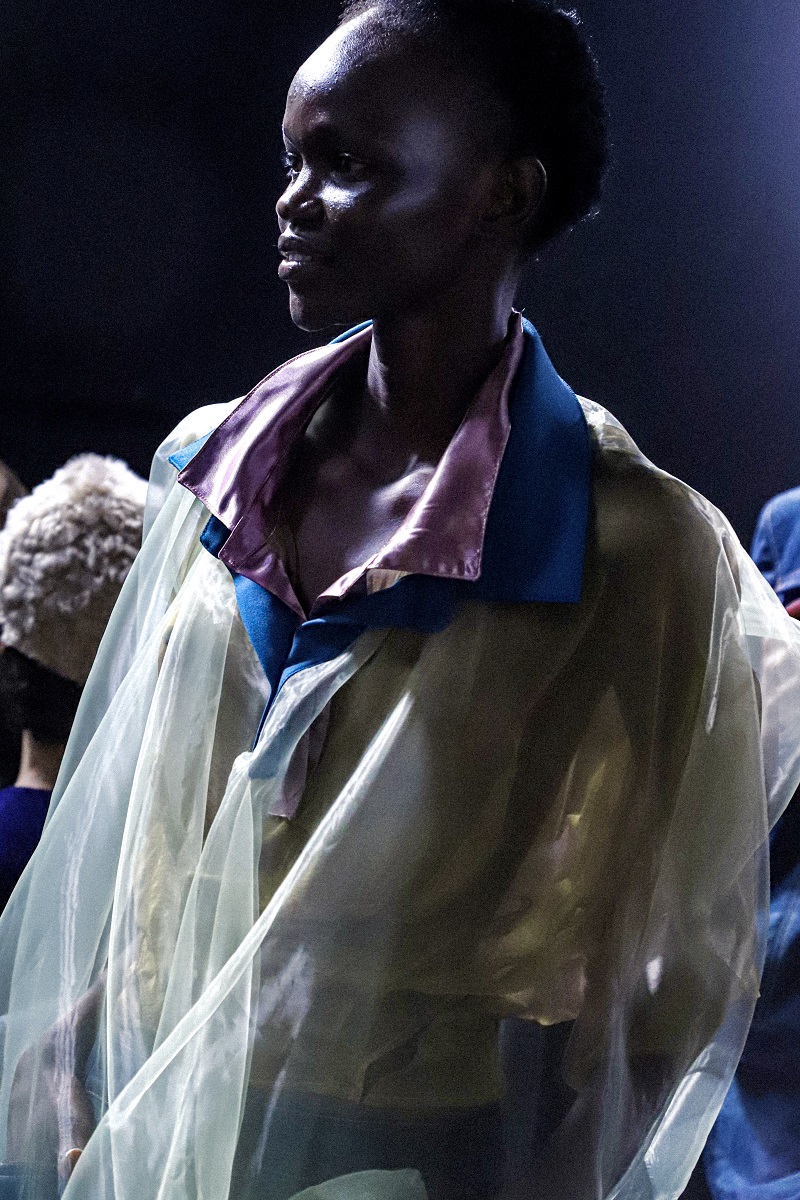
Standouts include the denim-style looks – which are actually multiple layers of tulle to create a denim effect. He has been developing the skill to make these for two years. “It’s several layers of sheer fabric. I didn’t print anything on them. All the layers were attached by hand.”
Clay Hattam
Australian designer Hattam’s collection, Manhole Cover, is inspired by sewer covers found on the road. “I love the municipality of them and how people walk past them unknowingly. It sort of juxtaposes when you look at these sewer covers and their designs. I think they’re beautiful objects. I’m interested in seeing things in a new light.”
Hattam incorporates Dada Art techniques, such as the use of found objects like parachutes. He also takes inspiration from Australian painters Arthur Boyd and Sidney Nolan and their ability to transform what might be considered uninteresting into the desirable.
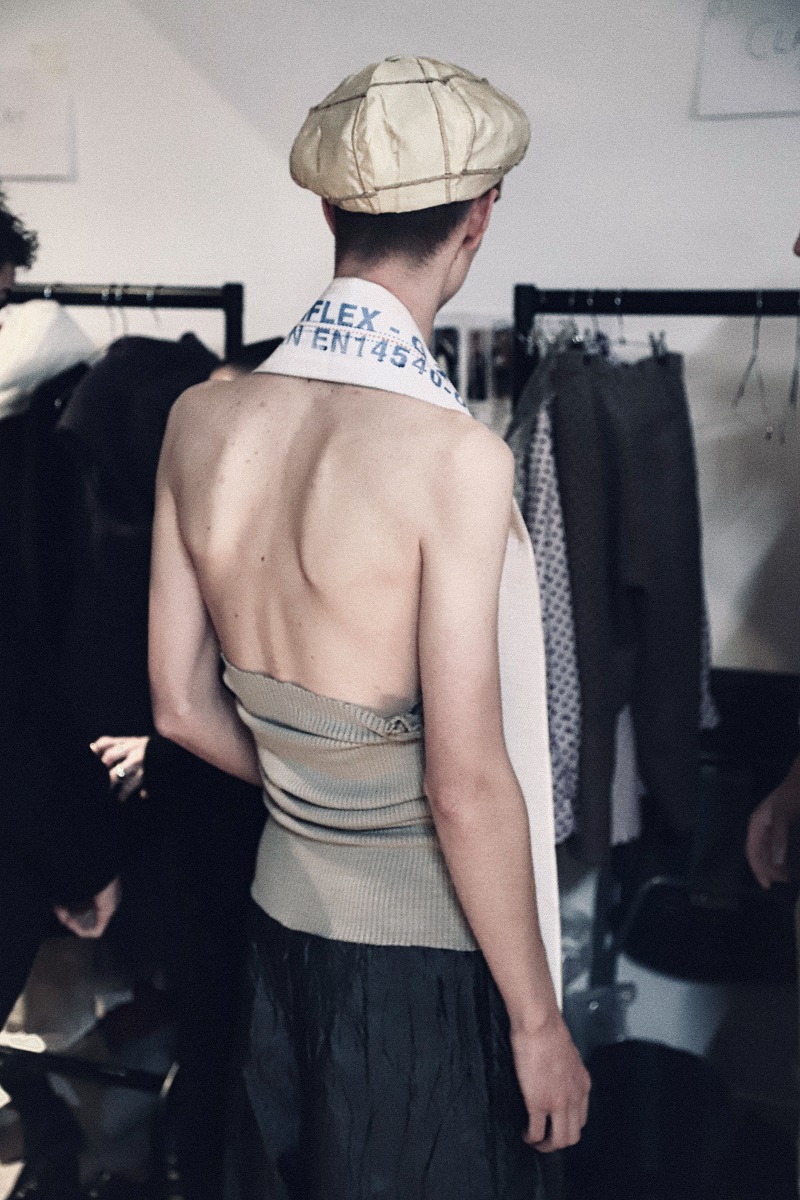
Hattam starts off his research by drawing various characters and then incorporating found objects through collage, with a focus on elevating the mundane. Found mailbags, seemingly of no value, were used by Hattam in this collection.
In a standout look, he ‘polka dotted’ these mailbags to make them more luxurious. The prints are made using iron gall ink which Hattam made from oak trees. As a result, the ink is slightly corrosive. “I like the idea of using something that already has wear in it and then introducing an element of luxury that would also wear away,” he says. “Basically, creating a layer of meaning that will exist beyond when you ship the garment off.”
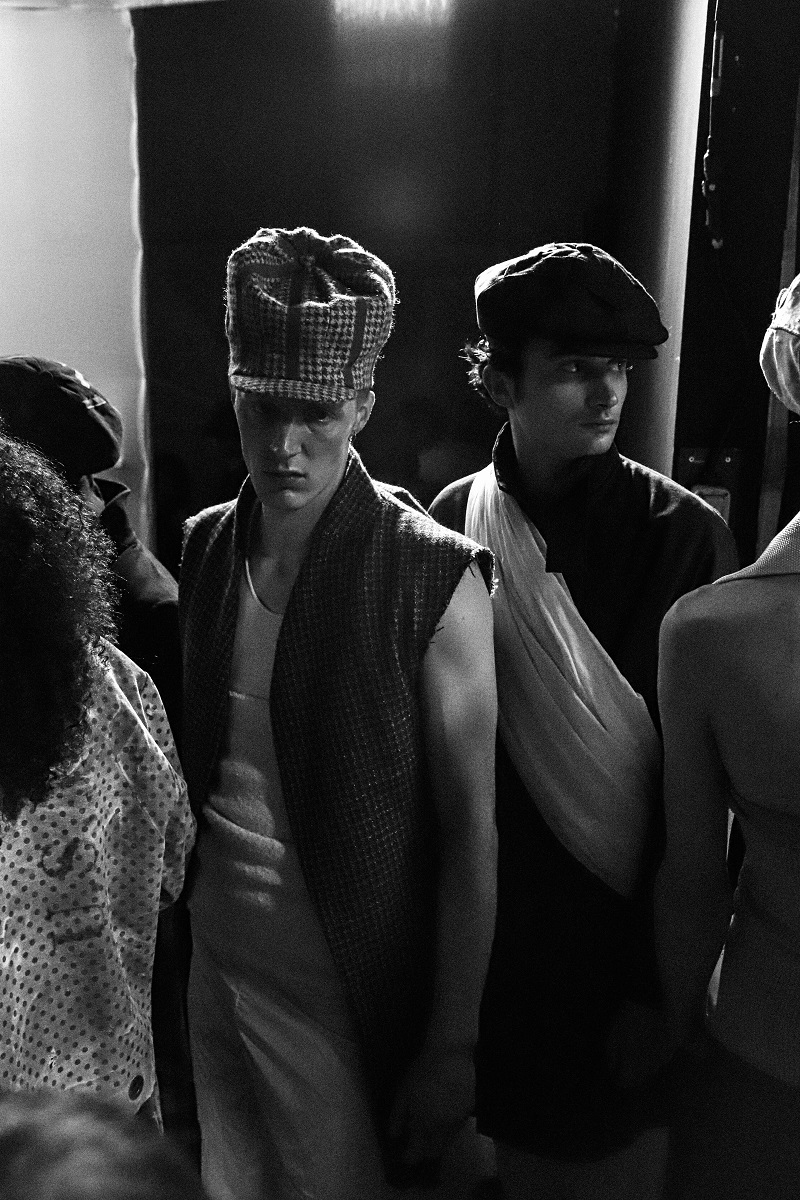
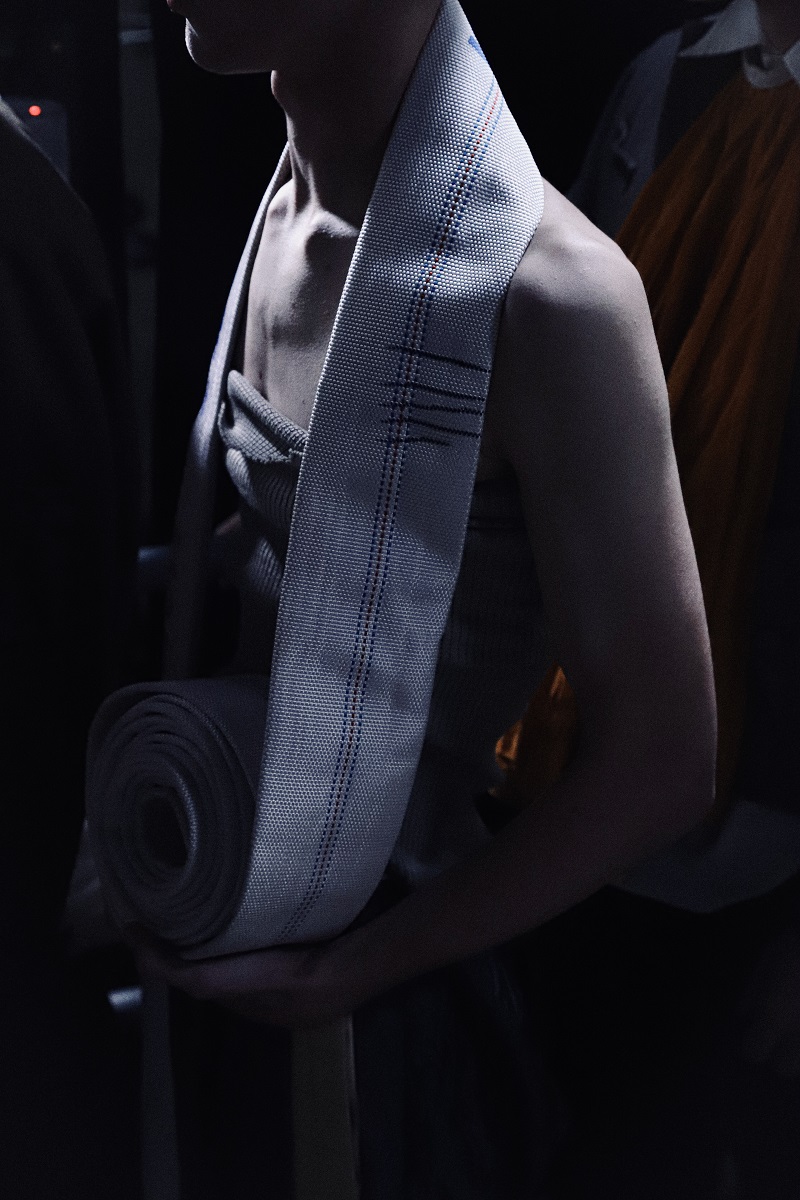
A pair of shorts is made out of an old couch. “These materials’ initial purpose has been made superfluous, but that’s what interests me in fashion,” he explains. “There’s a mix of nice wools which were relatively cheap but then mixing that with a more luxurious cotton shirt. I like that juxtapose.”
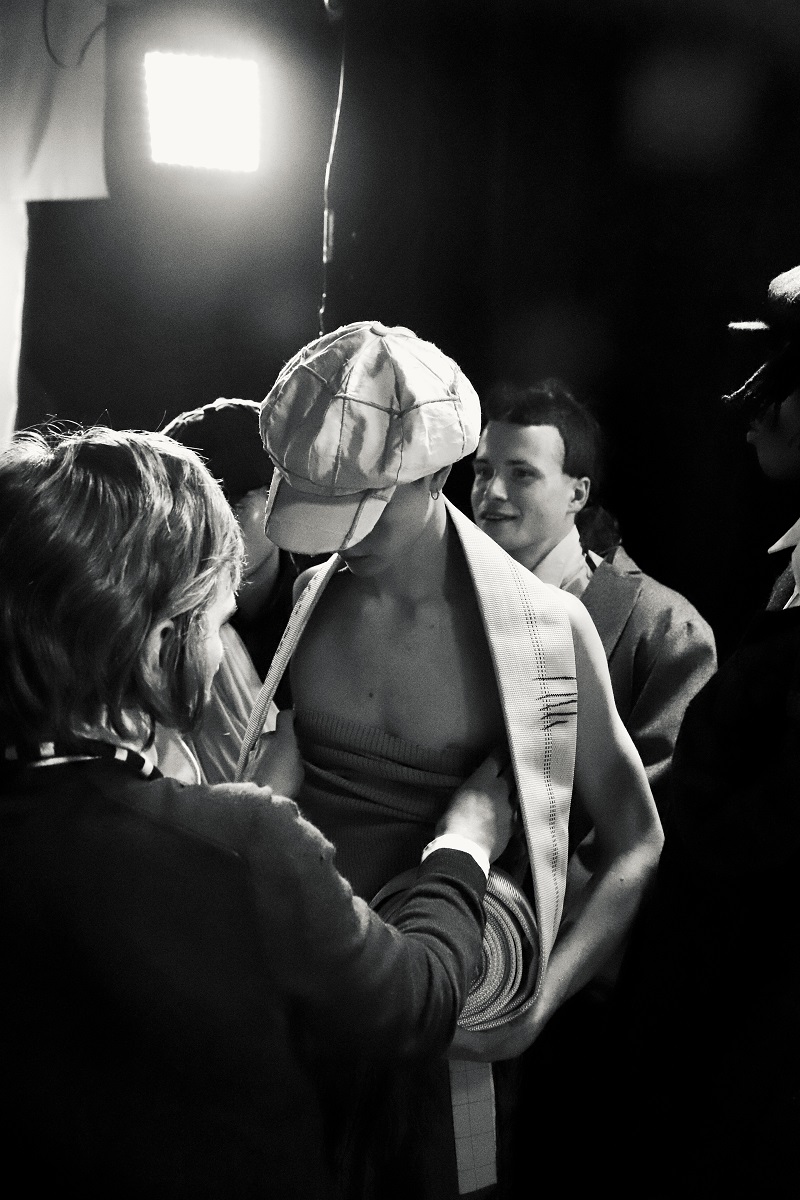
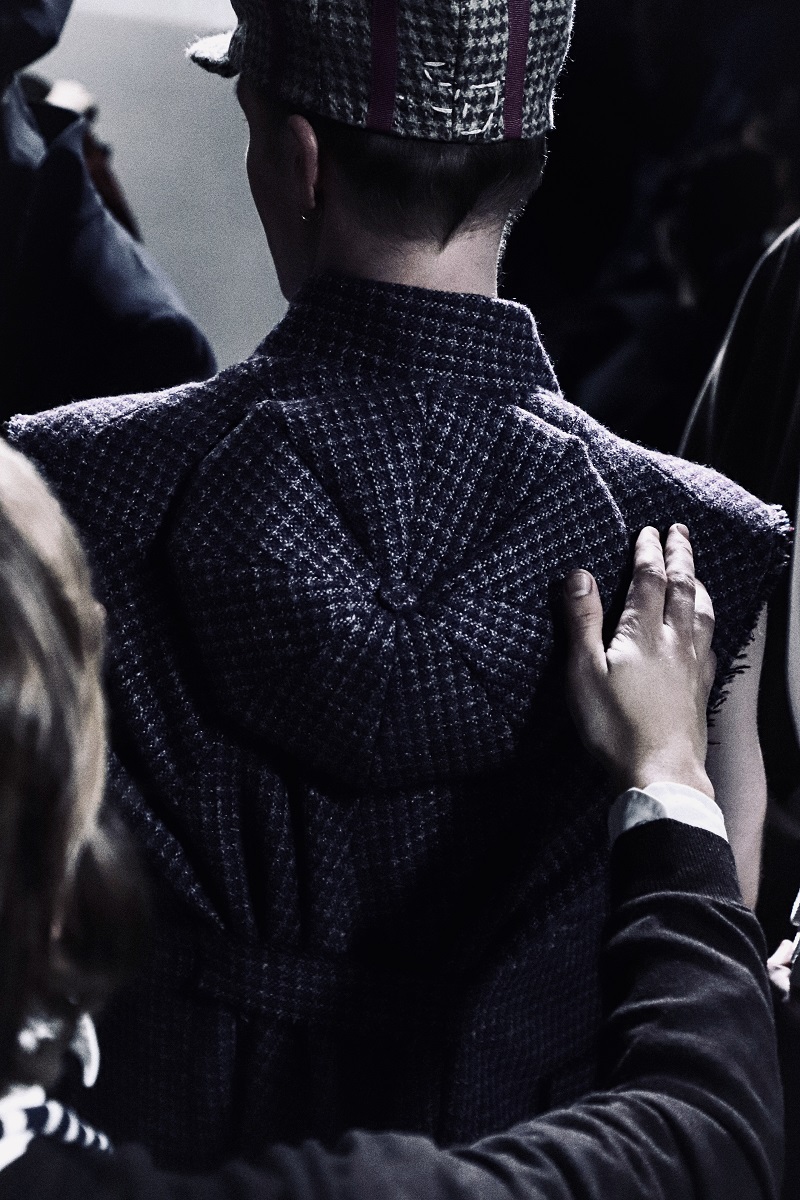
Hats are a frequent motif, but not solely as accessories for the head. Instead, hats become part of the paneling of several garments. “They emerge almost as a sort of appendage or a tumour to the garment,” he says. “It brings into question whether the garment is a hat or not. Or is it a jacket? I wanted the collection to be humorous while still having a serious side. It’s seemingly absurd, but it’s not.”
Editorial Guest Feature MA CENTRAL SAINT MARTINS SHOW
production
images LUCA BASS
autor WESLEY BRAY
Designers & Teams
designer IVAN DELOGU SENES
team @evrrtt
team @fuuuckingyoung
team @_isobeldickens
designer KAI GHATTAURA
stylist @finfo.r
casting @notyetalona
team @finfo.r
team @joshabramovich
team @moorhousehenry
team @levyzheng_1128
team @waritfutu
team @vitto.rtw
team @melkior.01
designer MACY GRIMSHAW
stylist @harry_lambert
stylist @naom_c
stylist @ellabacon
stylist @zazamcdonald
casting @nachumschonn
casting @maryzhang_22
wigs design @Ujjal.patelll
designer MÈ MÈ YIN
assistant @estephanie_____
assistant @yunzelil
assistant @imemiled
assistant @van.vau
designer CLAY HATTAM
assistant PARIS RYAN
fit model TOBIAS HOWARD
SHOW
hair and make-up @adamreed
hair and make-up @lorealpro
MA Fashion Design Central Saint Martins @mafcsm
MA Fashion Image Central Saint Martins @ma_fc_csm