November 14, 2026
The Body as an Unfiltered Self, Elsa Rouy
Elsa Rouy rejects idealized femininity, portraying the body as something deeply human-imperfect, vulnerable, and powerful in its ability to reveal hidden emotional states.
Born in 2000, Rouy graduated from Camberwell College of Arts in 2021. Her career gained momentum shortly after graduation when London’s Guts Gallery began championing her work, introducing her practice to a wider audience. Since then, Rouy has rapidly emerged as one of the most distinctive young voices in contemporary painting, with exhibitions across London, Antwerp, Valencia, and Berlin.
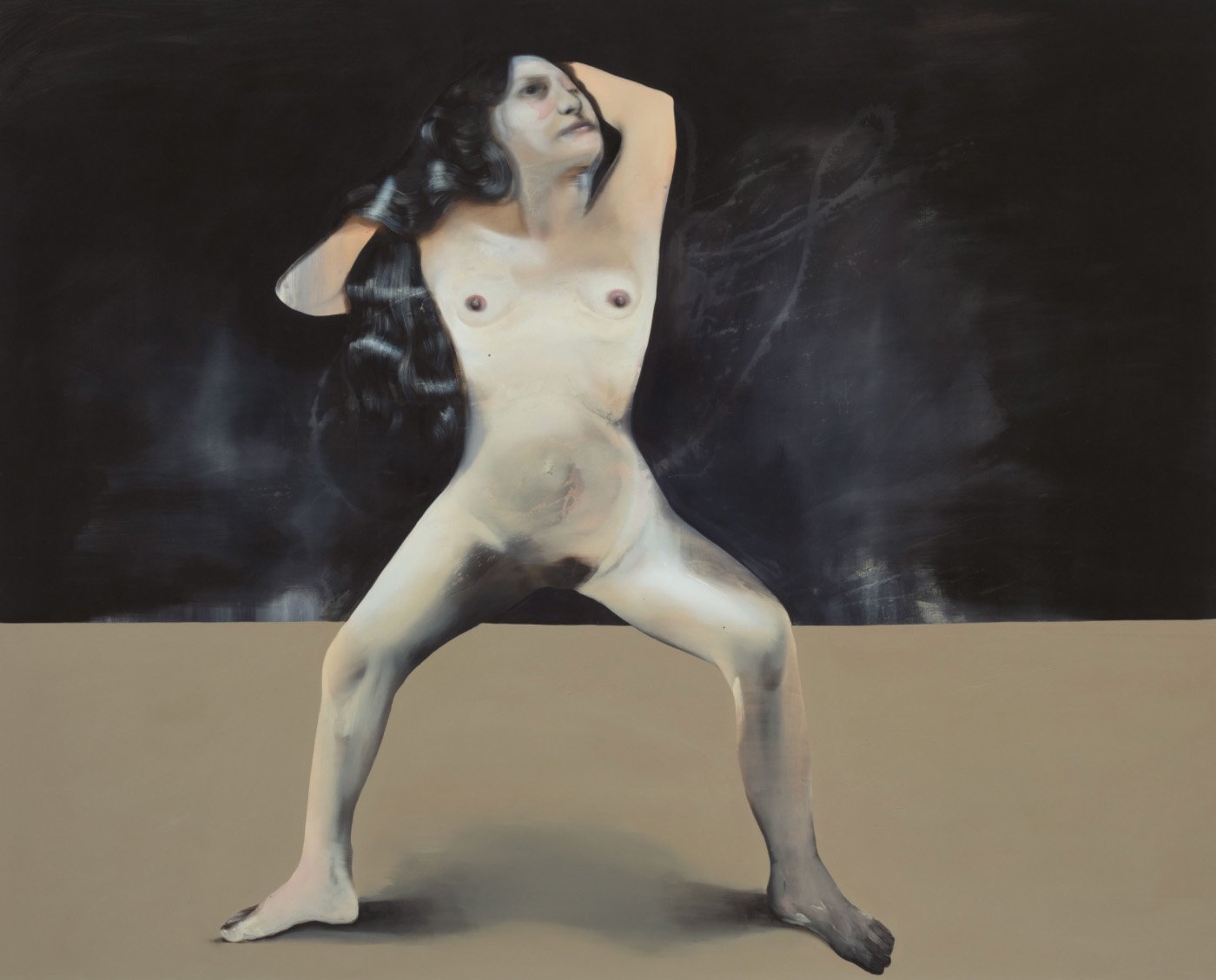
Working primarily in acrylic, she explores the psychological and physical dimensions of the body, drawing from observation, memory, and lived experience. Her paintings examine womanhood as a fluid and constantly evolving state, shaped by desire, vulnerability, intimacy, and transformation.
AY: There is a distinct current of female rage in your artworks-an ancestral, elemental kind of energy. How does that feeling interact with your work?
ER: There’s something exciting about female rage. Whenever I feel it, there’s an uncontrollability to it that ultimately feels empowering. Society constantly expects women to be passive, palatable, or at least likable. When you aren’t, it creates intense internal tension. Men are allowed to express those darker, violent urges, whereas women are conditioned to silence them, leading to internalized anger. The paintings become a safe space to process those very dark areas that people are often scared to confront.
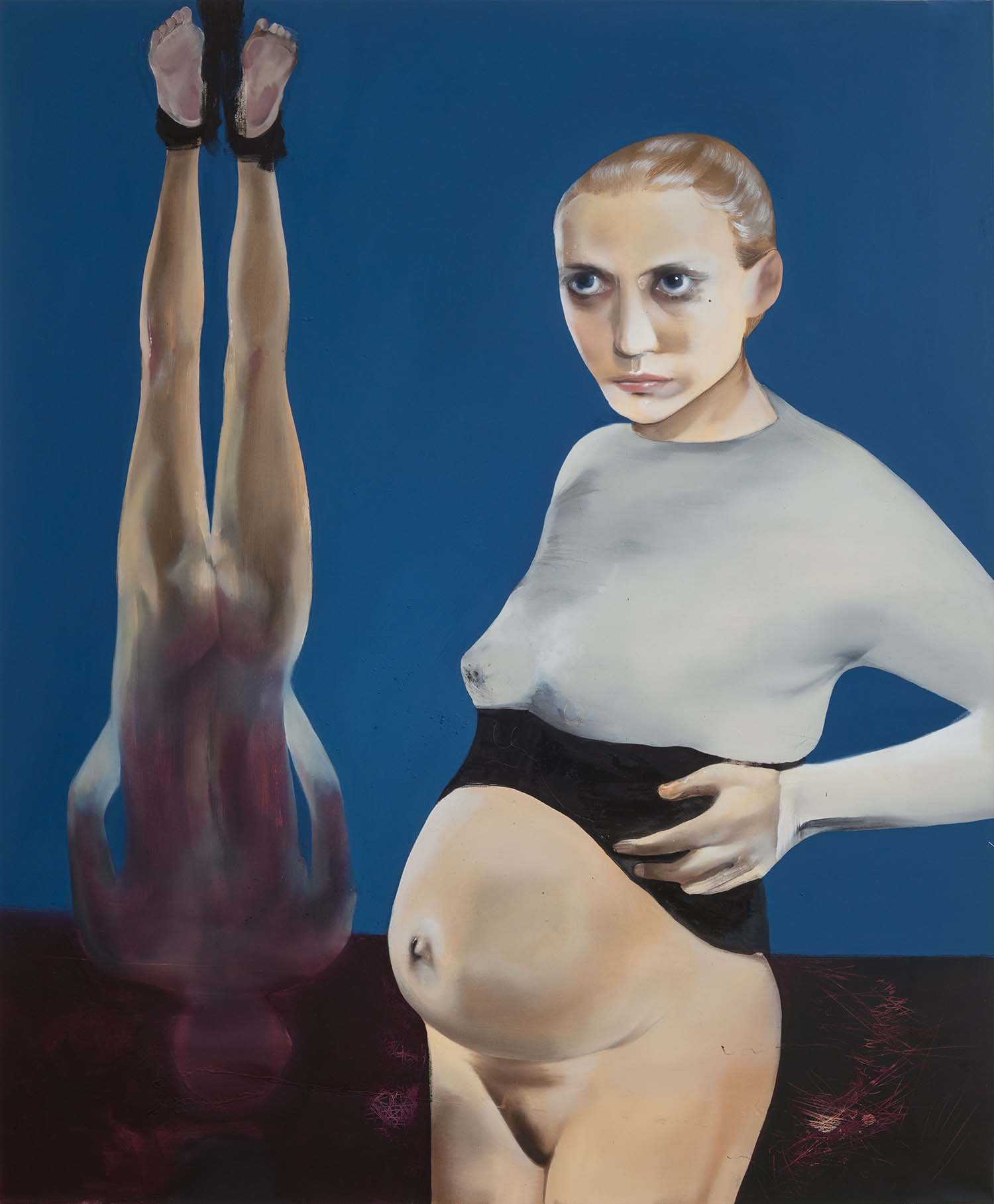
The Glory, 2025, Acrylic and water-based printing ink on canvas, 170×140cm
AY: Your figures often appear exposed, almost unable to defend themselves from external forces. Is vulnerability something you see as a weakness of the body, or as a fundamental part of being human?
ER: The body is inherently very vulnerable. A lot of societal issues stem from a refusal to accept that vulnerability. You can control so much, yet external forces constantly remind you that you ultimately hold very little control over what happens next.
Instead of fighting against that, the figures in my work become the vulnerability. I don’t set out with the intention to create «empowering» art; want to make work that feels real and emotional. But by exposing that vulnerability and embodying it to an extreme state, it ends up creating an empowering image. Most of us aren’t comfortable sitting with our own fragility, but accepting it transforms it.
AY: You’ve mentioned a certain masochistic quality present in some of your pieces. What does that process mean to you?
ER: Sometimes when I paint, I’m trying to work out a feeling of masochism-an inwardly directed intensity. It’s a sense of destroying yourself, but through that destruction, rebuilding yourself anew. You break it down to create a new thing.
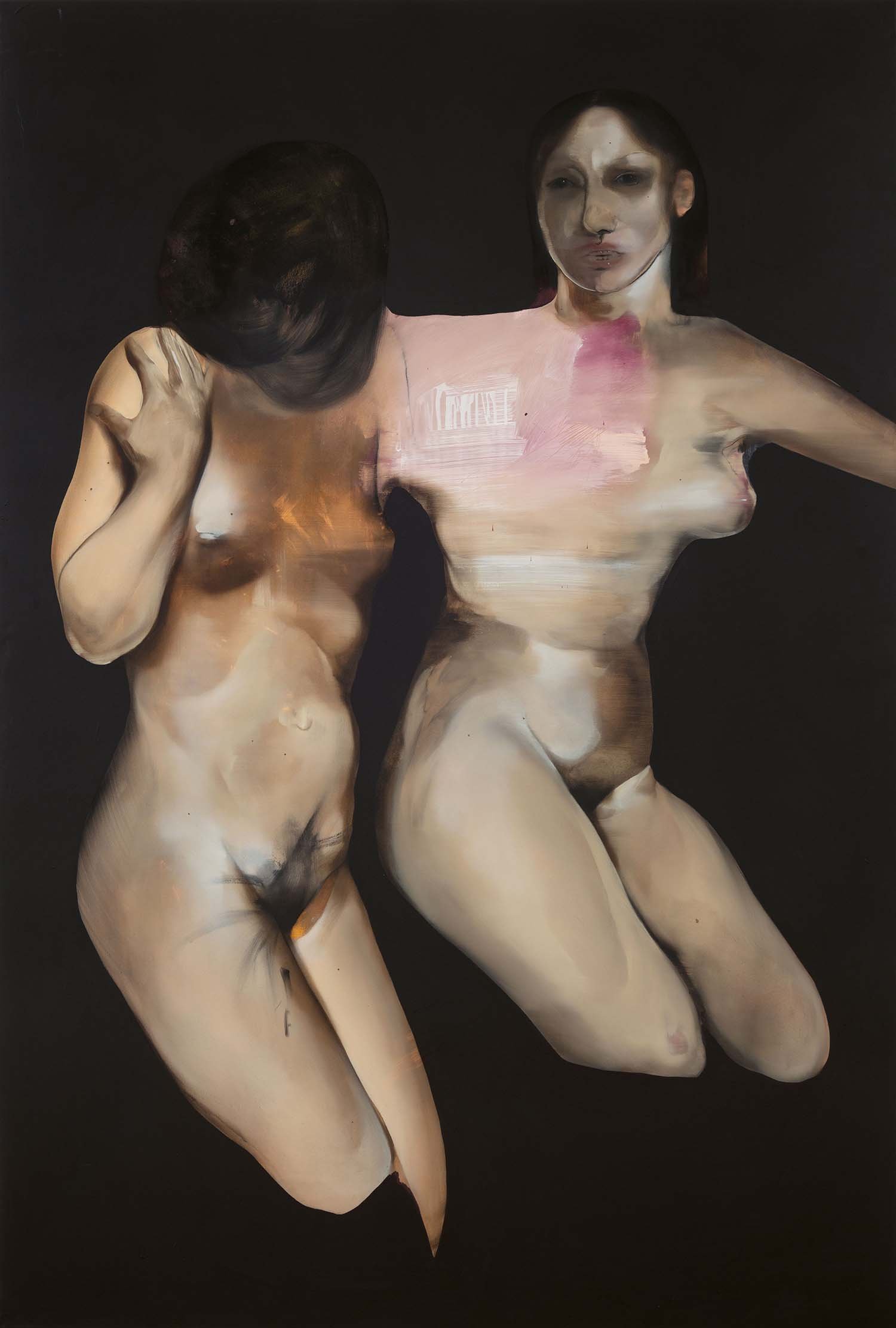
Smart, witty, mysterious, engaging, hot, unique, cute, charming and clean, 2025, Acrylic and charcoal on canvas, 240×160cm
AY: When you step away from the canvas and out of the studio, how do you find balance? What brings you that sense of wholeness?
ER: I love quiet, focused rituals. I do Sudokus and crosswords, and recently took up fencing. I’ve never been a sports person, but fencing requires total mental engagement and exists entirely outside the art world. The high after a session is incredible. I’m also obsessed with birdwatching using the Merlin Bird ID app, and I love cooking. I’ll spend four hours preparing a dish. Studio work is very solitary, so cooking feels similar-you create something in isolation, but then you get to open it up and share it with people over a glass of wine.
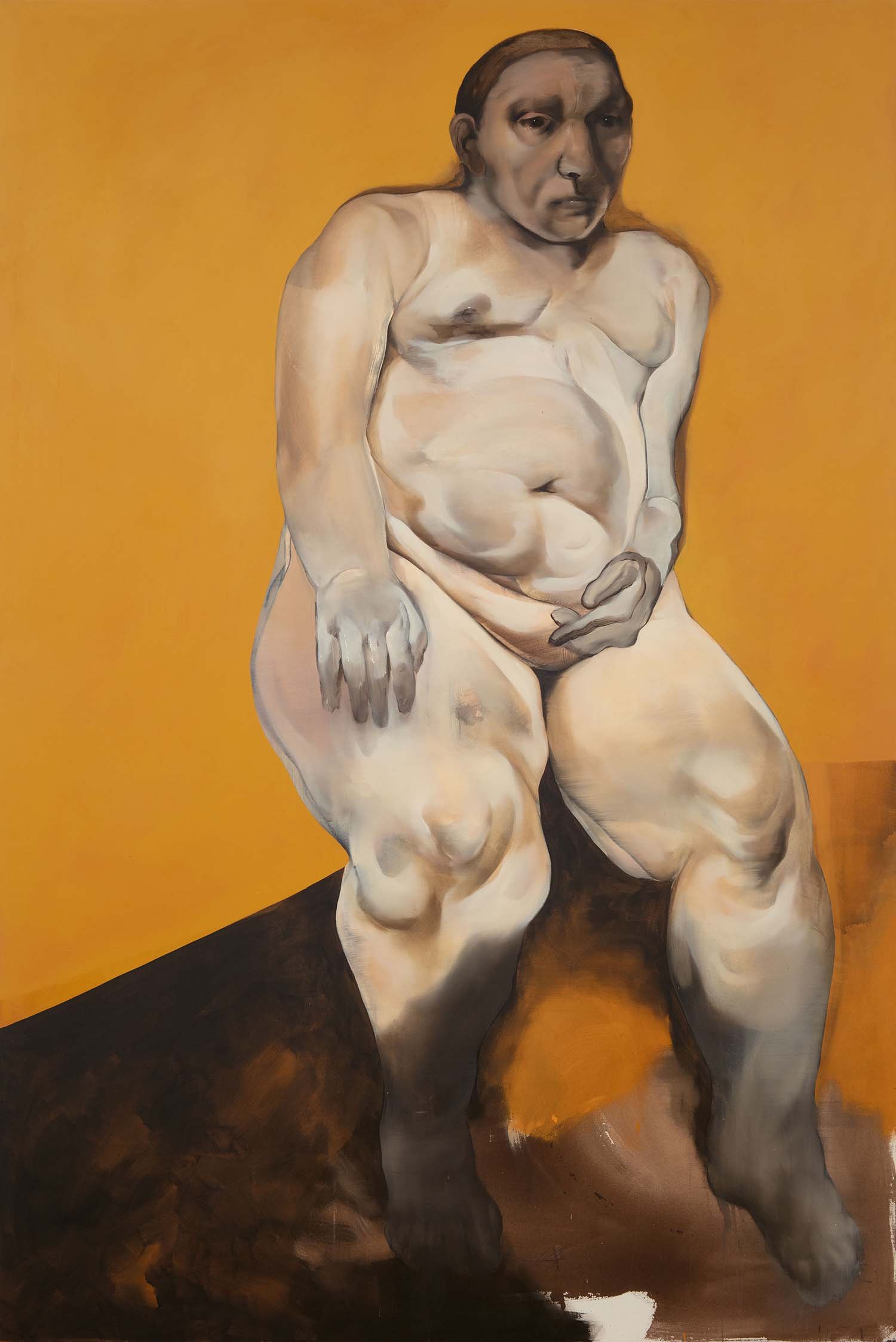
Soft-hearted figure, 2025, Acrylic and charcoal on canvas, 240×160cm
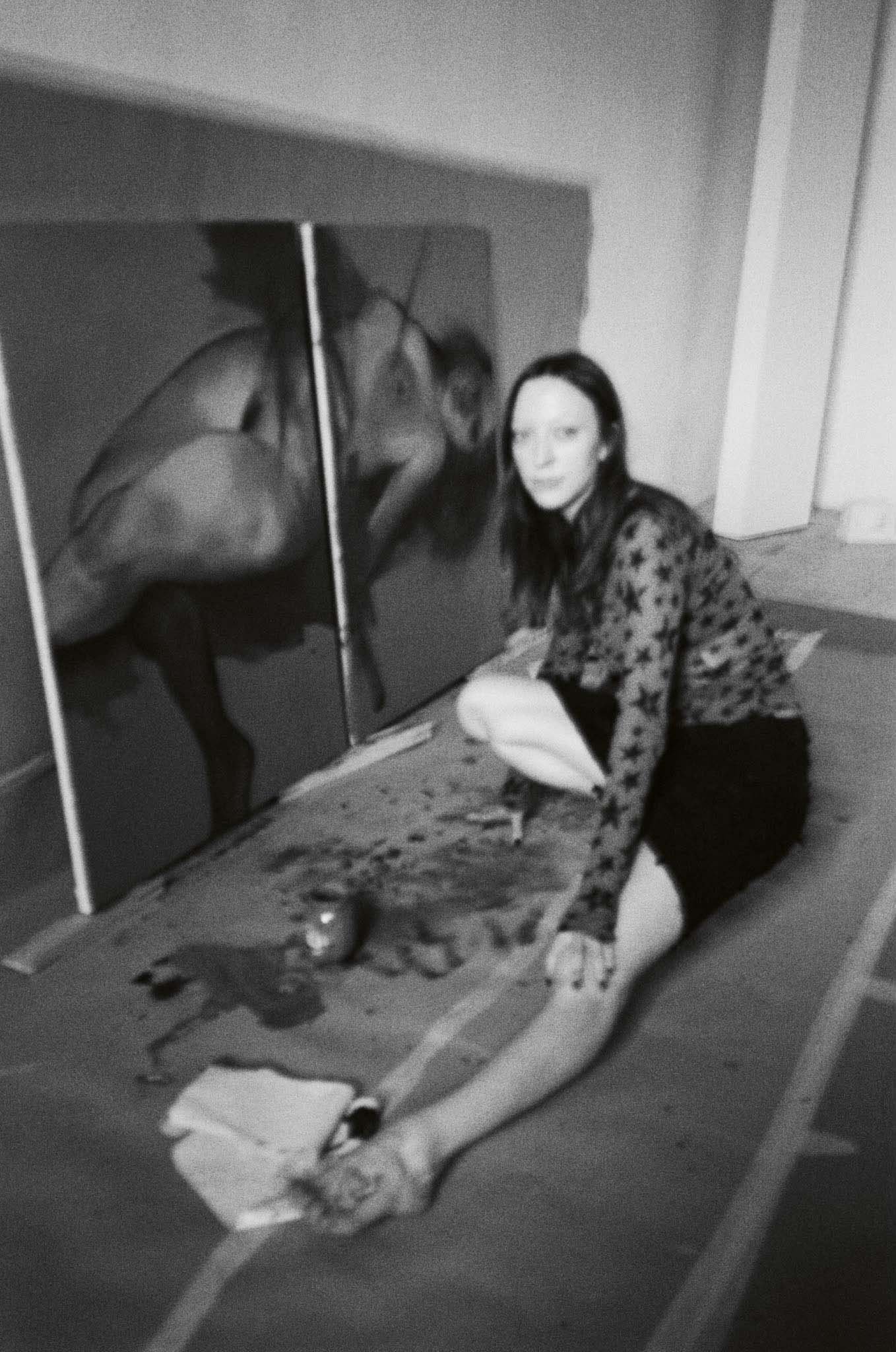
portrait GEMMA JANES
AY: Themes of motherhood and the physical body run deeply through your work. Where does your perspective on that transition come from?
ER: A lot of it comes from observation, my relationship with my own mother, and a deep awareness of the body. I’ve always been hyper-aware of physical shifts. Much of the media surrounding motherhood minimizes the actual human experience of it, framing it as this purely divine, saintly thing where the woman loses her autonomy.
I wanted to paint an alternative view grounded in the reality of having a body go through a massive physical process without losing your core identity. Watching my close friend go through pregnancy recently reaffirmed that. She hasn’t lost herself at all. The body changes, but the human inside remains fully intact.
After speaking with Elsa Rouy, one returns to her paintings with a different understanding of their intensity. Beneath their raw physicality lies a deeper investigation into what it means to be human: to desire, to resist, to transform, and ultimately to accept vulnerability as part of existence.
Rouy’s work offers comfort through recognition. Her canvases remind us that wholeness does not come from erasing our contradictions, but from embracing them.
Author ANASTASIA YOVANOVSKA
Images COURTESY OF THE ARTIST and GNYP GALLERY