

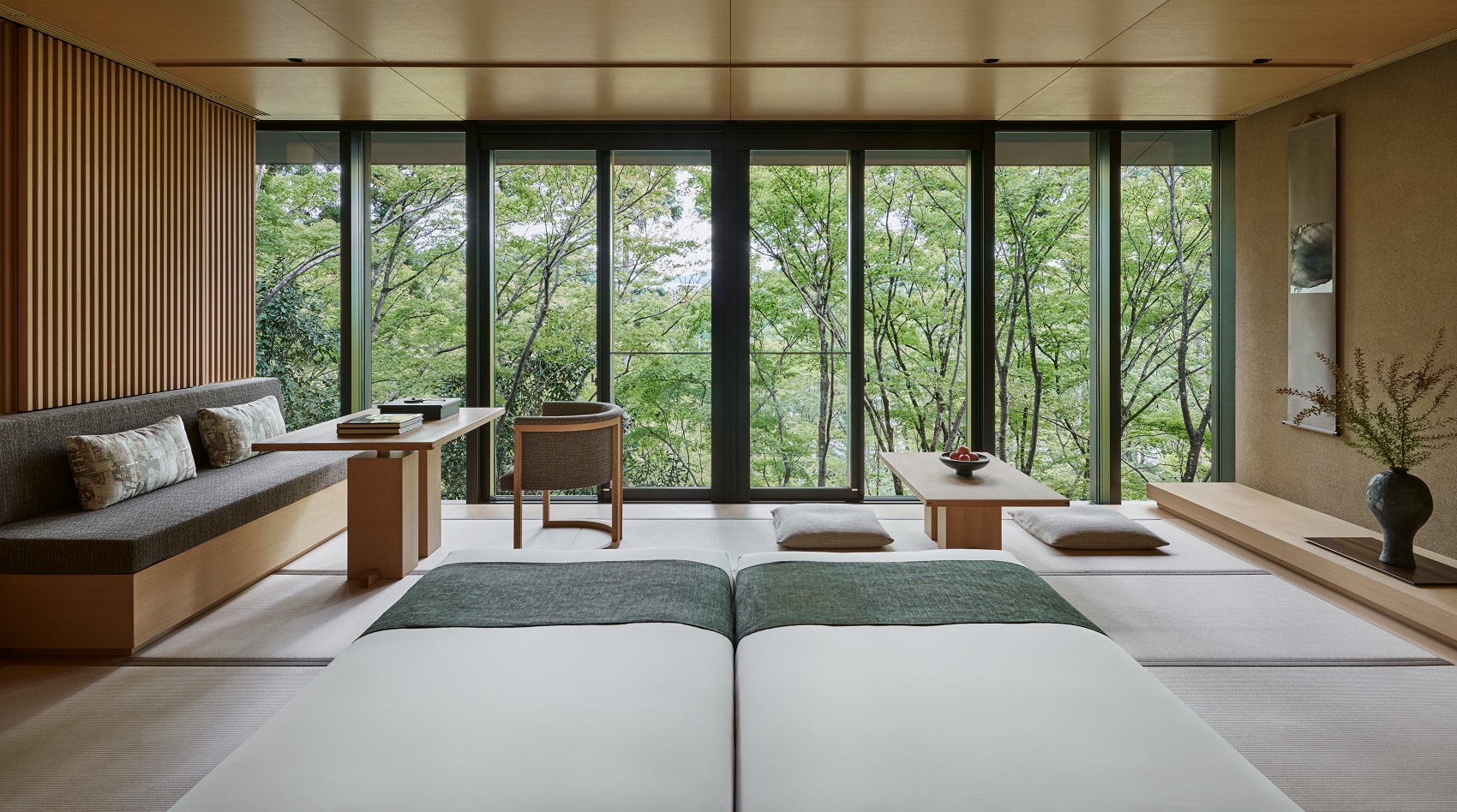
The Art of Stillness – Aman in Japan
There are places that you don’t simply visit — they unfold around you, like a slow exhalation. Japan is one of them, and Aman has distilled its essence into three sanctuaries that reimagine luxury not as opulence, but as stillness made tangible.
Aman, in its Japanese trilogy, has done what few Western minds ever could — it has translated the country’s invisible language of calm into architecture, into air.
Each of its sanctuaries — Aman Tokyo, Aman Kyoto, and Amanemu — is less a destination than a state of grace. Together they form a cartography of serenity — a pilgrimage for those who seek not comfort, but clarity
Aman Kyoto — Moss, Silence, and the Art of Impermanence
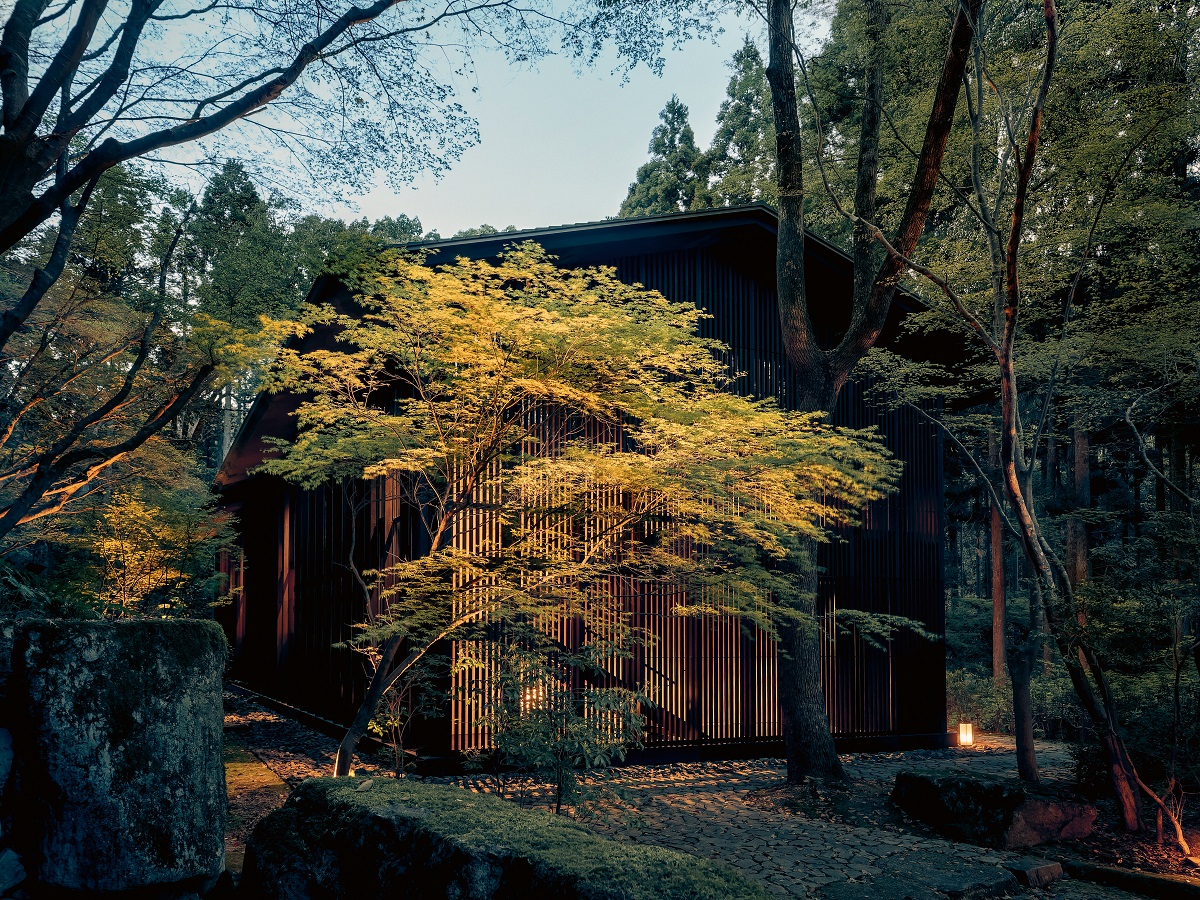
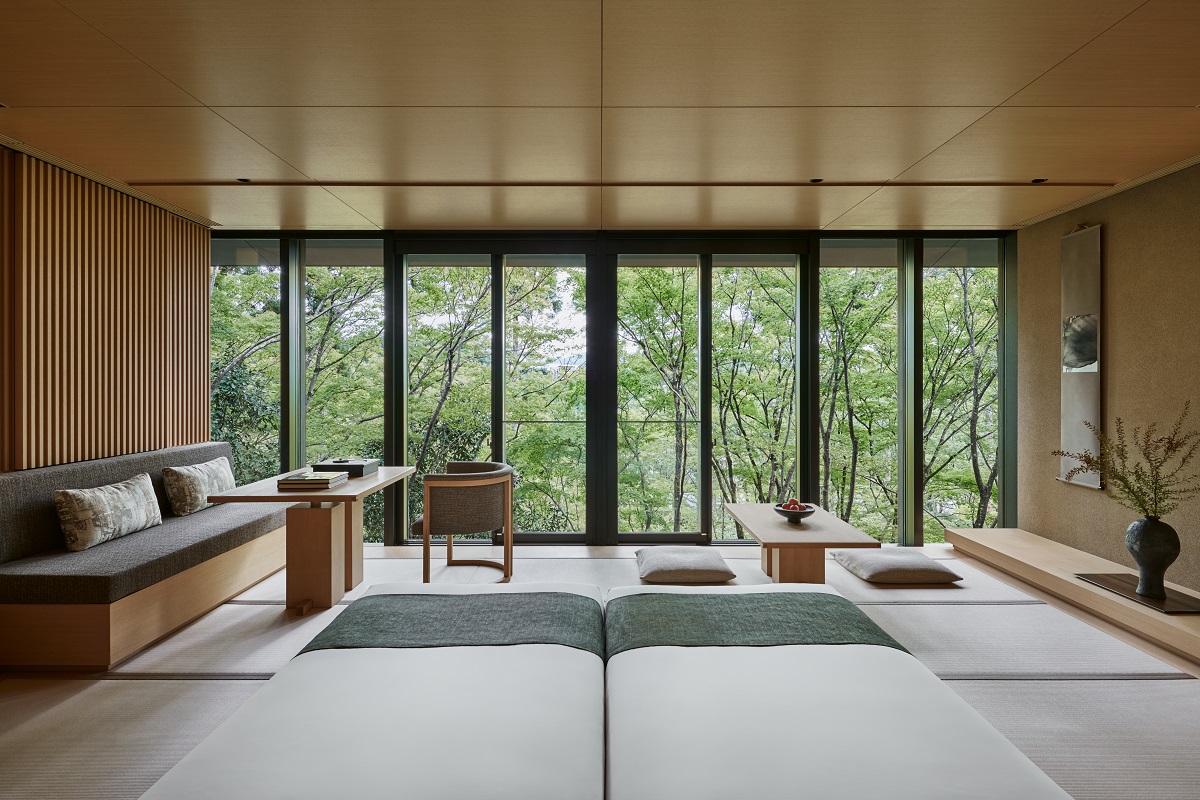
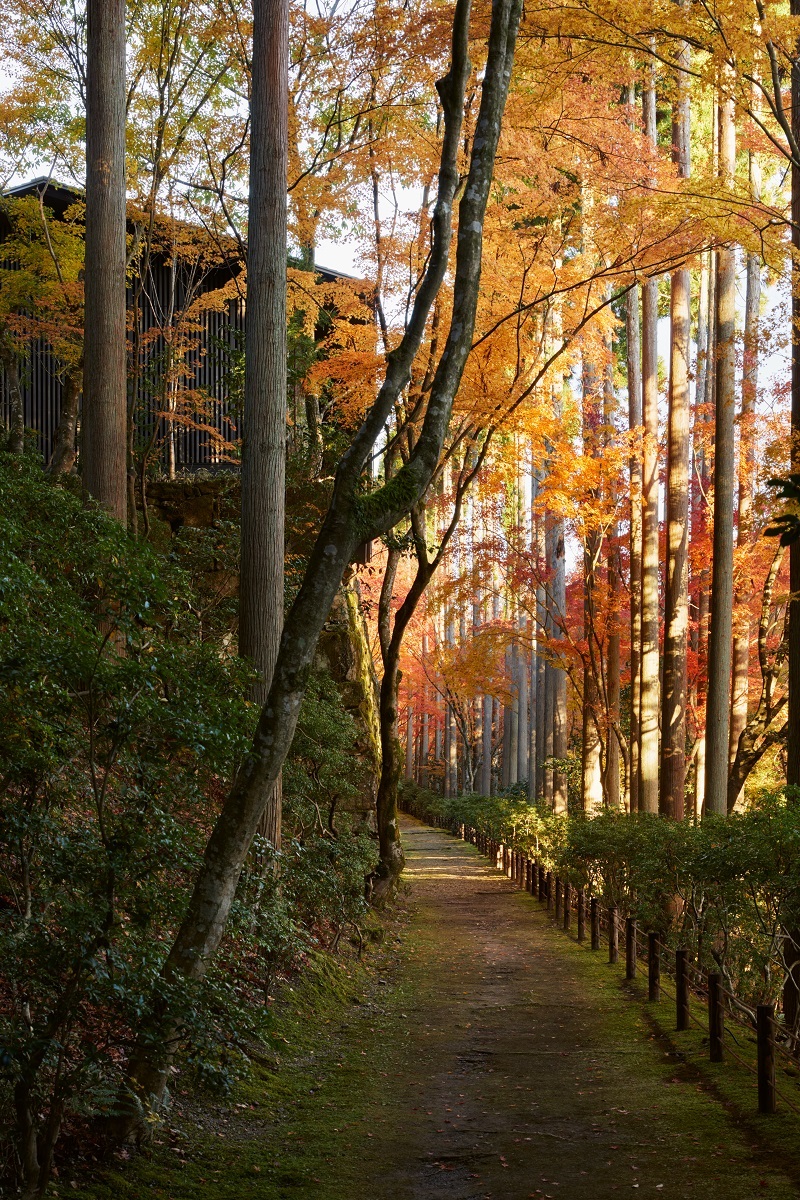
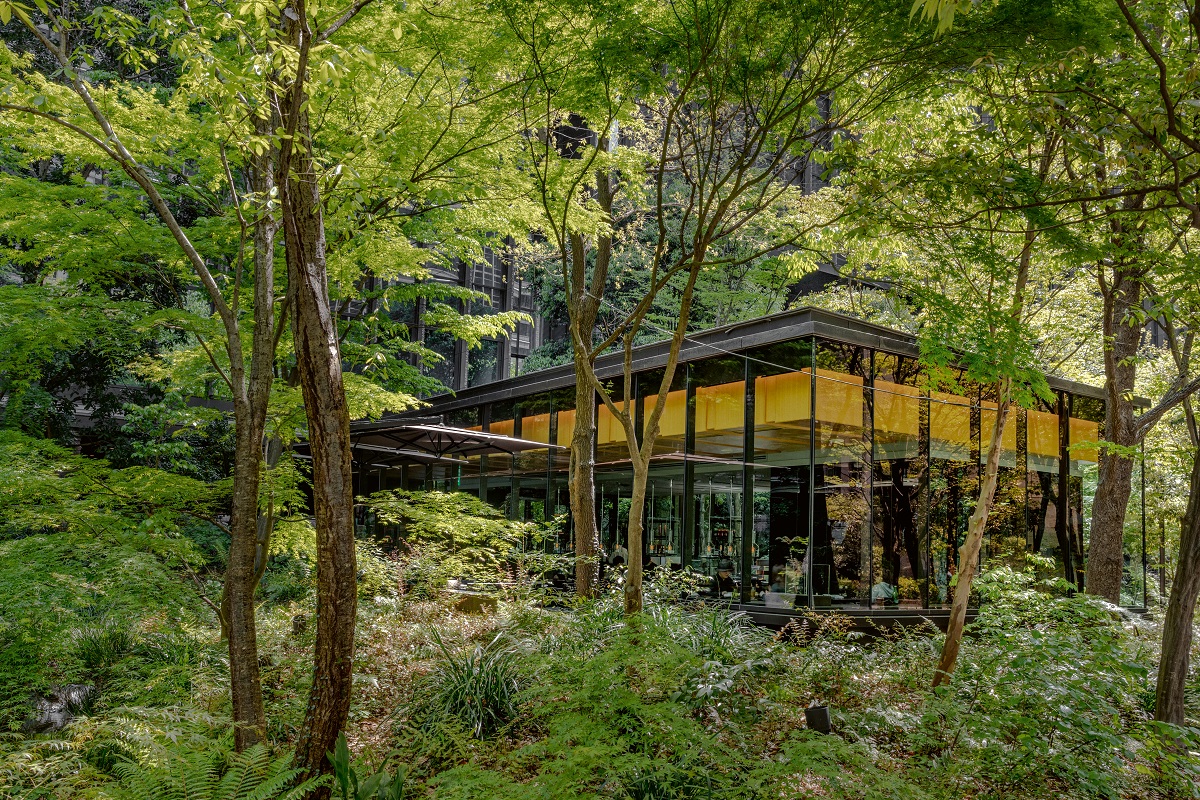
If Tokyo is the mind, Kyoto is the soul. Hidden within the forested folds of the Hidari-Daimonji Mountains, Aman Kyoto exists as a whisper of architecture — a series of minimalist pavilions built within a once-forgotten secret garden. It is both retreat and revelation: tatami underfoot, hinoki in the air, glass framing trees that have seen centuries pass without hurry.
Each room is a composition in restraint. The tokonoma alcoves hold a single ikebana stem, and the hinoki bathtubs open to moss-covered gardens where wind moves like breath over still water.
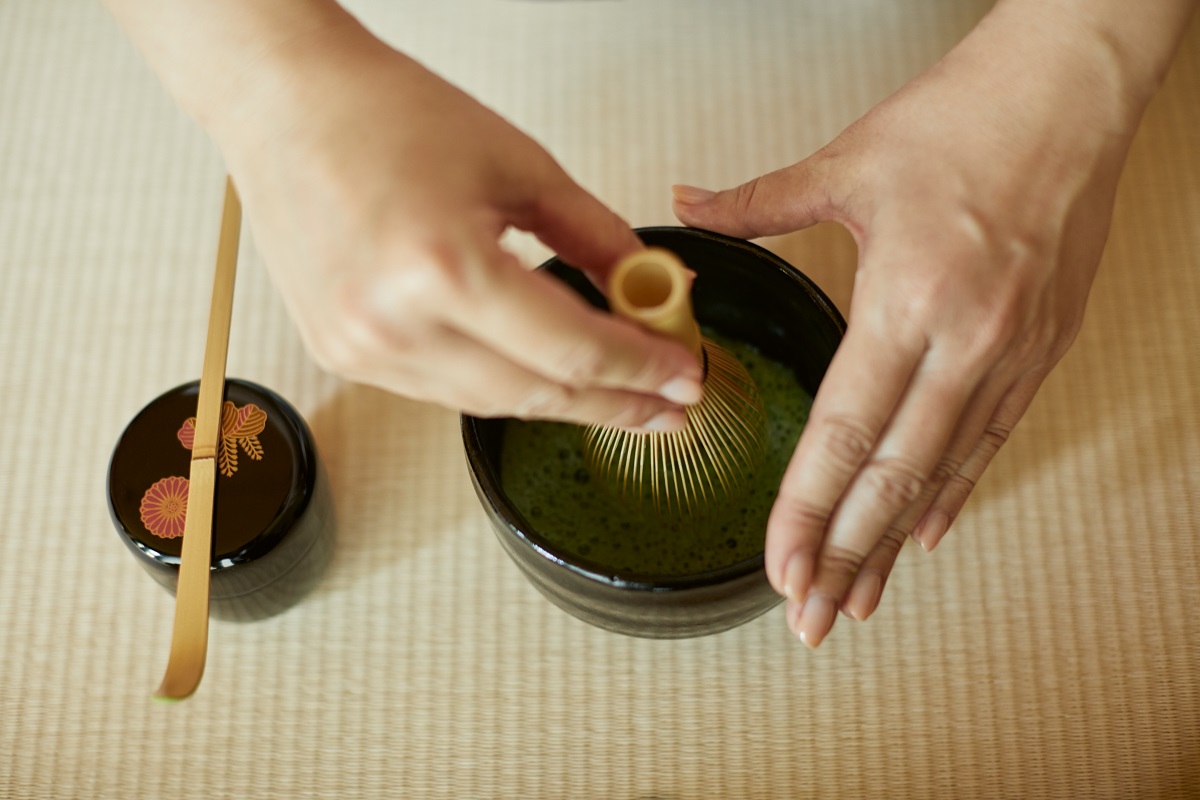
At The Living Pavilion by Aman, culinary art finds its purest form. Kyoto’s mountain vegetables and miso meet contemporary refinement — a dance of season and simplicity. Meals end by the hearth, where tea is poured slowly, deliberately, in the light of amber flames.
The Aman Spa is a hymn to nature: green tea and camellia oil restore the body, while onsen baths steam beneath soft rain.
And in the surrounding hills, the rhythm of Kyoto unfolds — temples, torii, and 17 UNESCO
World Heritage sites, each within reach yet impossibly far from noise.
Here, luxury isn’t served— it’s observed.
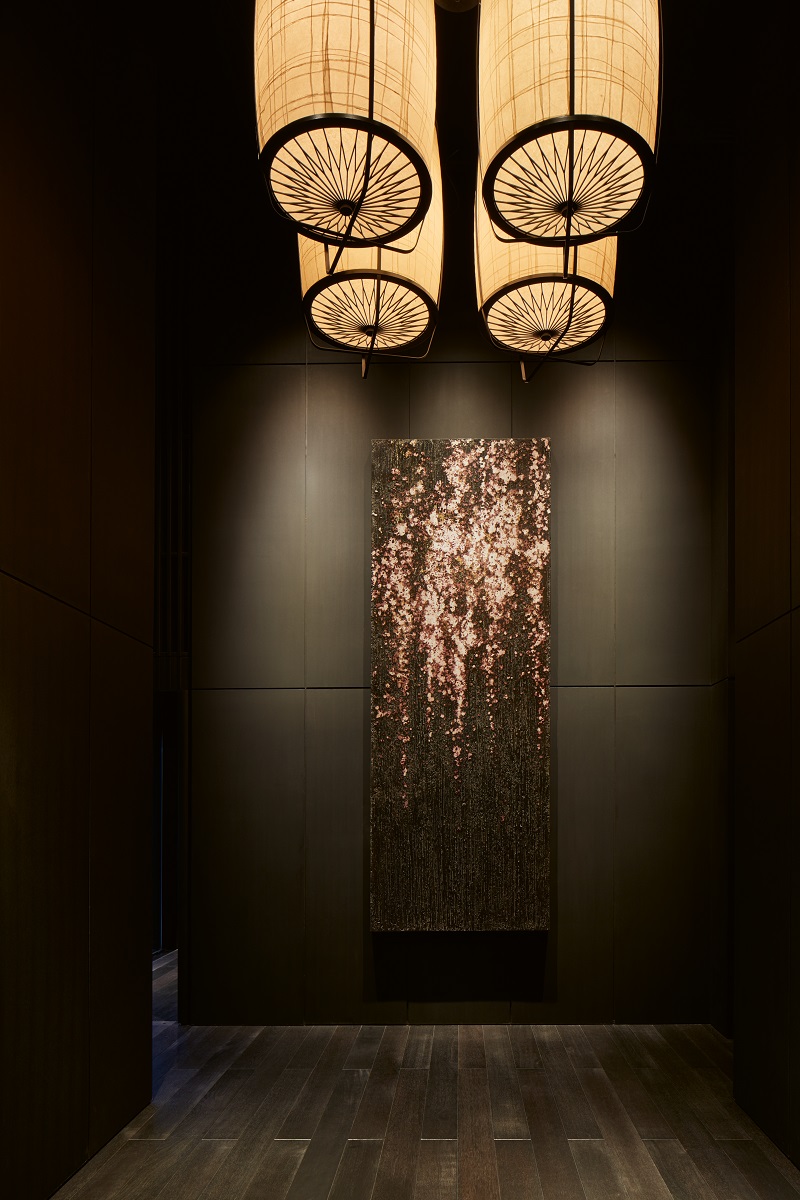
Aman Tokyo — Where the Sky Learns Serenity
It begins high above the Otemachi skyline, where Aman Tokyo hovers like a temple between heaven and earth. Designed by Kerry Hill, the lobby rises thirty meters, a cathedral of shadow and light — tatami tones meeting slabs of granite, hinoki wood diffusing its scent through a space that feels both sacred and effortless.
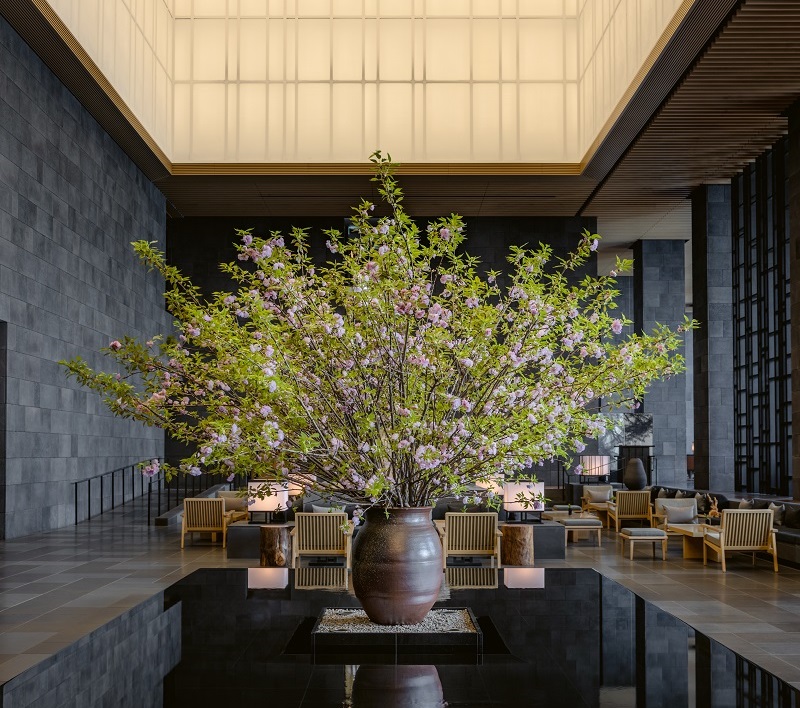
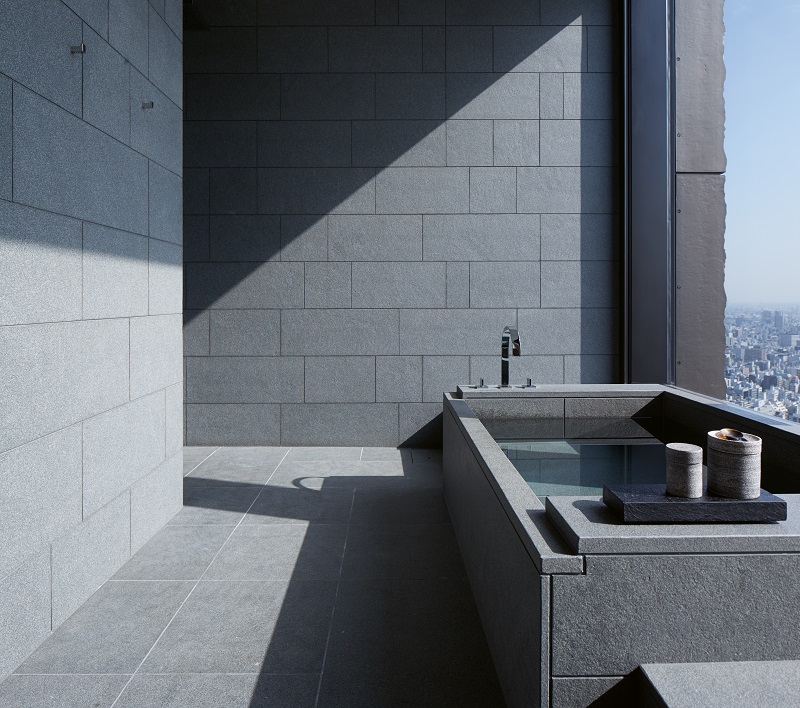
Ten years have passed since Aman’s first urban retreat opened its doors, yet time here feels circular. In the morning, the city glows through shoji-inspired windows. By evening, the skyline burns gold.
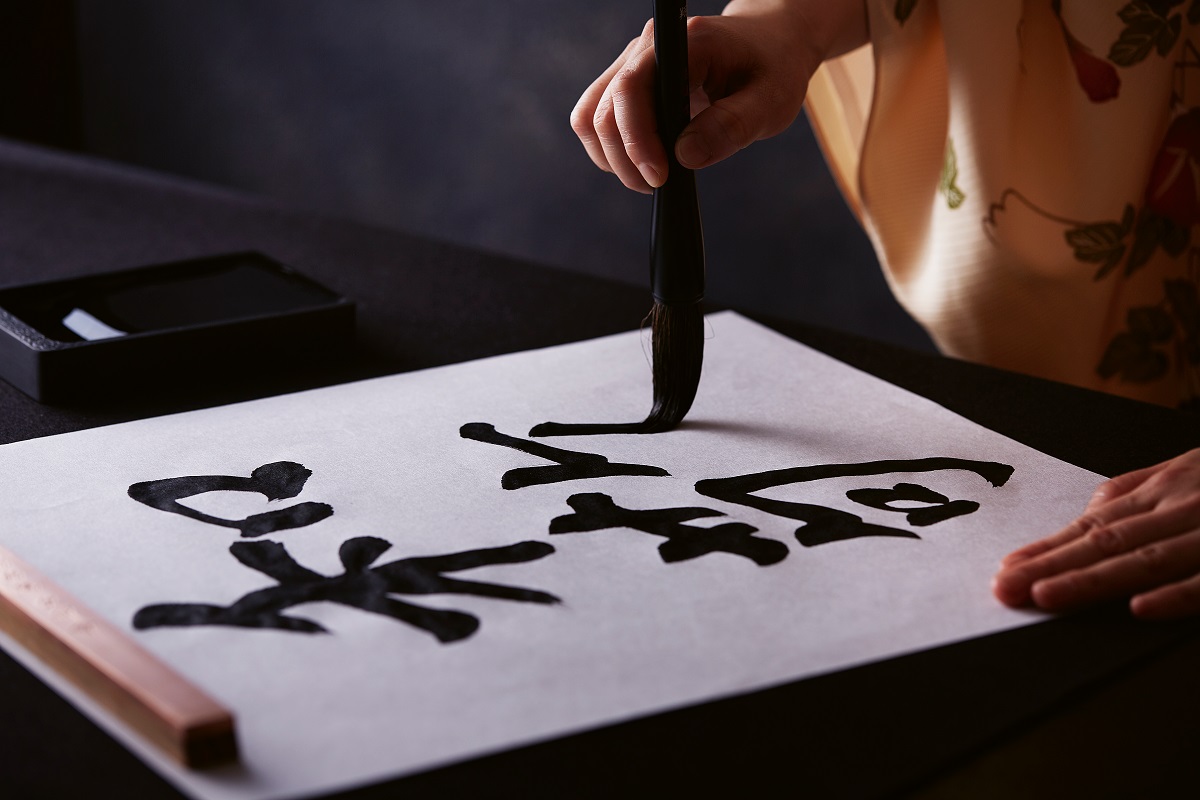
The anniversary brings curated gestures that honor a decade of quiet revolution: the 10th Anniversary Afternoon Tea at The Lounge — black sesame scones, miniature choux, and glossy sweets echoing the architecture’s obsidian palette; and the Aperitivo River Cruise, where Champagne and caviar are served as the Sumida River reflects the pulse of the city below.

At Musashi by Aman, sake flows in crystal glasses — brewed from rice personally cultivated by Chef Musashi — each sip carrying a note of precision and patience.
Amanemu — The Spirit of the South
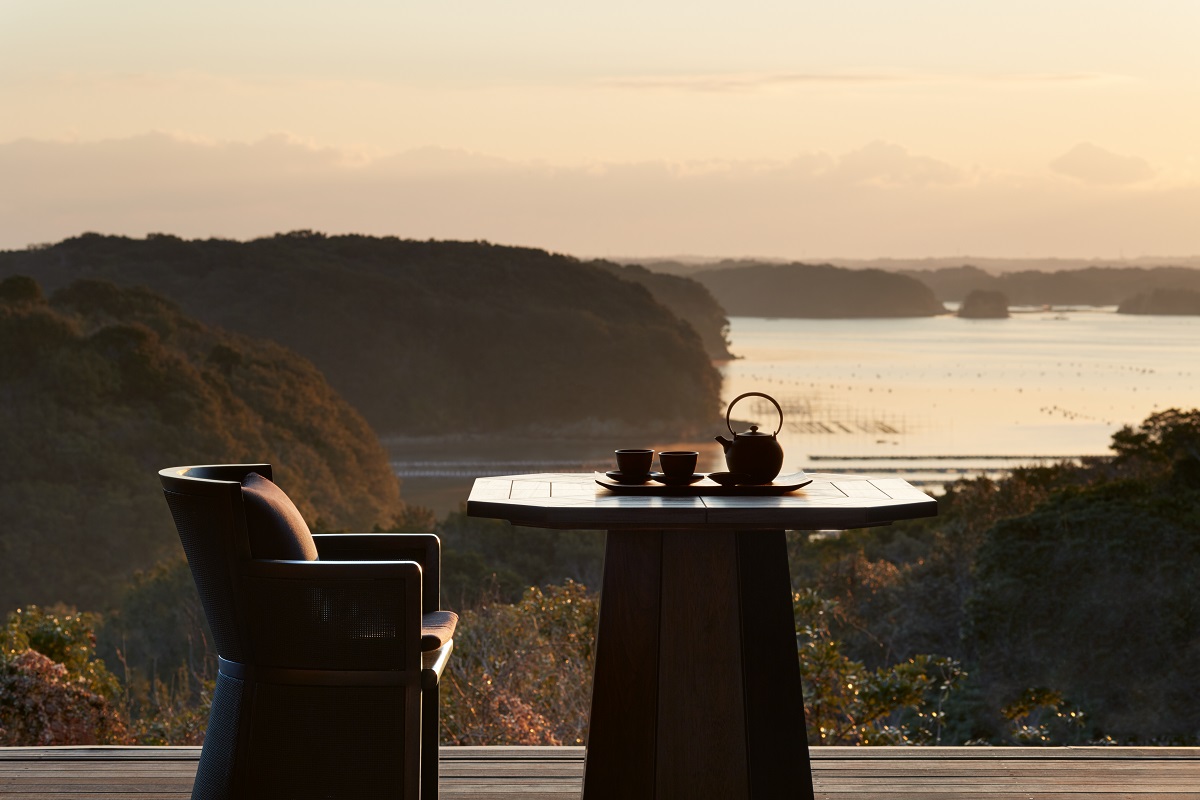
To the south, where Ise-Shima meets the sea and the wind still carries the breath of gods, stands Amanemu — the warmest whisper in the Aman lexicon. This is the land of Amaterasu, the sun goddess, whose radiance is said to have blessed these shores. Each sunrise here feels like the first one on earth.
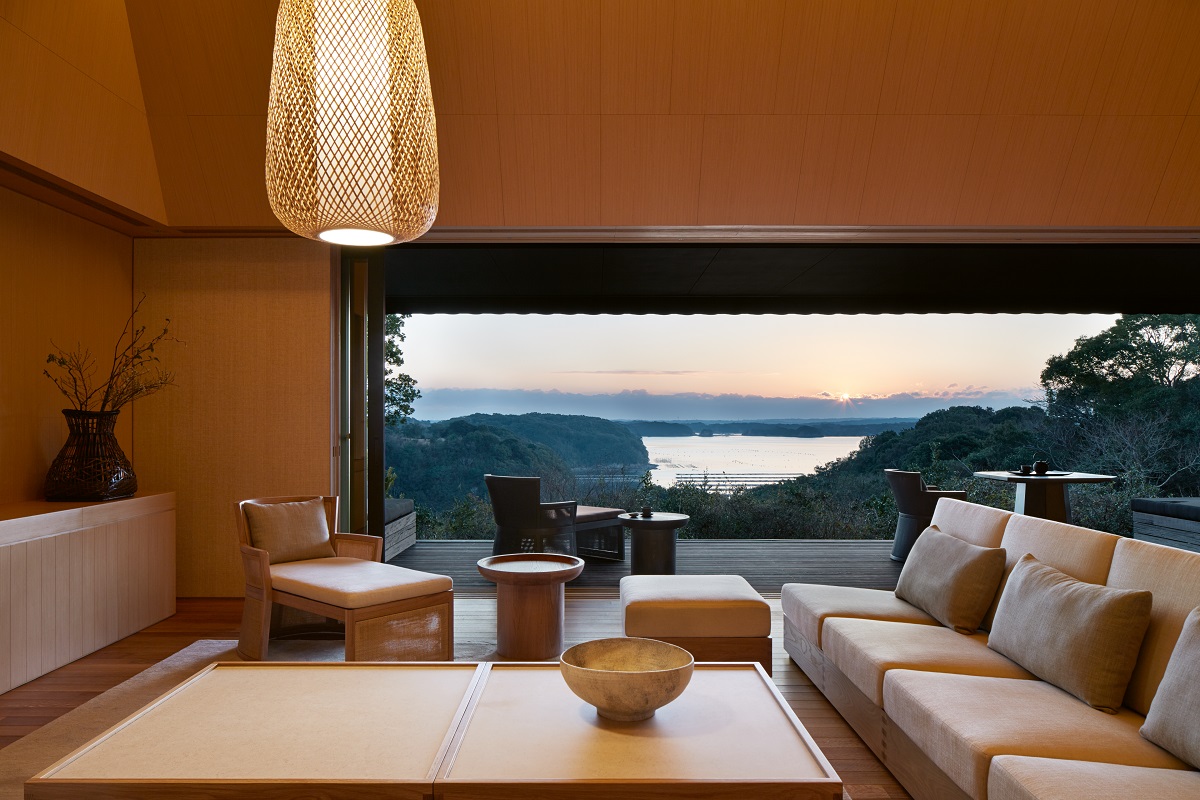
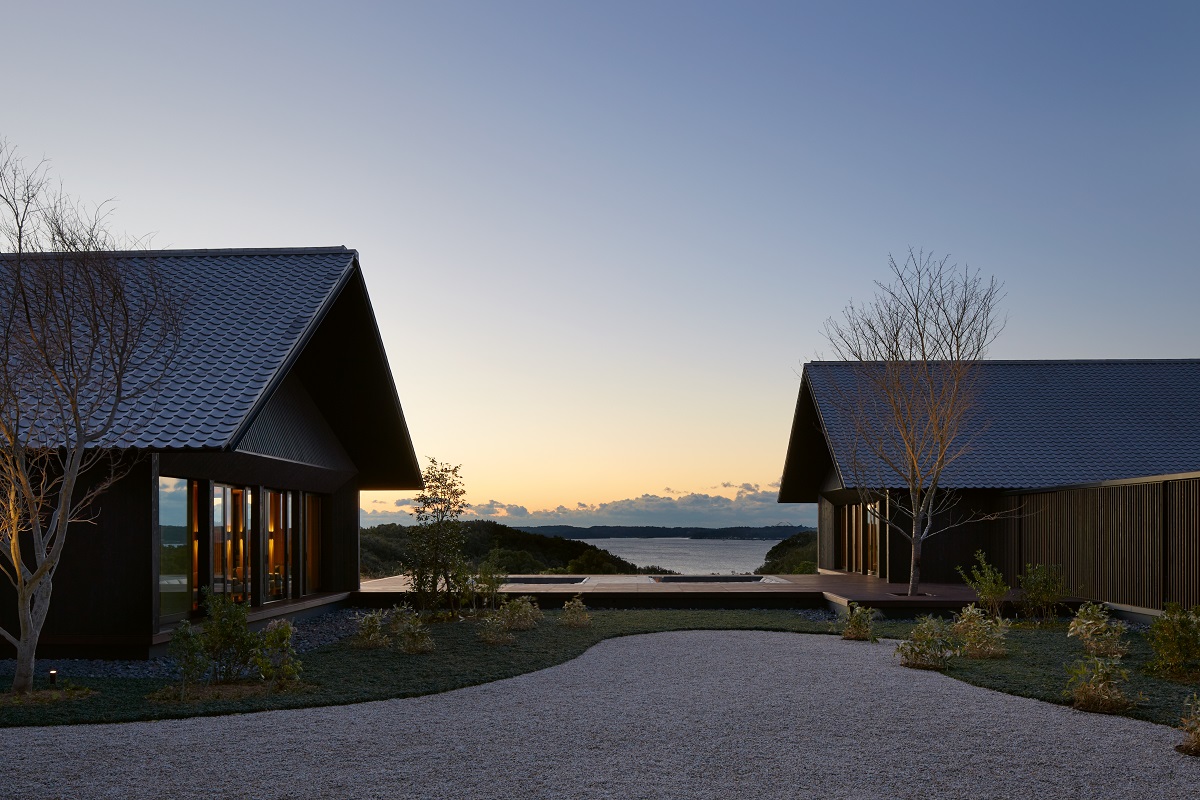
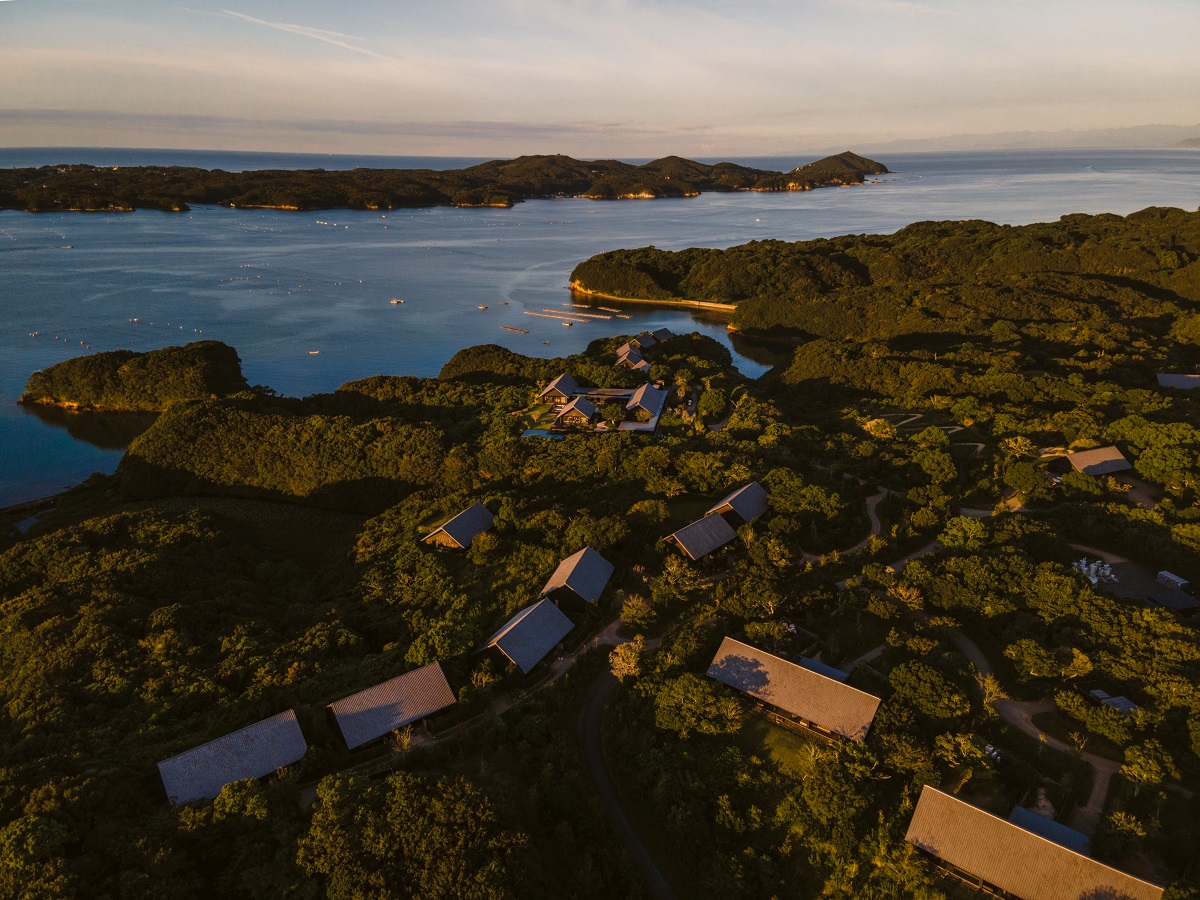
Set above Ago Bay, Amanemu rises from the ground like a Shinto shrine— humble, timeless, inevitable. Its architecture speaks of shizen, the Japanese reverence for naturalness: cedar beams weathered by salt, paper lamps glowing like fireflies.
The onsen waters, drawn from ancient springs, recall the bathing rituals of the Yamato emperors. Steam rises from cypress baths like spirits returning home. Each villa is a meditation on intimacy — wood, stone, and silence in perfect alliance.
Guests walk among the pines, practicing shinrin-yoku, forest bathing as therapy for the soul. In the evenings, Saishi Mai dances unfold like prayers, and fireworks bloom over the bay — each one a fleeting embodimentm of mono no aware, the beauty of things destined to
end. Amanemu is not a retreat. It is a return to origin — to heat, to humility, to breath.
Across its three Japanese sanctuaries, Aman weaves a narrative of contrasts — city and forest, ritual and design, body and soul. Each property is an essay in balance, crafted not to impress but to awaken.
At Aman, one doesn’t simply check in; one arrives —to the scent of hinoki, the geometry of quiet, and the unspoken understanding that true luxury lies not in abundance, but in awareness.
Because in Japan, and in Aman, stillness is not the absence of movement. It is a movement perfected.
author JVDAS BERRA
images COURTESY