
October 7, 2026
CHANEL Spring/Summer 2027: One House, Many Perspectives
There is something particularly interesting about Matthieu Blazy’s vision for CHANEL: he does not seem interested in defining what the CHANEL woman should be. Instead, he is interested in asking how many women she can become.
For Spring/Summer 2027, presented in Paris as “La Conversation – Part Three – Different Faces of the Same Coin”, Blazy continues his dialogue with Gabrielle Chanel through the idea of multiplicity. “Throughout their lives, women become multiple selves, different faces of the same coin,” he explains. It is perhaps one of the most revealing ideas behind his work for the house so far. Because this collection is not simply about revisiting the codes of CHANEL; it is about understanding how those codes can continue to belong to different women, different eras and different versions of the self.
What I find most compelling is the notion of a “layered history of selves within a layered history of clothing”. Gabrielle Chanel becomes the starting point, but not the destination. The young woman she once was, the designer she became, the woman who challenged the conventions of her time and the countless women who have worn CHANEL since are all present at once. Each look seems to contain a previous incarnation of the house, but transformed enough to belong to the present.
This also makes me think about the women chosen to inhabit these clothes. Blazy’s approach to casting feels increasingly interested in individuality rather than in the idea of a single, recognizable CHANEL archetype. Different faces, backgrounds and energies bring different readings to the same house codes. The model is not simply there to display the garment; she becomes part of its meaning. In that sense, the casting becomes another form of reinterpretation: CHANEL is not one woman, but many women looking at the house from different perspectives.
And perhaps this is precisely what makes the collection feel increasingly alive.
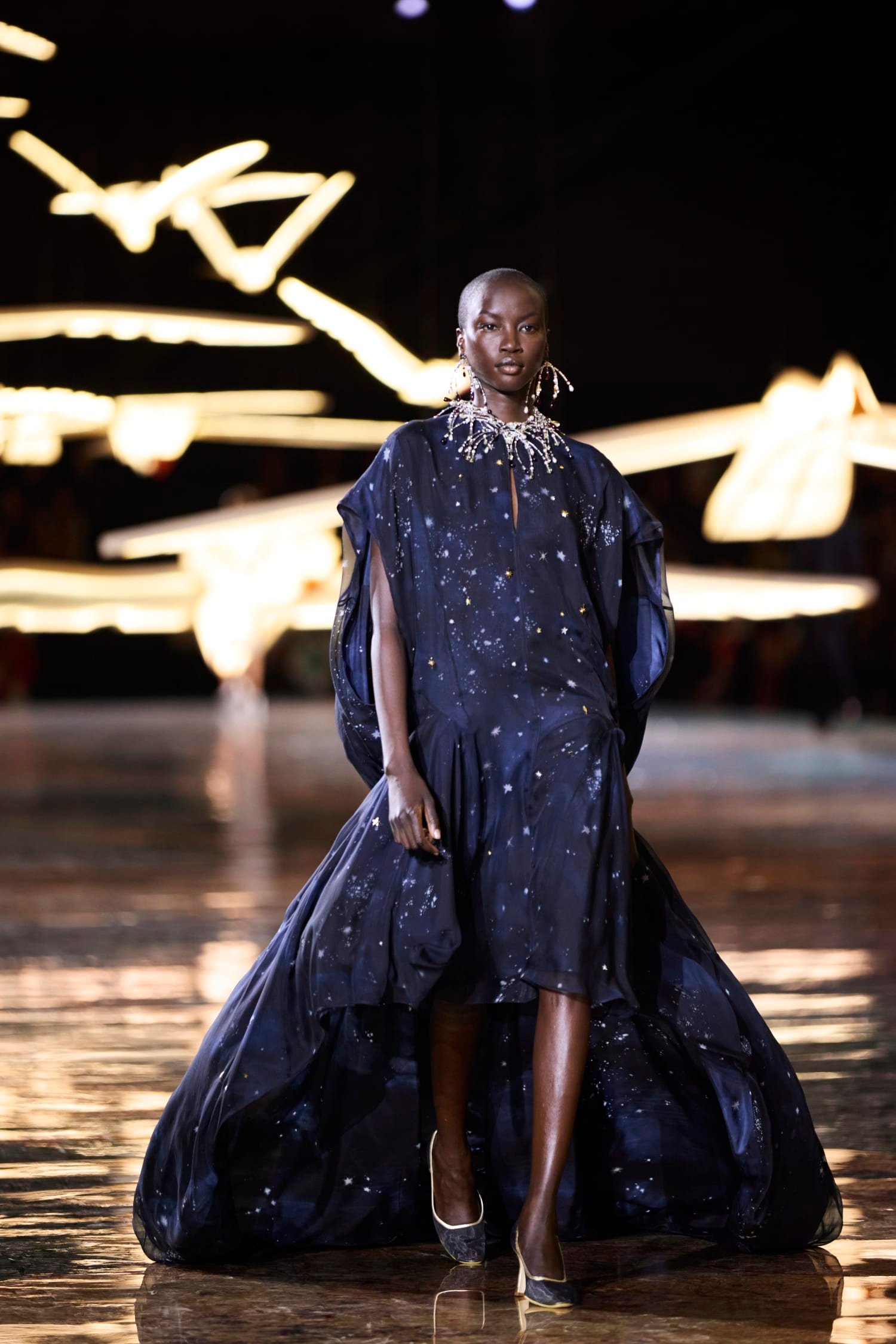
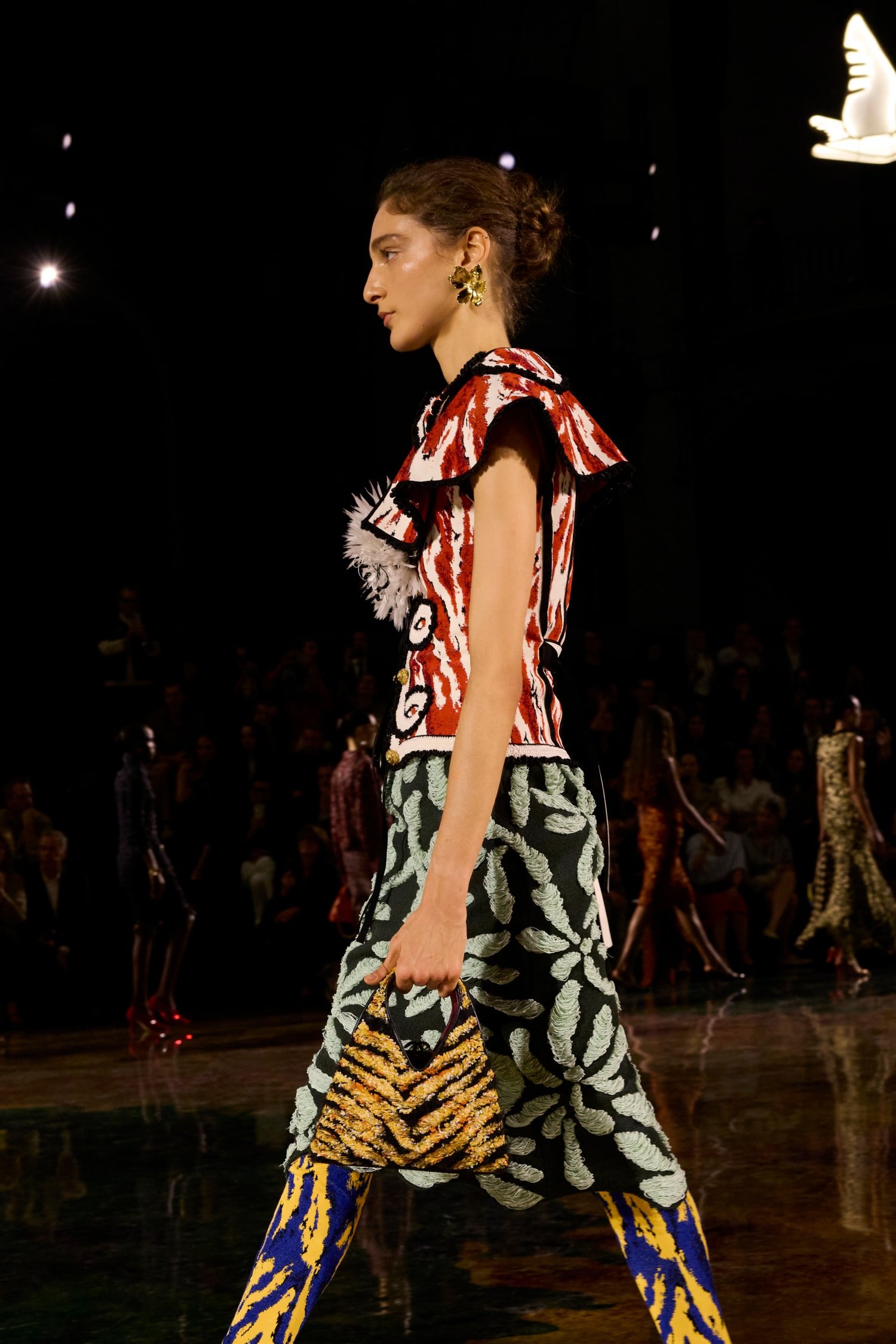
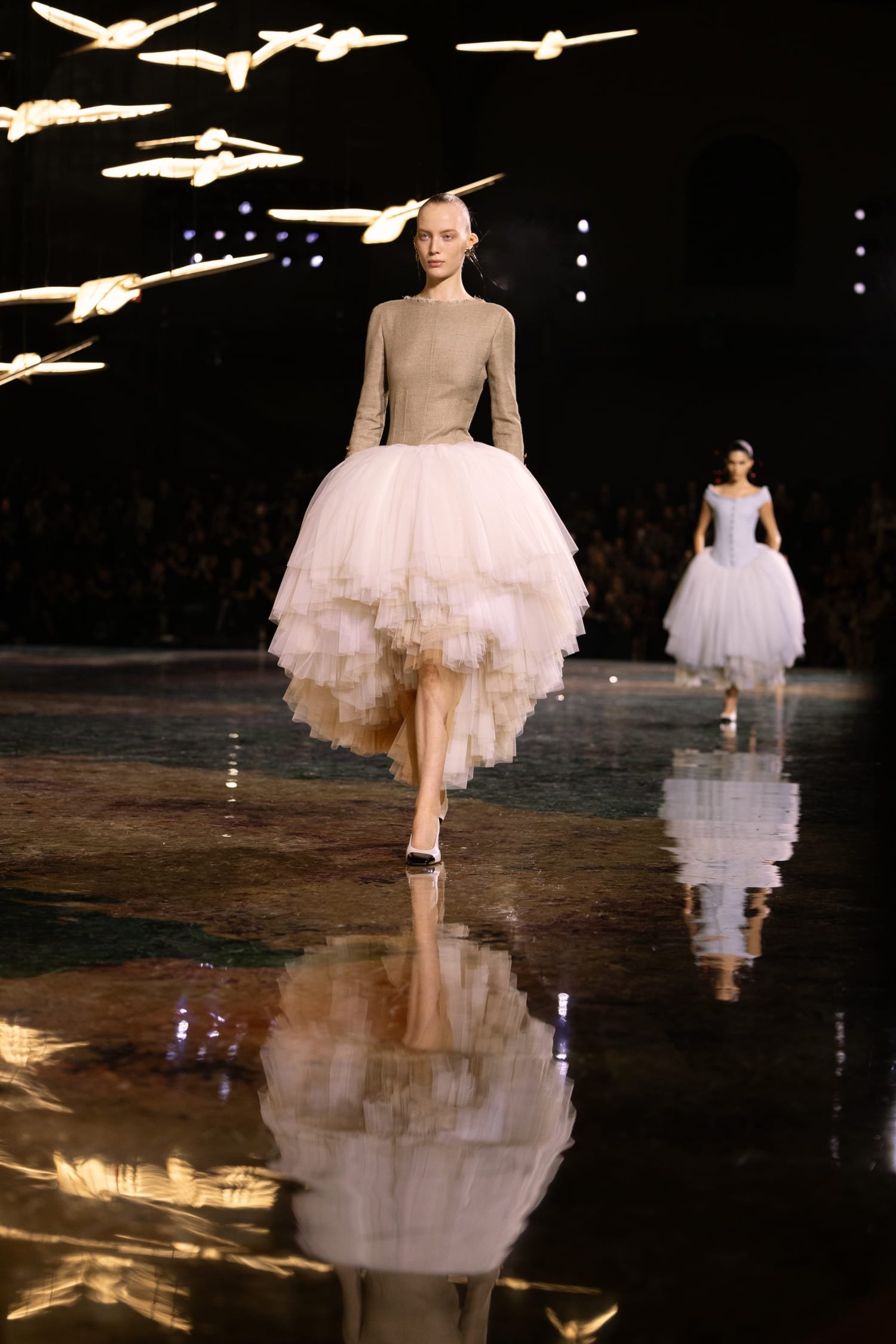
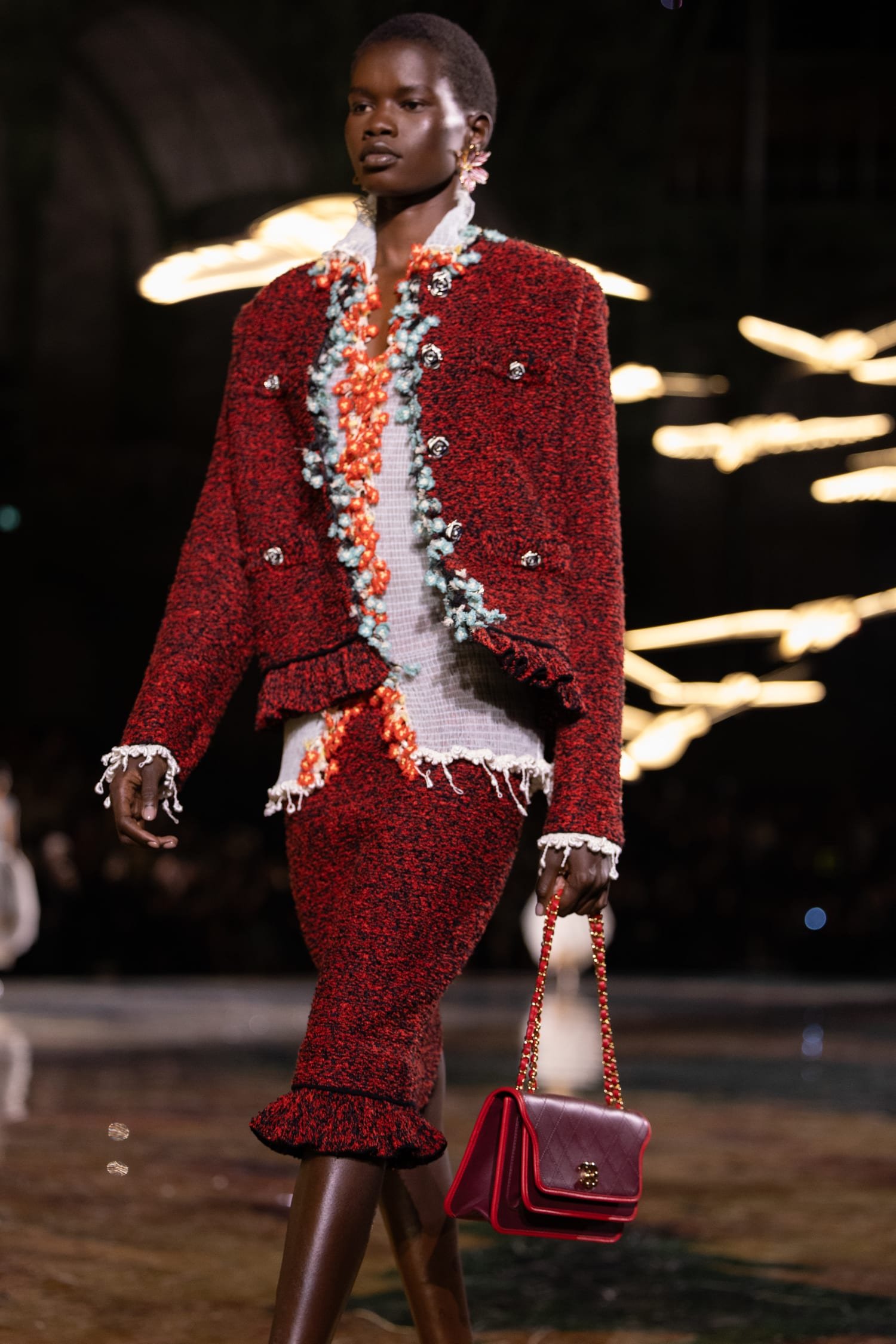
A year into Blazy’s tenure, CHANEL is beginning to develop an identity that feels distinctly his own. What is interesting is that this identity does not come from rejecting the past. Quite the opposite. Blazy seems to understand that the power of CHANEL lies in its ability to be continually reinterpreted without losing recognition. The 2.55, the suit, tweed, jewellery, quilting, the codes of masculine tailoring and the vocabulary of Gabrielle Chanel are not treated as museum pieces. They are moved, enlarged, softened, distorted and sometimes almost disguised before returning as something new.
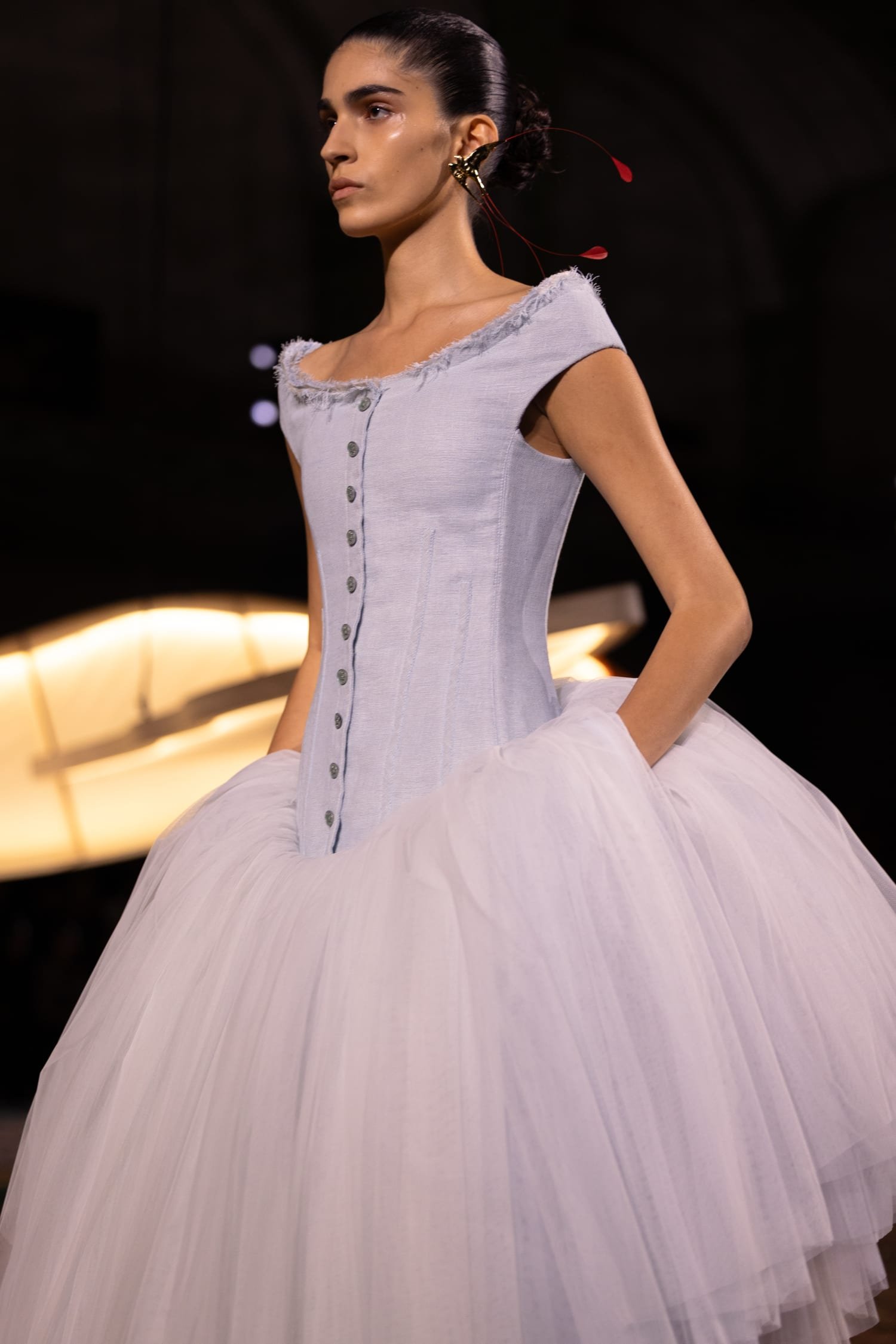
The result is a collection that moves freely through time. Edwardian corsetry, masculine tailoring, the 1930s, postwar CHANEL and contemporary sportswear-like ease coexist without feeling like historical costume. The references are there, but they are never trapped in their original moment. Blazy understands the difference between preserving an archive and keeping an archive alive.
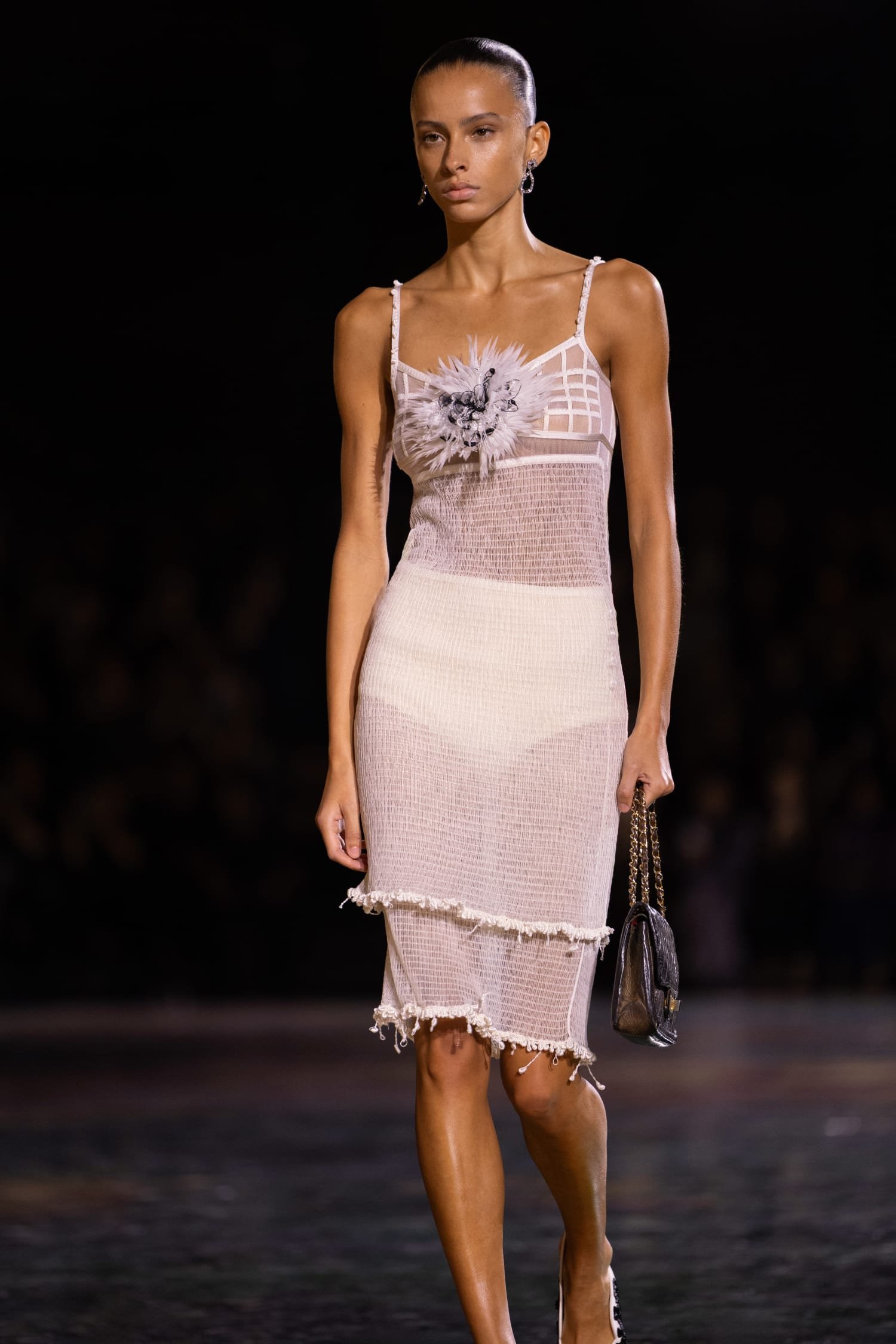
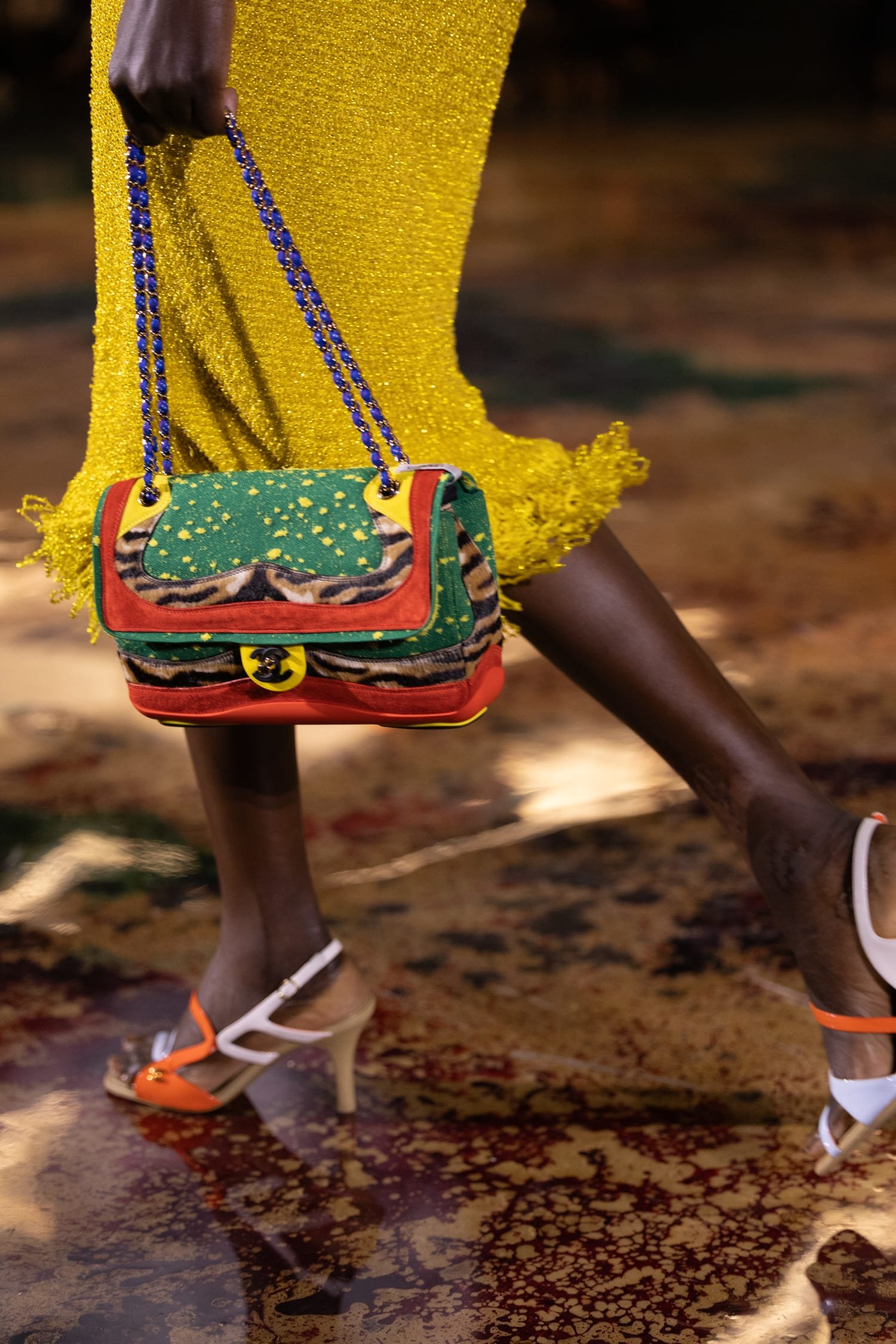
The same can be said of the accessories. The house’s familiar vocabulary is multiplied rather than repeated: flap bags appear in new colours, textures and proportions; chains become decorative gestures; familiar silhouettes acquire unexpected surfaces. The 2.55 carried by Dyanira Hurbuscher, borrowed from the Patrimoine archives and appearing at both the beginning and the end of the show, creates a circular movement through CHANEL’s history. The object remains the same, yet everything around it has changed.
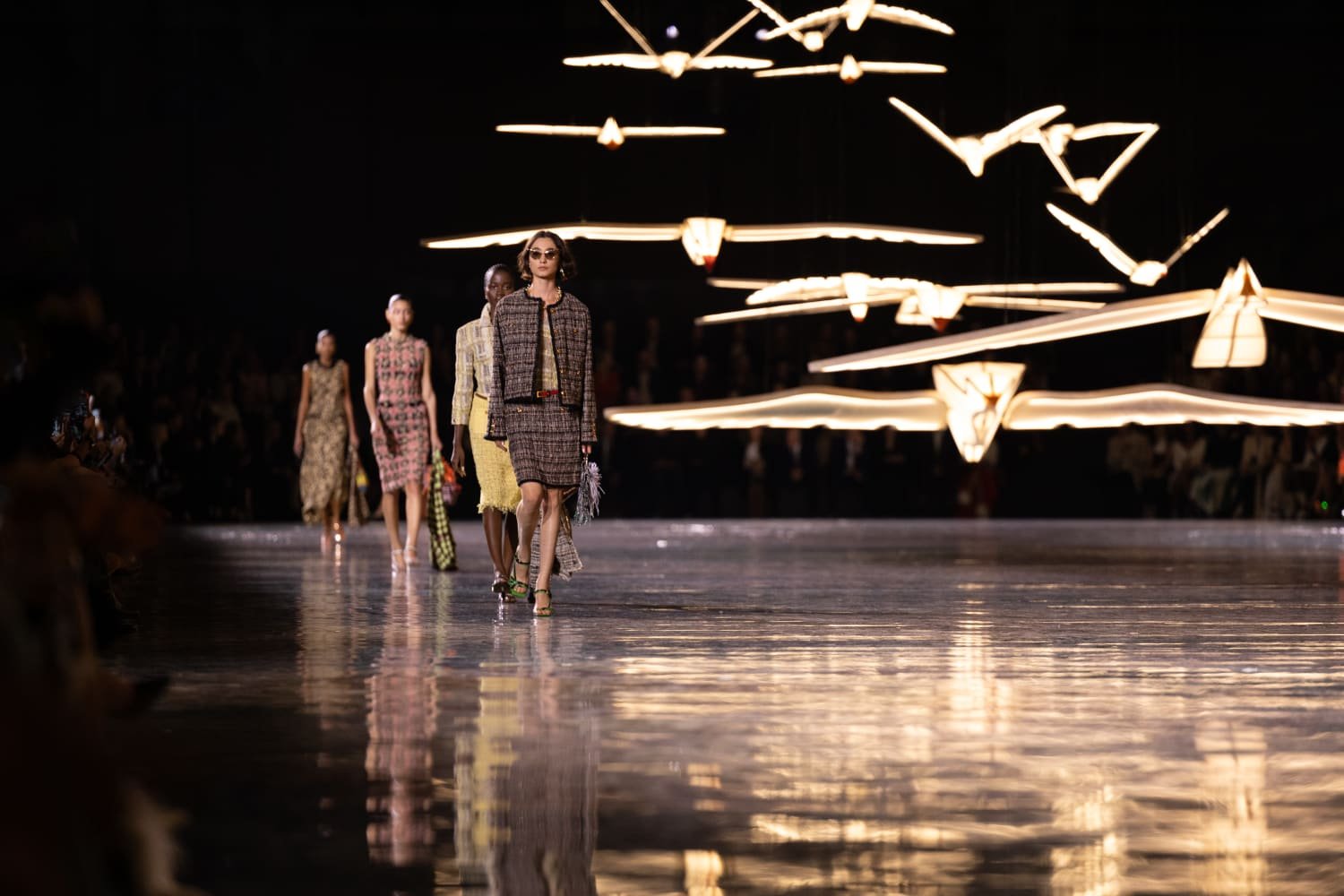
Then there are the birds.
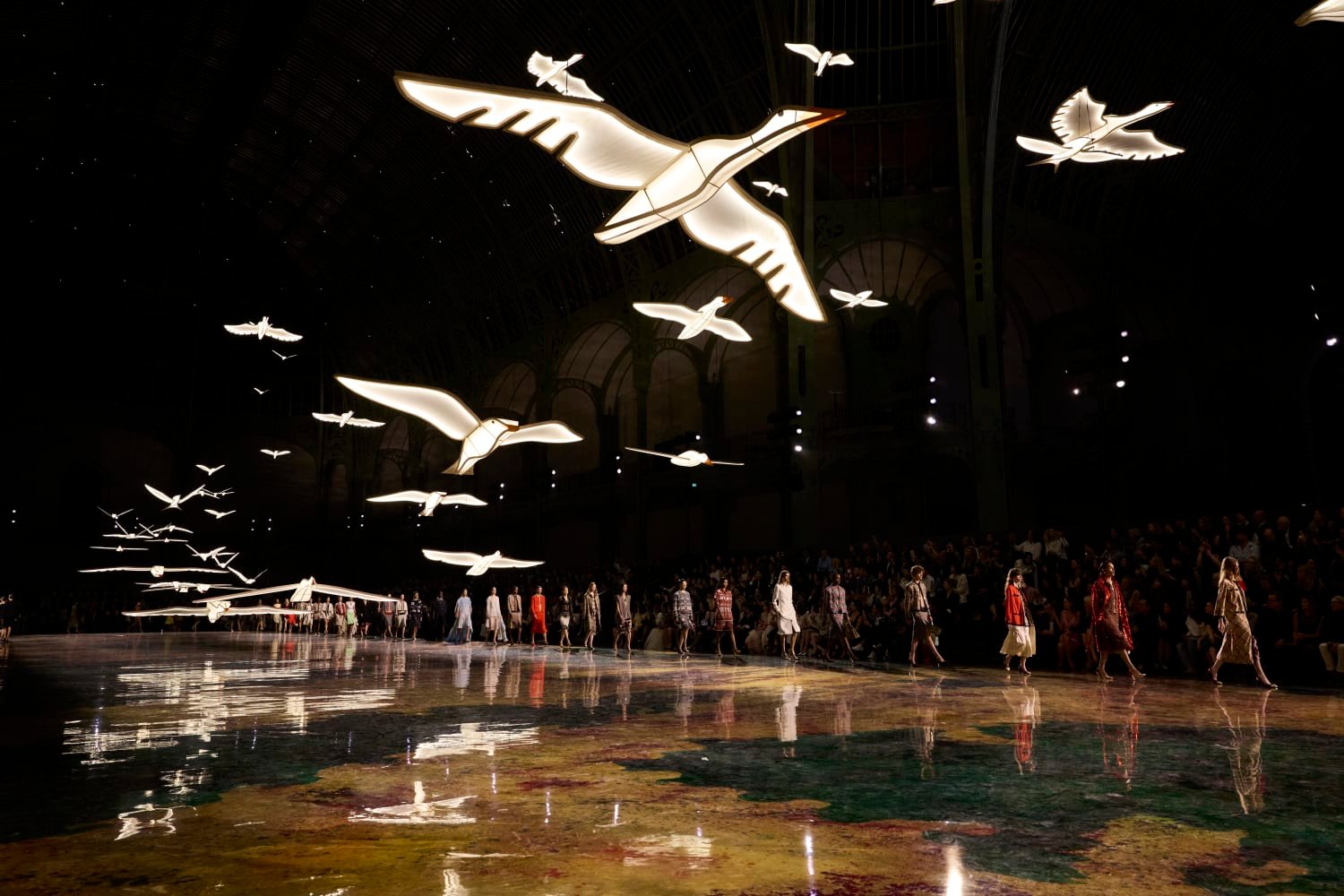
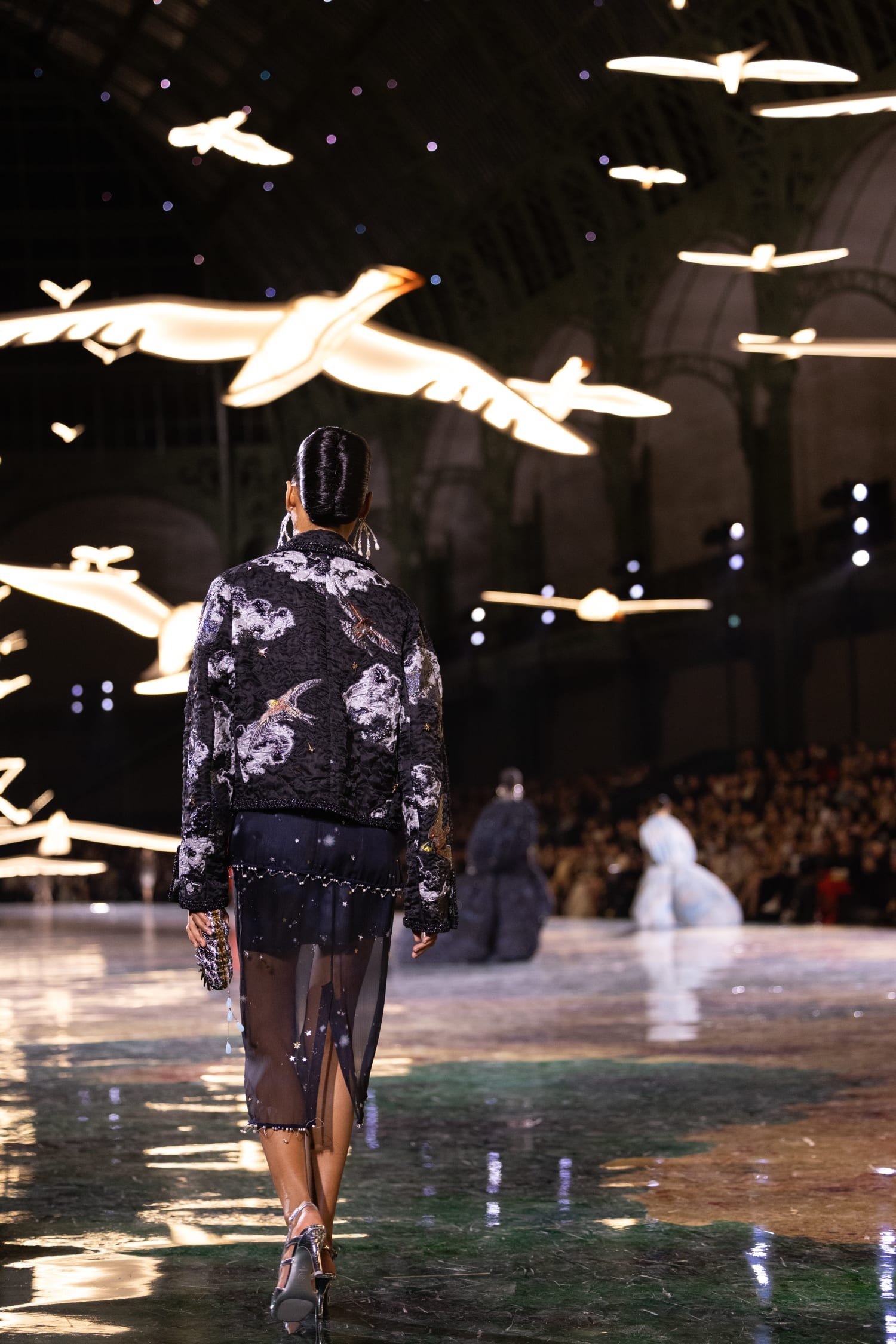
Swallows and swifts appear throughout the collection as buttons, jewellery, embroidery and decorative elements, but their meaning goes beyond ornament. They become a visual language for freedom. Gabrielle Chanel’s relationship with movement and liberation is translated into clothes that are lighter, more fluid and increasingly mobile. Even the new “smocked tweed” seems to challenge the traditional understanding of CHANEL tailoring: the tweed stretches, moves and follows the body like a second skin.
This sense of movement is also where the collection begins to reveal its maximalist side.
There is more happening now. More texture, more colour, more layering, more embellishment, more visual information. Silks overlap like changing skies; sequins, beads, tweed, embroidery and jewellery accumulate across the body. It reflects something that has been increasingly visible throughout fashion week: the return of the idea that “more can, in fact, be more”. But at CHANEL, maximalism becomes particularly significant because the house has always been associated with a precise and recognizable vocabulary. Blazy is expanding that vocabulary without allowing it to dissolve.
And then, almost unexpectedly, comes Britney Spears.
The final moments of the show, set to a remix of “Gimme More”, offered one of those gestures that could easily have felt disconnected from the history of the house, but instead made perfect sense. There is something sophisticated about allowing CHANEL to exist alongside contemporary pop culture without needing to explain the connection. It is playful, immediate and slightly irreverent. And it says something important about Blazy’s approach: heritage does not have to mean solemnity.
Perhaps that is why CHANEL feels increasingly desirable under his direction. There is a growing sense of curiosity around the house. What will the next collection reinterpret? Which archive code will be transformed? What will the CHANEL woman look like next?
For me, that is where Blazy’s real strength lies. He is not trying to invent a new CHANEL. He is making the existing one feel open again.
The house’s past remains visible, but it no longer dictates the future. Gabrielle Chanel is still there, but now surrounded by all the women she made possible. Different faces, different identities, different moments in time — all part of the same coin.
After more than a century, that is the most contemporary way to keep CHANEL moving.
author SEBASTIAN MAGUNACELAYA
Images COURTESY