
Summer in a Bottle: Inside the World of Christine Nagel
In contemporary perfumery, there is a woman behind some of the world’s most beloved scents: Christine Nagel. Trained as a scientist, she entered the world of fragrance almost by chance and went on to become one of the most accomplished perfumers of her generation.
Long before her time at Hermès, she became known for perfumes that balanced precision with emotion and simplicity with depth—creations that felt natural rather than engineered. At Hermès, she has continued to develop this style, creating fragrances that are both light and complex, subtle yet sensual. With Un Jardin Sous la Mer, Nagel carries that balance even further, evoking the warmth of sunlit skin and the quiet minerality of the sea—an atmosphere so vivid it feels as though she has, quite literally, put summer in a bottle.
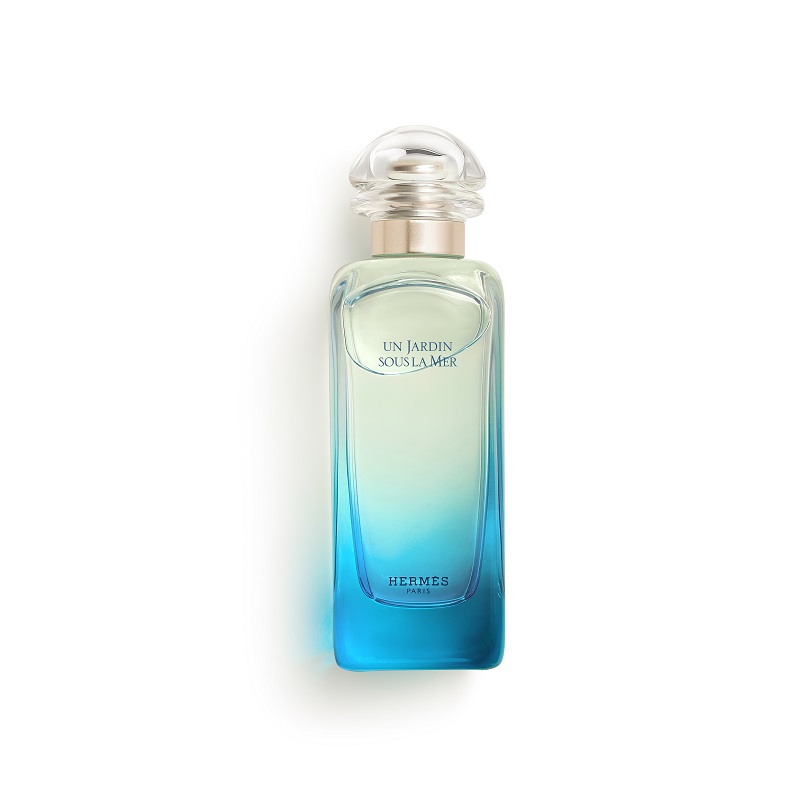
perfume UN JARDIN SOUS LA MER, HERMÈS
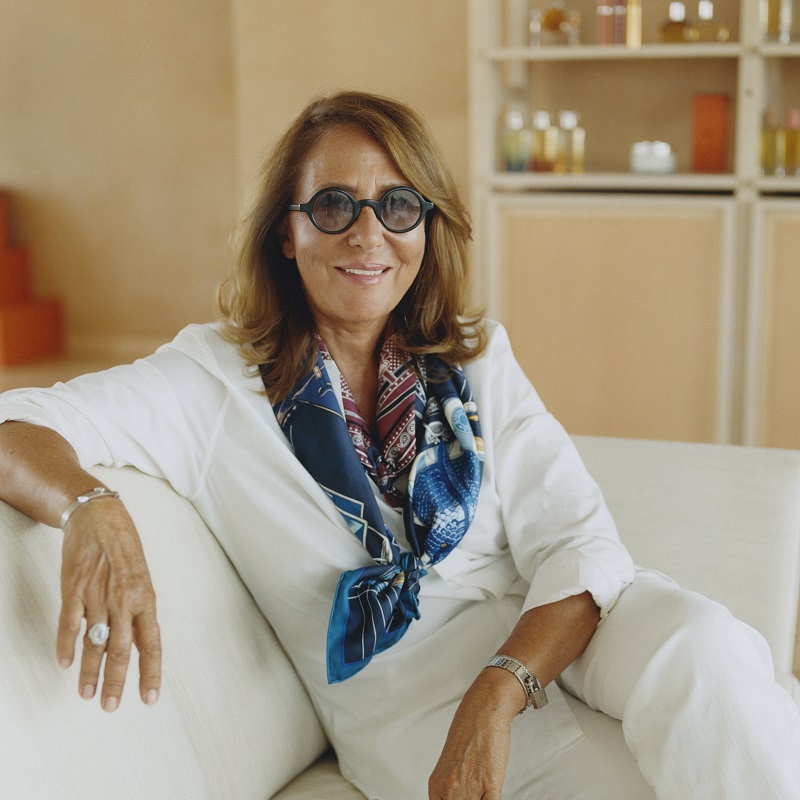
portrait CHRISTINE NAGEL
Anastasia Yovanovska: Many of your perfumes seem to explore tension—between transparency and depth, delicacy and structure. Are you consciously working with contradiction?
Christine Nagel: I love contradictions. I love working with different textures, but they always need to remain harmonious and elegant. I enjoy bringing together opposites—making gold feel liquid, flowers feel a bit raw, or wood feel flexible and supple. It’s about combining elements that might seem opposed, yet ultimately work beautifully together.
AY: You were born in Geneva. How did that environment shape your sensitivity to smell? Do you remember any favorite scents from your childhood—perhaps your mother’s pie or the smell of grass in the morning?
CN: As a child, I never imagined becoming a perfumer—I didn’t even know the profession existed. It was only later, when I moved from studying science in Geneva to working in research laboratories at Firmenich, that I discovered it. That’s when I realized I wanted to become a perfumer, though the journey was long and complicated.
As for childhood scents, there are many that stayed with me. I remember opening my mother’s wardrobe when she was out, trying on her clothes and shoes—the scent in that cupboard is still deeply anchored in my memory. Another strong memory is of my younger brother, who was born when I was ten. I used to help take care of him, and I remember the cloud of talcum powder my mother would use—Borotalco, an Italian brand. That fragrance left a lasting impression on me, and I still love it today.
AY: Do you think there is a kind of predestination in becoming a perfumer?
CN: Not really. For me, it wasn’t predestined—it happened by chance.
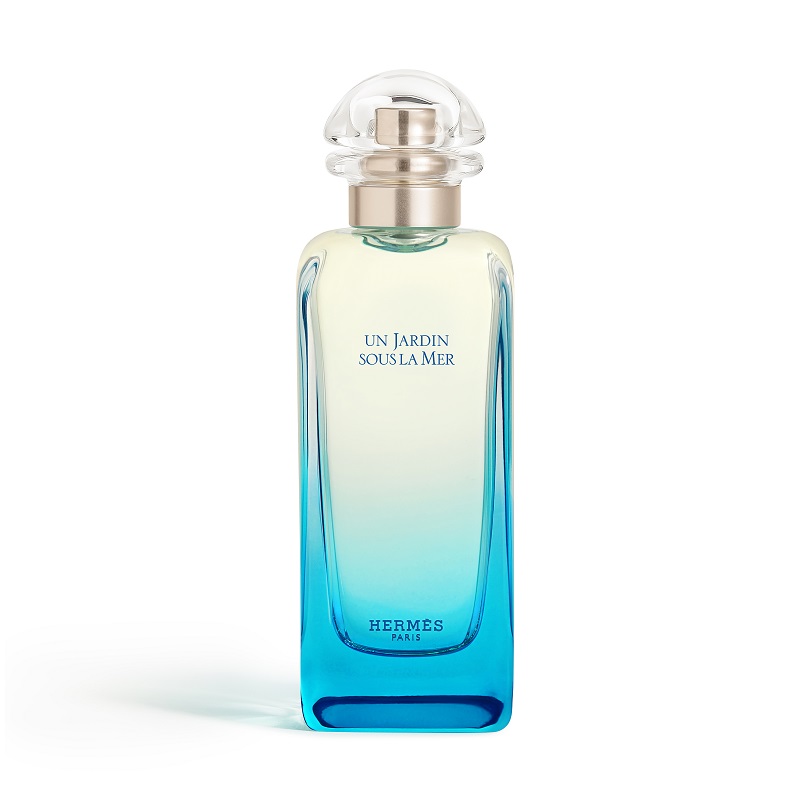
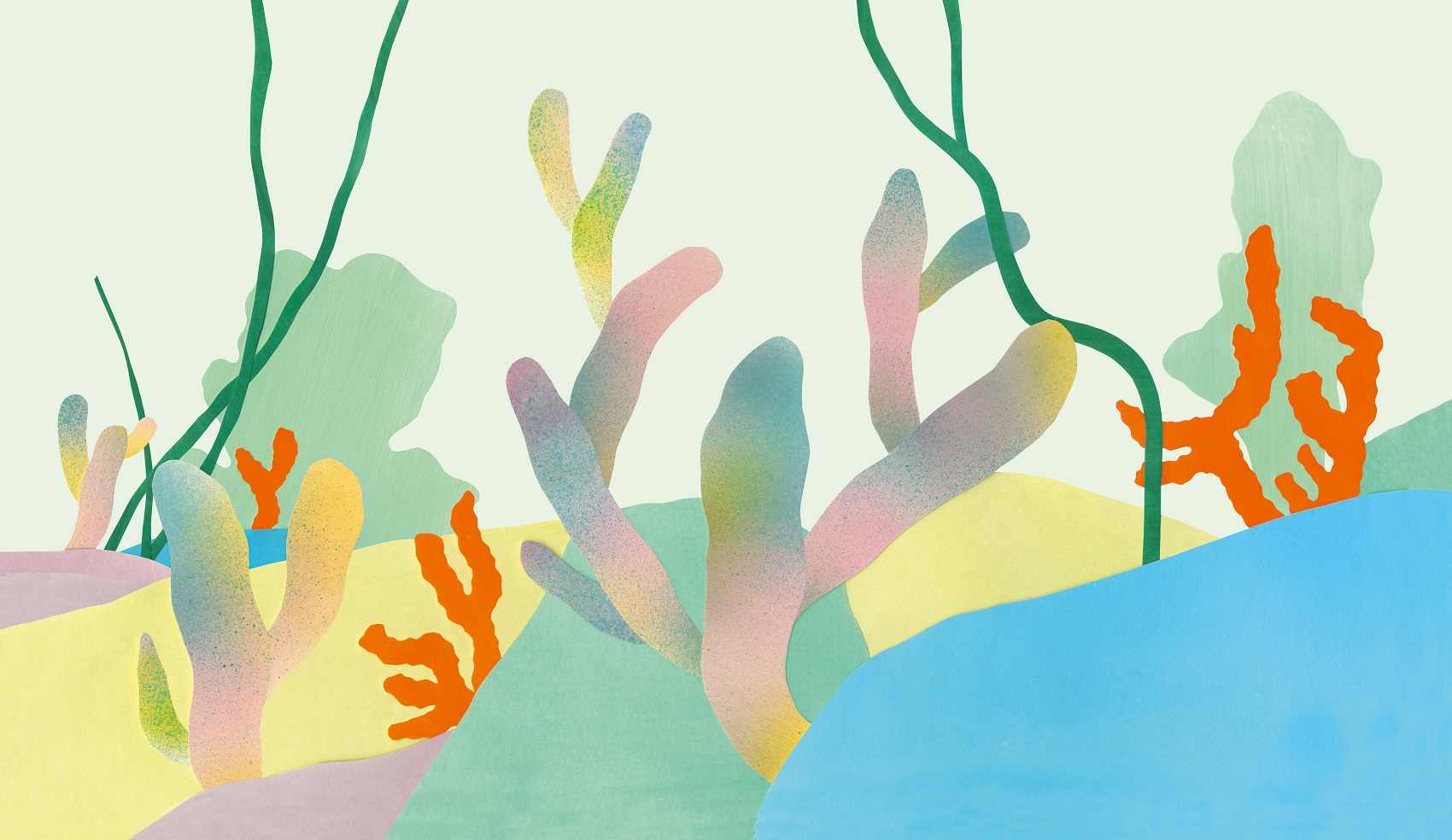
perfume UN JARDIN SOUS LA MER, HERMÈS
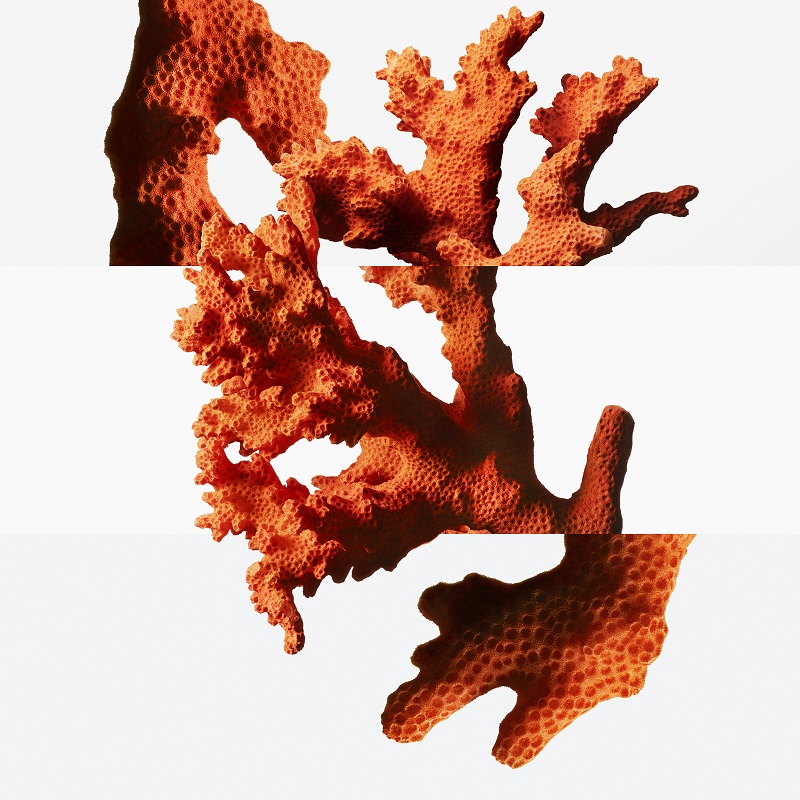
collage COURTESY OF THE BRAND
AY: You once said, “Choosing a perfume is not a question of gender, but of style, signature, and sensitivity.” How can someone know when a fragrance truly reflects who they are, rather than being chosen because of status or fashion?
CN: One shouldn’t choose a perfume because of a model’s face or a famous brand. We all have bottles at home—beautiful ones received as gifts—that we rarely use. In the end, wealways return to the fragrances we truly love. Perfume is deeply intimate, so it’s important totrust yourself and wear what makes you feel good, regardless of branding, packaging, or advertising.
When you explore perfumes in a store, take your time. Start by smelling a few on blotters, then test your favorites on your skin. Walk around, let them evolve, and notice how they make you feel. The real connection happens on the skin, over time.
AY: Do you see yourself more as a guardian of Hermès’ identity or as an author reshaping it?
CN: It’s both at once. Hermès has a rich heritage and a strong identity, which serve as a foundation and a source of inspiration. At the same time, there’s a remarkable sense of freedom within the house. That balance is essential—I need tradition as my roots, but also the freedom to innovate and bring something new.
At Hermès, I have the freedom of time, which is a rare and precious gift in creation. I also have the freedom to explore materials, whether traditional or cutting-edge. I can work with bespoke raw materials or experiment with biotechnology. It’s about combining exceptional natural ingredients with innovative molecules, always with a strong ethical and qualitative approach.
AY: One of the latest fragrances you created for Hermès, Un Jardin Sous la Mer, evokes salty skin after swimming, warm stones, and marine plants. Could you tell us how you arrived at such a deep composition? It feels as though you captured not just a scent, but a state of being.
CN: The inspiration came from a trip to Polynesia. I was struck by the richness of the flora and the uniqueness of the scents—fresh coconut, for instance, smells fibrous and almost woody, very different from what we associate with it in cooking. I also discovered Tahitian vanilla, which is more sensual and fleshy than the more common Madagascan variety.
But beyond materials, there was an experience: snorkeling over coral reefs. Underwater, there is silence, slowness, and an almost meditative beauty. Nothing smells there, so I asked myself—what would this place smell like if it had a scent? That’s where the abstract dimension comes in.
The fragrance combines real elements like tiare flower and Tahitian vanilla with an imagined, mineral, salty, almost tactile sensation. It has two facets: radiant and sunny when first applied, but more sensual and skin-like as it develops—like warm air and salt gently settling on the skin after swimming.
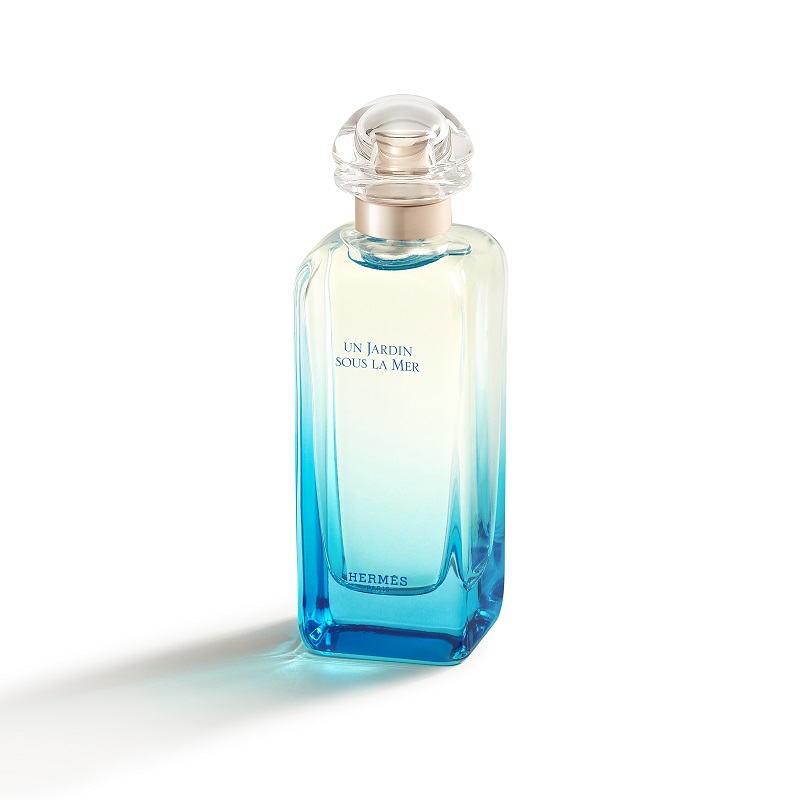
perfume UN JARDIN SOUS LA MER, HERMÈS
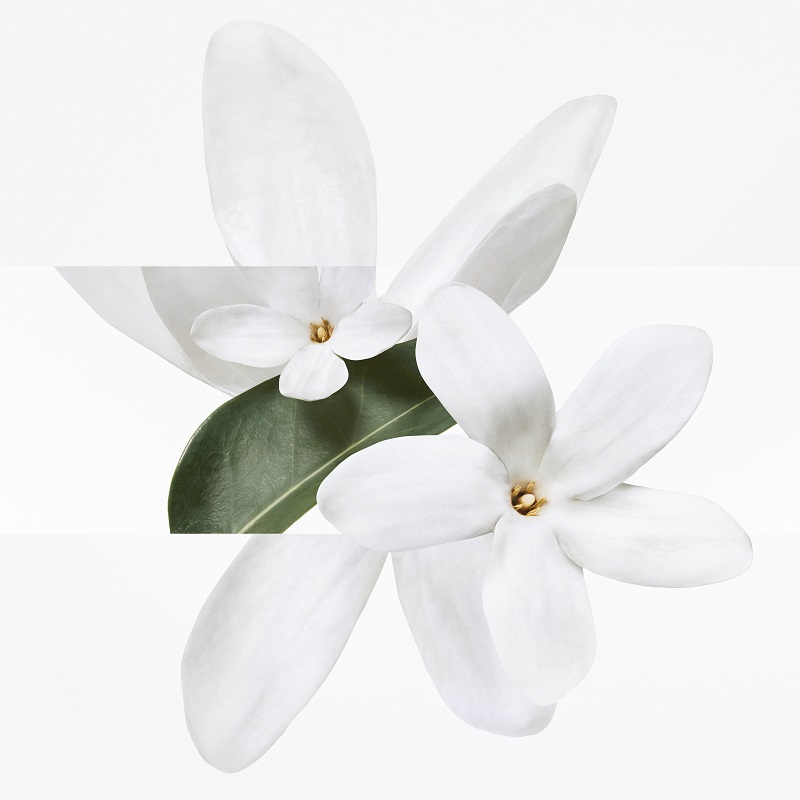
collage COURTESY OF THE BRAND
AY: What was the starting point for this fragrance?
CN: The tiare flower was essential. I didn’t just want to study it—I wanted to use it. We worked to create an extract in sufficient quantity, which became a key starting point for the composition, alongside Tahitian vanilla.
AY: You’ve mentioned that perfume can be protective, like armour. As an introvert, this idea resonates with me deeply. Which scents help create a sense of protection from a harsh or overwhelming outside world?
CN: That’s a very personal question. For some, perfume is essential before leaving the house—it completes them. For others, it offers comfort or serves as a statement. What I find most beautiful is the trace a perfume leaves behind—the lingering scent on a scarf, for example. That memory, that presence, is what gives perfume its emotional power.
AY: After the pandemic, people seem more aware of smell and more drawn to distinctive fragrances. What has changed?
CN: The pandemic made people realize how vital the sense of smell is. At the same time, there was a shift away from overly similar, sweet fragrances toward more distinctive signatures. This led many people toward niche perfumes.
Another interesting development is layering—people mixing fragrances to create something personal. Initially, this was difficult for me to accept as a perfumer, but over time I’ve come to appreciate it. It shows a desire for individuality. Ultimately, what matters is wearing something that resonates with you.
AY: Do you believe there are still entirely new smells to discover?
CN: Absolutely. Nature is vast, and there are still many materials we cannot yet fully capture. With time and new technologies, we can extract and recreate more and more scents. Sometimes it takes years to develop a single ingredient.
Innovation also comes from combining materials—like a painter mixing colors. When we blend ingredients, we sometimes create entirely new olfactory experiences. That element of surprise is at the heart of perfumery.
Christine Nagel speaks of perfume as a presence—something that moves with the body, settles into fabric, and lingers in memory. She always returns to sensation—what is felt before it can be named. At Hermès, she works within a legacy without being confined by it, shaping perfumes that are precise yet alive, rooted yet free. And if her creations often feel like entire worlds distilled into scent, it is because she treats perfumery not as the art of describing life, but as a way of preserving its most fleeting, invisible moments.
autor ANASTASIA YOVANOVSKA
images COURTESY OF THE BRAND