

A Historic Landmark, A New Chapter — Mandarin Oriental Conservatorium, Amsterdam
There are buildings in Amsterdam that carry more than architecture. They carry memory that unfold a kaleidoscope of stories and history.
On Paulus Potterstraat, in the Museum Quarter, stands one of them. Designed at the end of the 19th century by Dutch architect Daniël Knuttel as the Rijkspostspaarbank, the structure was part of a new civic ambition. The city was expanding. Culture was consolidating. The Museum Quarter was becoming what it is today — a concentrated field of art, design and urban intention.
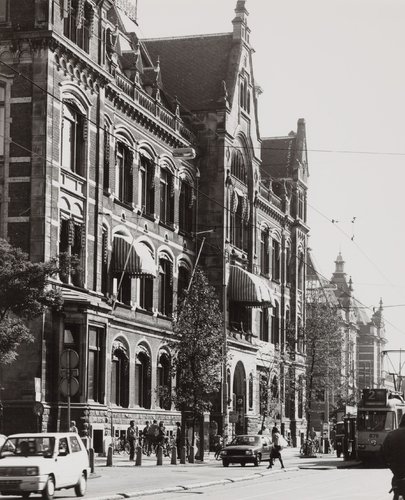
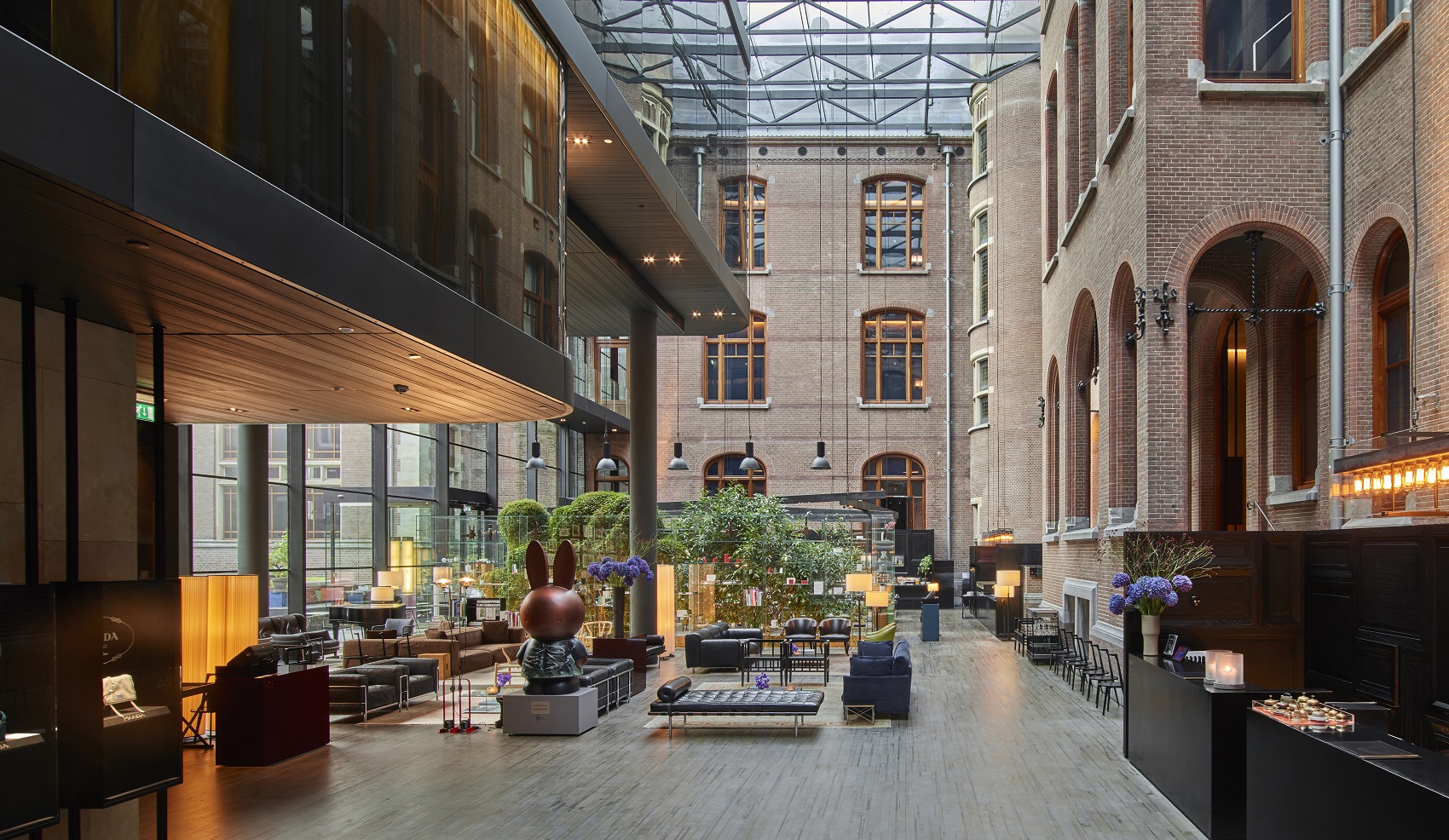
Later, the building became home to the Sweelinck Conservatorium. Music replaced banking. Corridors once built for financial discipline began to carry sound instead. That layer never fully disappeared. You still feel it — in the proportions, in the rhythm, in the quiet seriousness of the space. And, of course, in the main entrance lobby, where a striking installation resembling a large chandelier made from violins hangs above the room. A truly impressive detail that immediately anchors the building in its musical past.
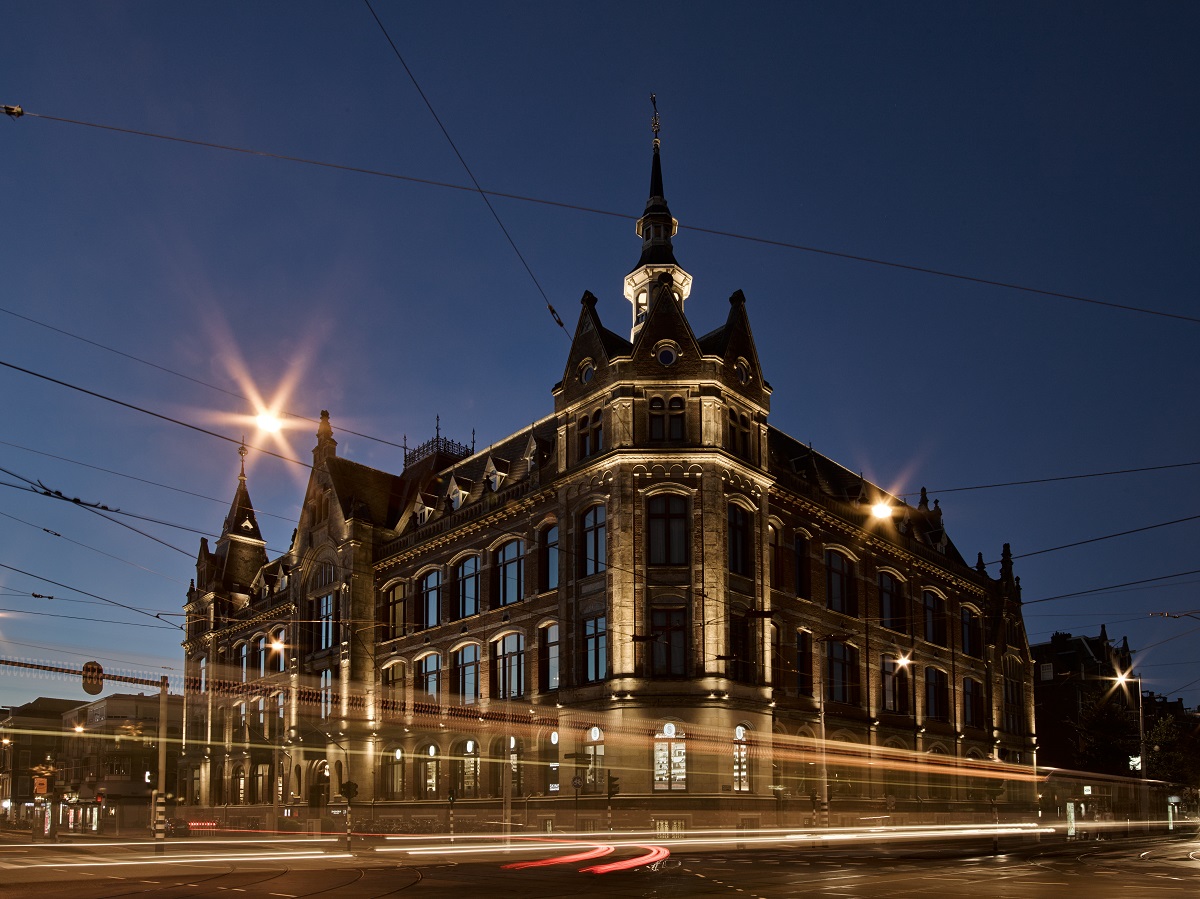
Since 2011, the building has operated as the Conservatorium Hotel. As of 14 January 2026, it enters a new chapter: Mandarin Oriental Conservatorium, Amsterdam — the first Mandarin Oriental property in the Netherlands.
The significance of that is not only symbolic alone — it is primarily operational. Mandarin Oriental is known above all for its calibrated hospitality. The way things are done, the way they are felt. A culture of care that functions almost invisibly, yet becomes immediately felt. From the moment you step through the doors, the tone is set — and it stays with you as an aftertaste even after you leave.
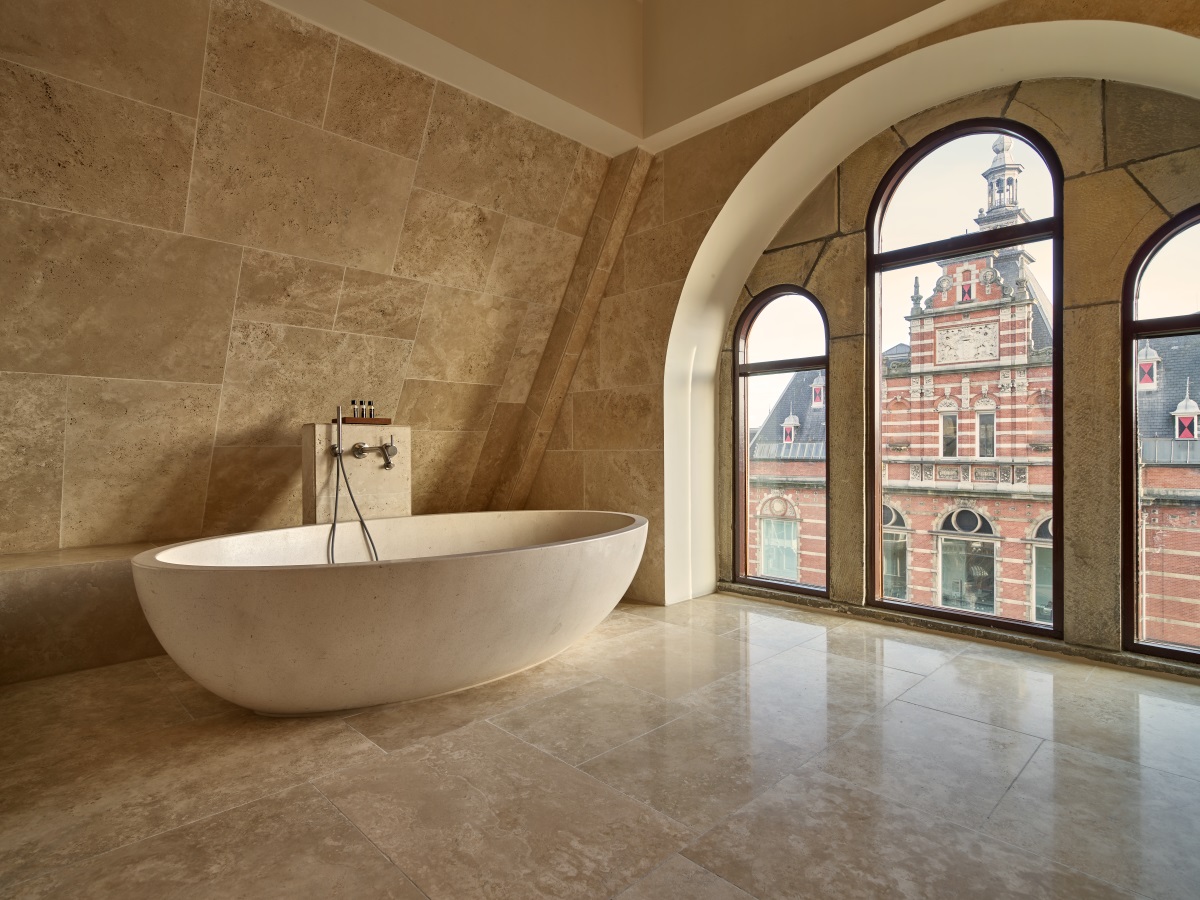
The hotel sits in the Museum Quarter, steps from the Rijksmuseum, the Van Gogh Museum, and the Stedelijk. P.C. Hooftstraat — one of the city’s main luxury shopping streets — runs nearby.
This part of Amsterdam feels composed. It attracts a certain rhythm of guest: cultural travellers, art lovers, design-aware visitors who prefer to experience the city at their own pace, taking the time to savour it.
The Conservatorium has always positioned itself as more than a hotel. It calls itself the “Living Room of Amsterdam”. That identity remains intact under Mandarin Oriental management. It is part of what makes the hotel feel lived and experienced, as an integrated part of the city that is loved by both guests and locals.
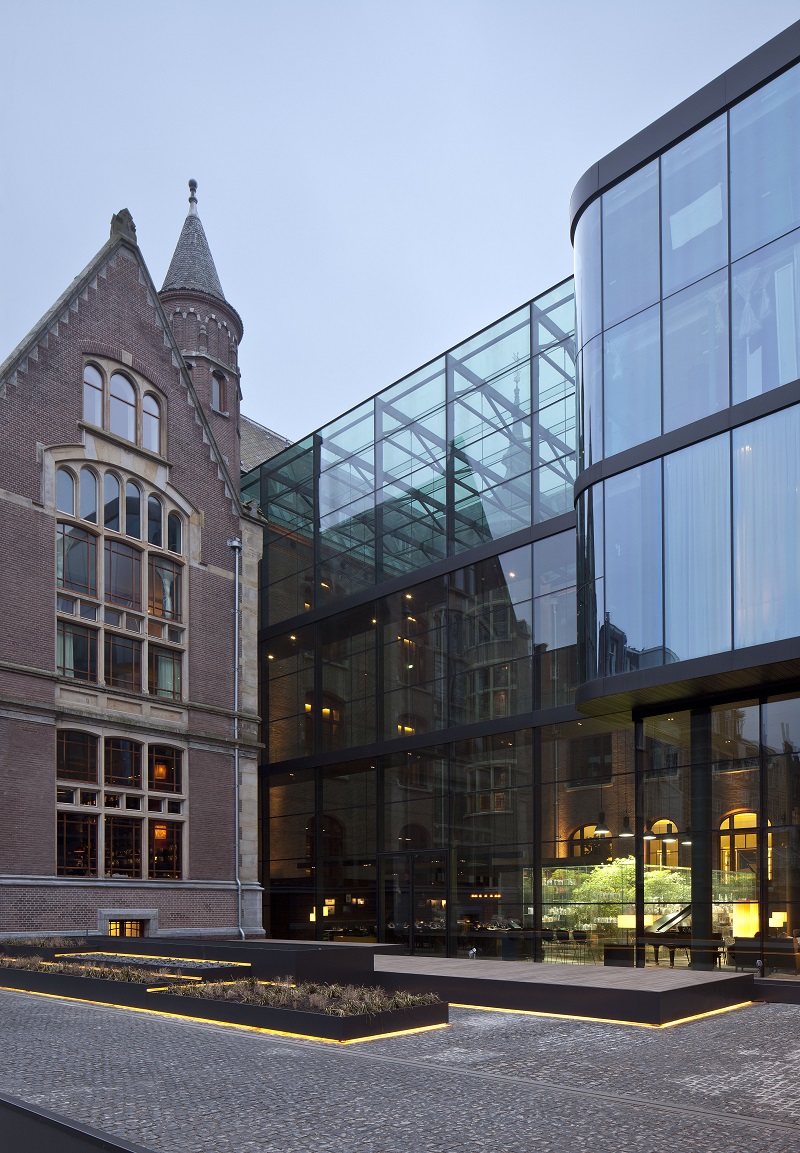
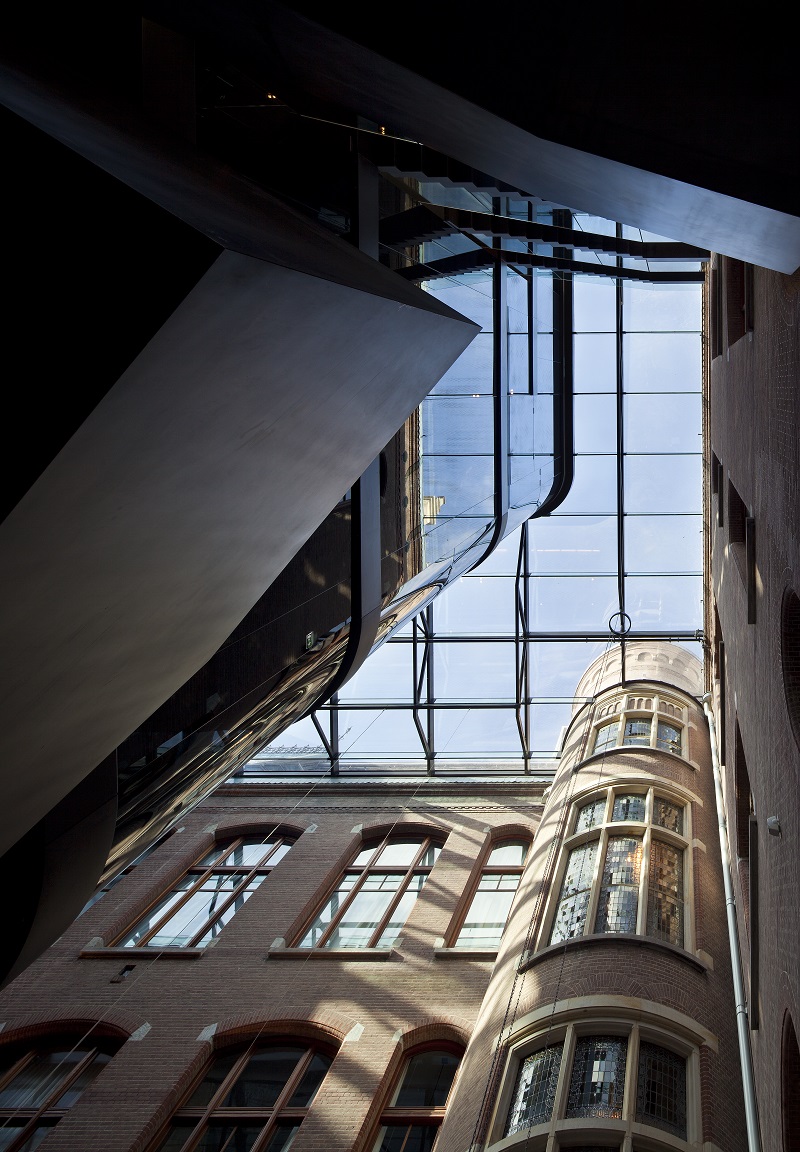
The transformation of the building into a hotel between 2008 and 2011 was led by Italian architect Piero Lissoni. His approach did not attempt to historicize the building, nor to erase its past. Instead, it framed it — allowing history and contemporary design to coexist naturally.
The building itself has very distinct Dutch architecture from the outside, yet inside it gives a Hogwarts-like feeling, with side staircases in different parts of the hotel, its corners and arches. Alongside its modern design and style, it still carries a certain magical atmosphere.
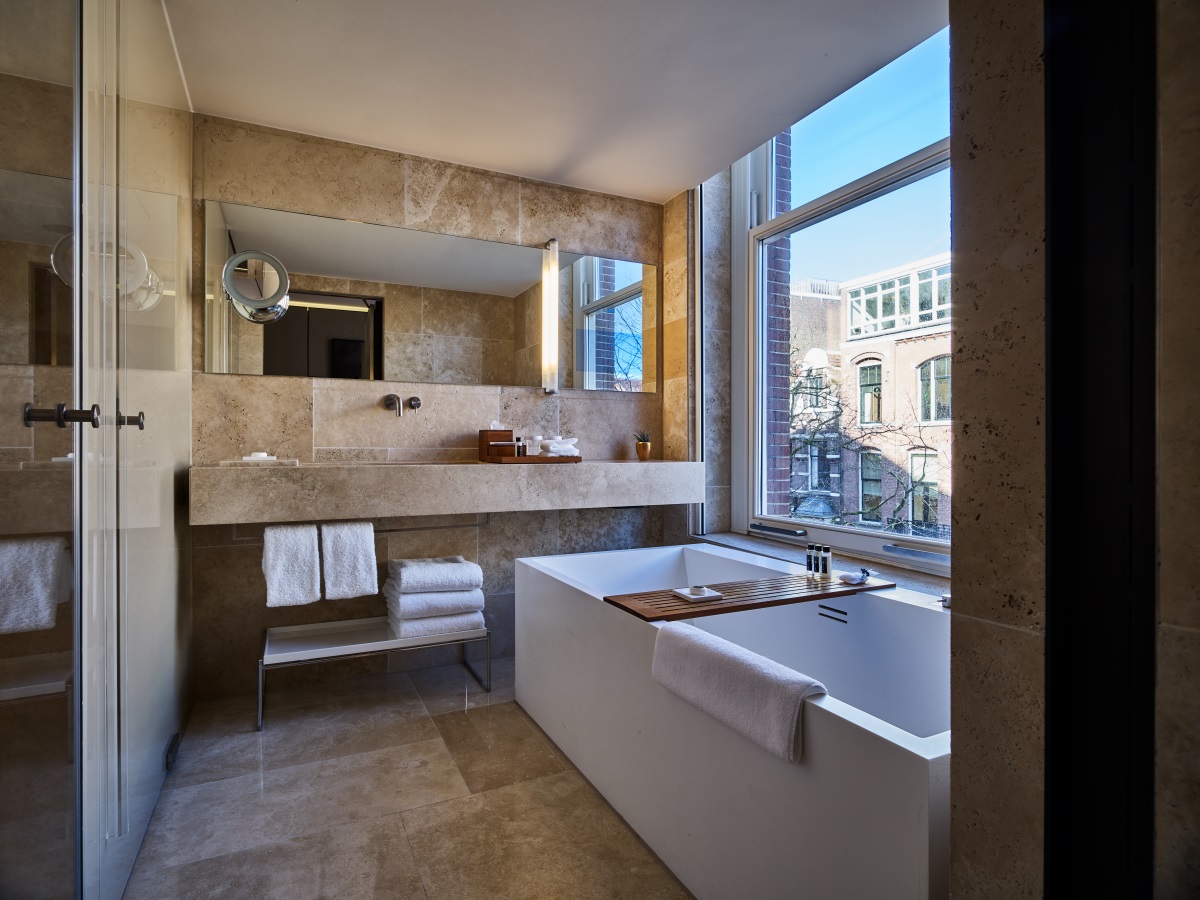
Materials play a big part in forming the perception. They do the narrative work. The lounge floor is finished in recycled Lithoverde volcanic stone. Hallways combine terrazzo with liquid cement. Structural beams remain visible in many rooms, while oversized windows bring generous light into the interiors.
The color palette stays largely restrained, interrupted by accents of blue, burgundy and dark yellow that appear in doors and architectural details. Furniture pieces from Living Divani, Kartell and Cassina sit alongside vintage Asian rugs. Photography by Claude Vanheye and artwork by Kevin Best quietly reference Dutch and Flemish old masters.
Under Mandarin Oriental, the physical changes are evolutionary. The lounge is being refreshed with a renewed focus on afternoon tea. The architectural language remains. The refinement happens in detail.
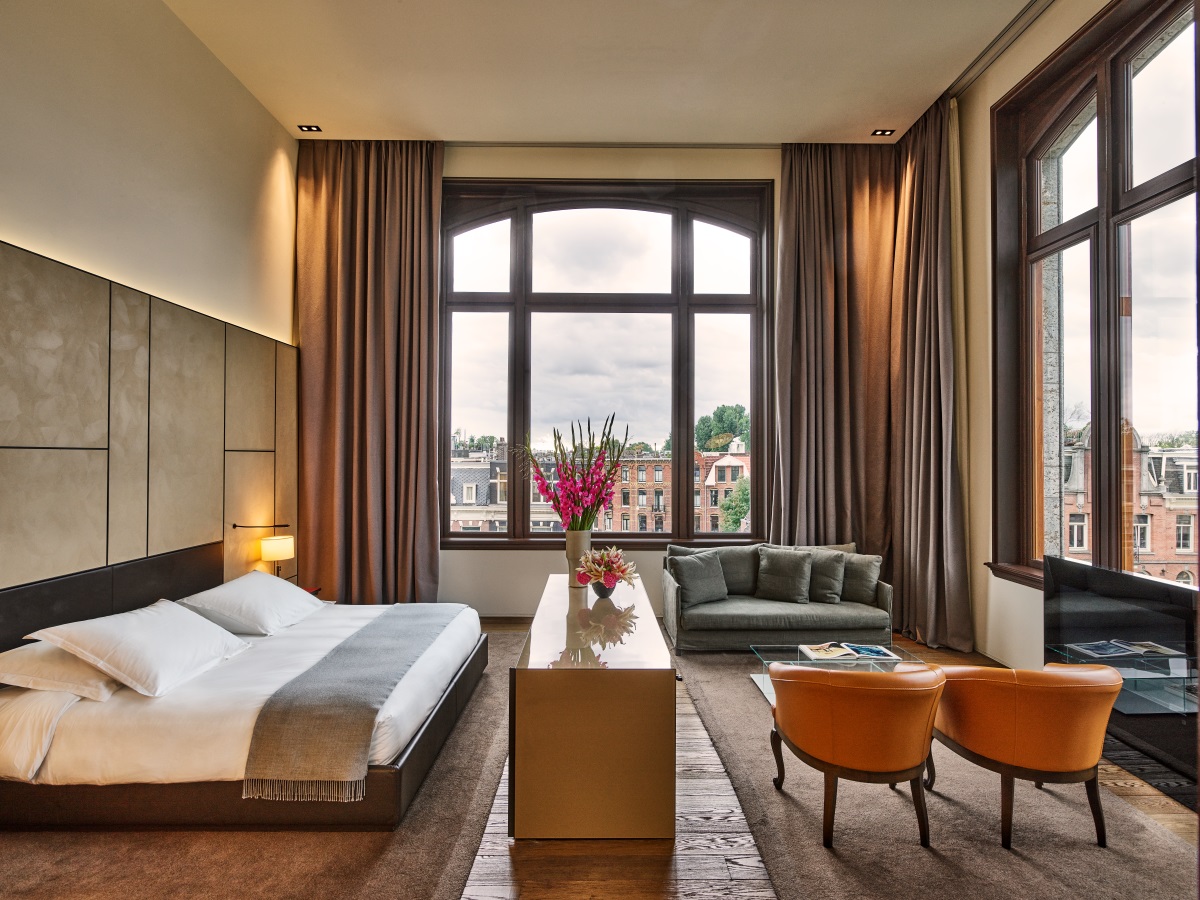
The hotel offers 129 rooms and suites, including 64 suites, across eight floors and seven categories, ranging from 28 to 170 square meters.
Nearly half of the rooms are configured as duplexes. This vertical structure shifts the experience away from a conventional hotel layout and closer to a residential scale. Structural beams and high ceilings reinforce the building’s original architecture. Light becomes part of the interior composition.
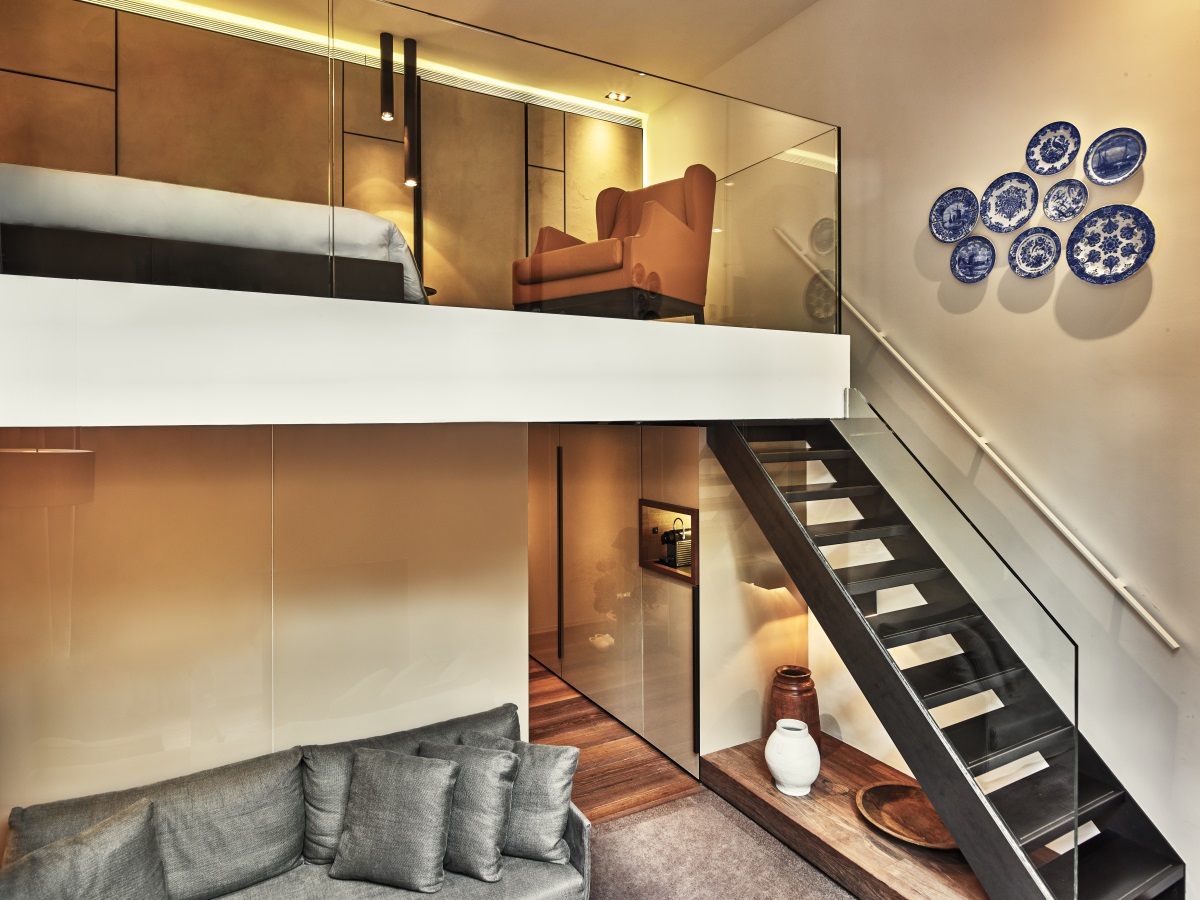
Despite the shared design language, the rooms differ significantly in layout and atmosphere. Some overlook the garden; others open onto balconies or face the authentic streets of the neighborhood. One room may feel like a loft space, another like a cozy apartment — complete with kitchen, wardrobe space, and a bathroom framed by a large window. Very Amsterdam. Returning to the hotel can feel slightly different each time.
Dining has always played a central role in Mandarin Oriental Conservatorium’s connection to the city.
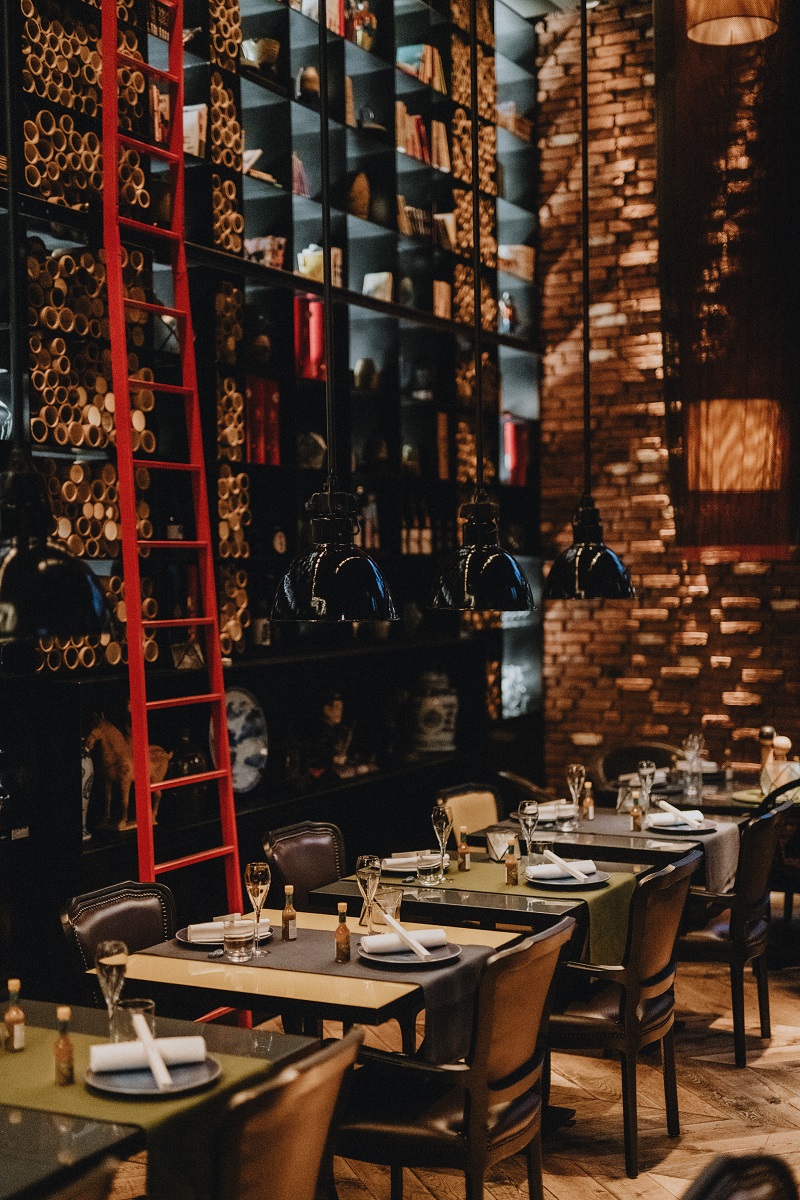
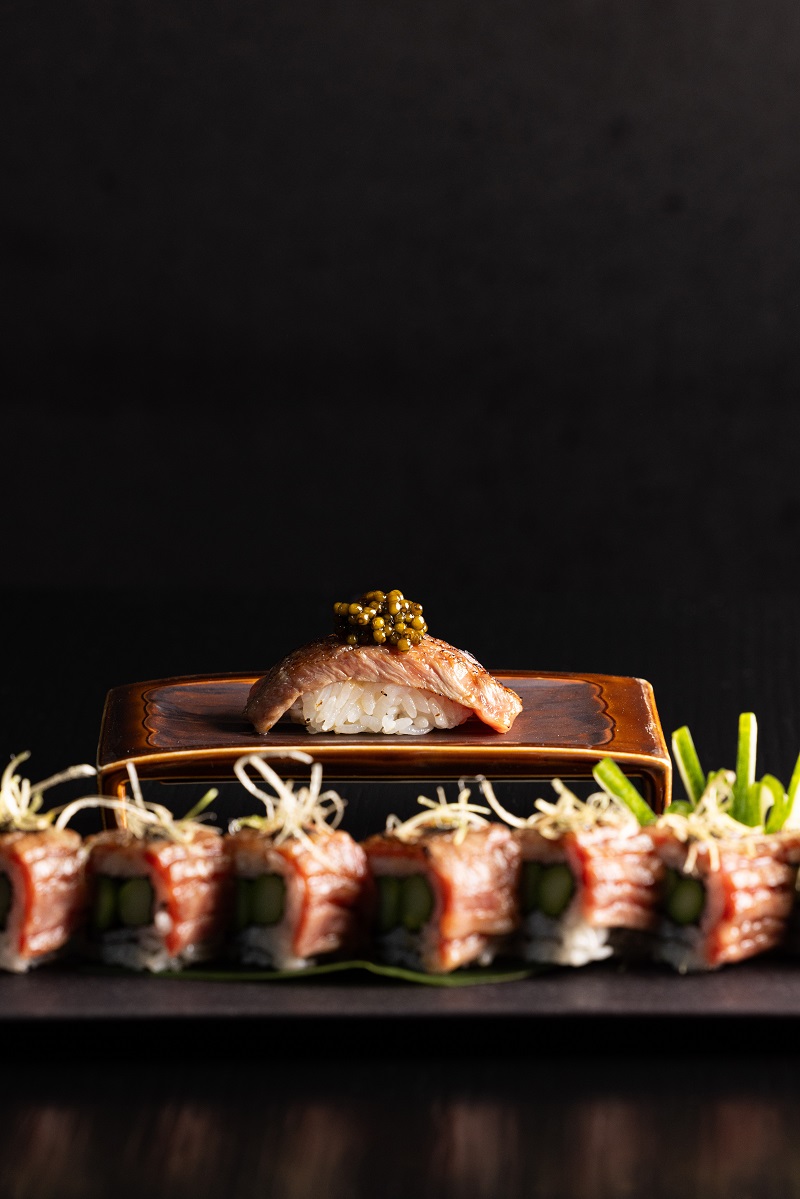
Taiko opened in 2014 and quickly became one of Amsterdam’s most recognized Asian-inspired restaurants. Located in the historic wing overlooking Paulus Potterstraat and the Stedelijk Museum, it takes its name from Japanese drums — a reference to the building’s conservatory years, when percussion classes once occupied the space.
The restaurant now continues under the leadership of Head Chef Lars Drost, maintaining its contemporary, technique-driven approach built around seasonal produce.
In early 2026, Yotam Ottolenghi opened his first restaurant in the Netherlands inside the hotel’s glass atrium. Inspired by ROVI in London, the concept is vegetable-led, structured around sharing plates, and rooted in local sourcing — serving guests from breakfast through dinner. The atrium — already one of the building’s defining architectural spaces — becomes an even stronger center of gravity for the hotel and for the city in general.
The Bar extends the Taiko universe into a more nocturnal register. Asian-influenced cocktails, weekend DJs, and a program that attracts both residents and hotel guests. It functions naturally as part of the city’s nightlife ecosystem.
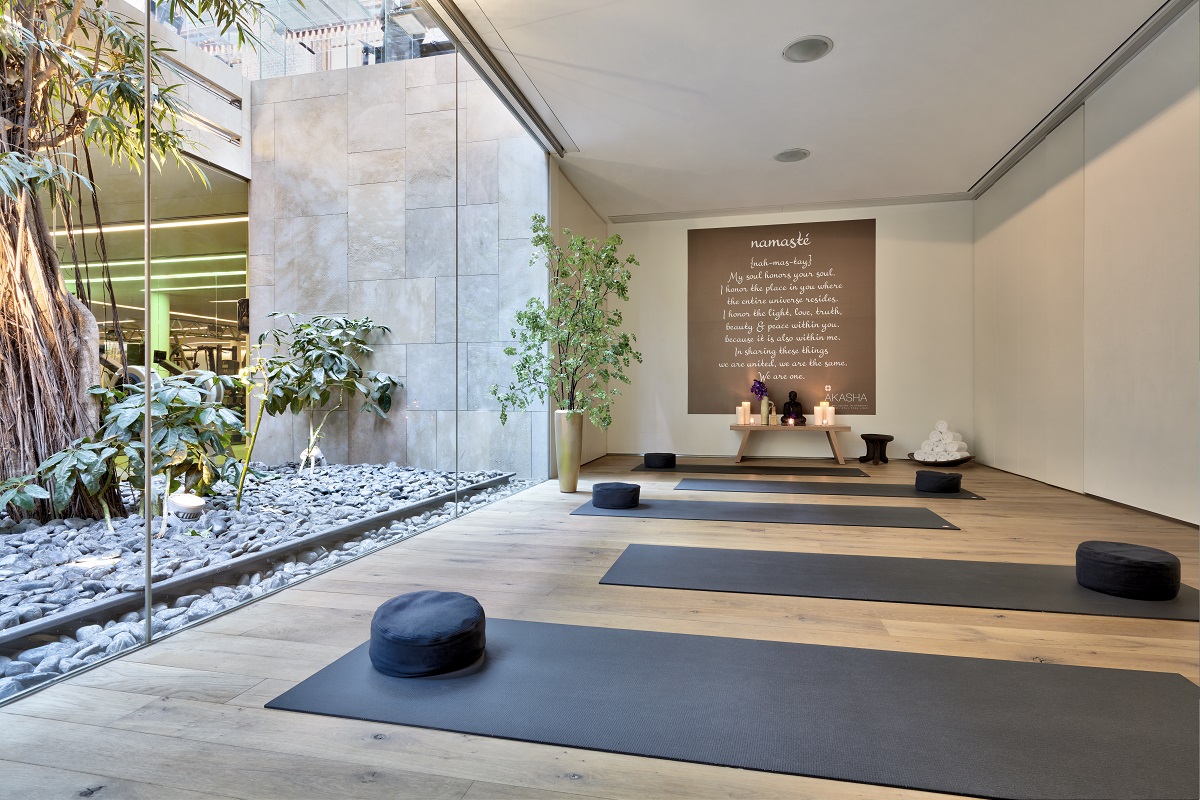
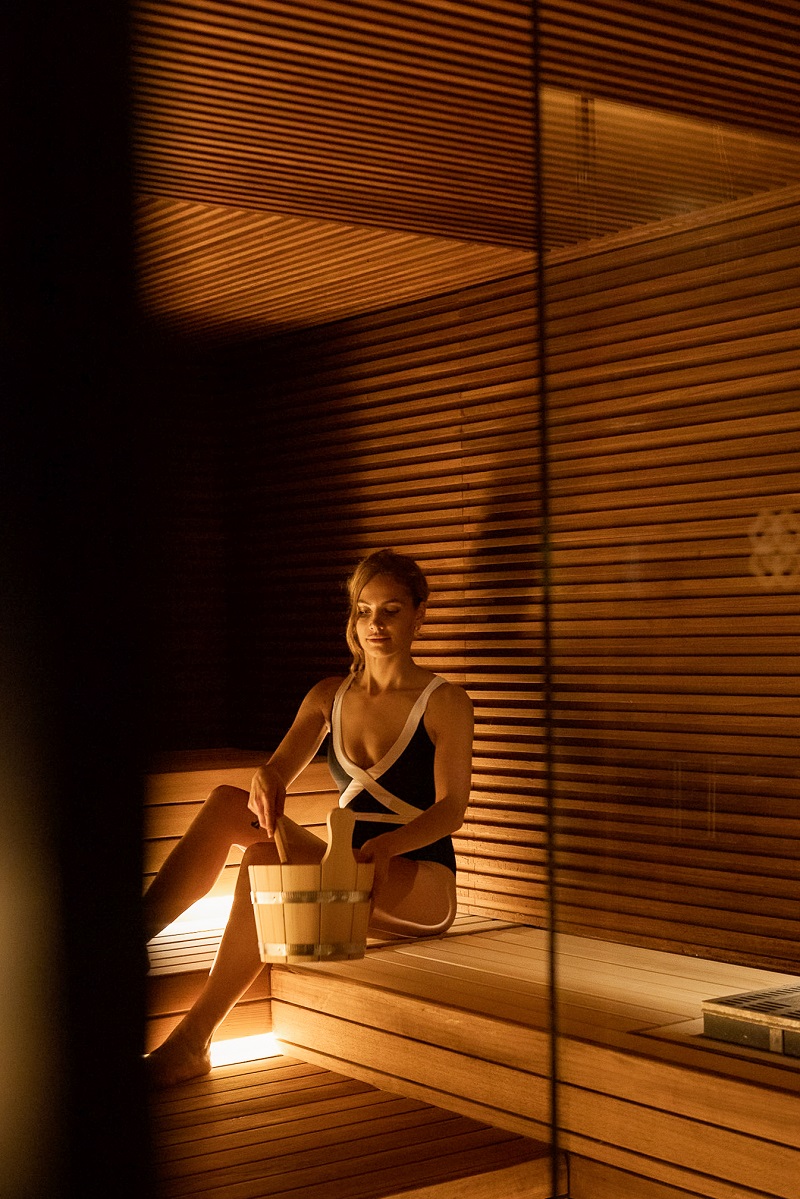
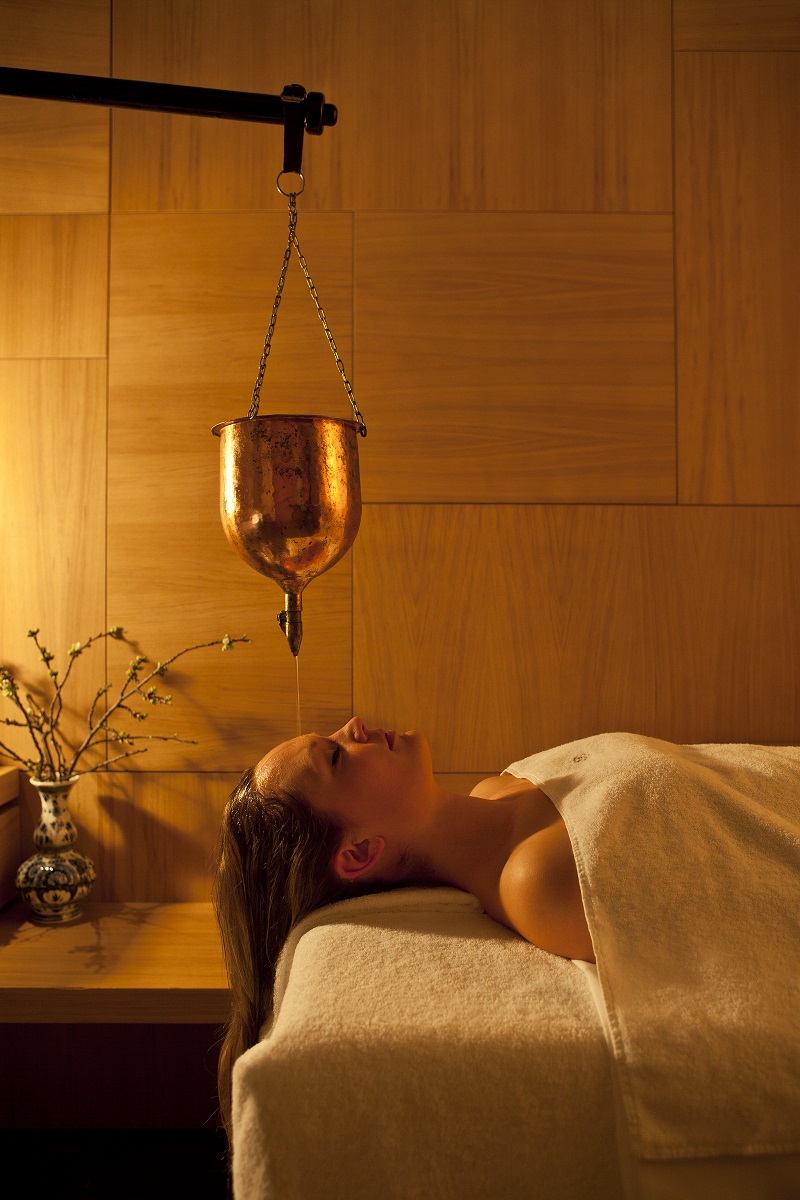
Akasha Spa spans 1,000 square meters, making it the largest hotel spa in Amsterdam. An 18-metre lap pool anchors the space. There are seven treatment rooms, a full gym, sauna, private hammam and steam room, a yoga studio, and a Watsu pool.
The Conservatorium Hotel has been recognized since its opening as one of Amsterdam’s most design-forward luxury addresses. Its strength has always been structural coherence: architecture, interior, dining and location operating within the same register.
Mandarin Oriental does not alter that register. It reinforces it.
The building remains a historic landmark in the Museum Quarter. The design remains Lissoni’s. The integration with the local community remains a defining feature.
What evolves is the hospitality standard layered on top of it — the operational precision, the global network, the long-term brand framework.
For Amsterdam, it means one of its most architecturally significant hotels now operates under one of the most disciplined luxury hospitality groups in the world.
For the guest, it means entering a building with history — and experiencing it through a service culture that is globally benchmarked.
A moment when one plus one becomes eleven.