
February 24, 2026
Rappaz and its synonymity with non-conformity
If you have been desperately looking for a voice that speaks to our conscious age like me, your search ends here. Rappaz is designing exactly for climate-aware women who refuse to compromise. Their values? Upcycling, always. In an industry drowning in pollution, Rappaz channels the defiant optimism of 21st-century womanhood. Her collections are a megaphone for the quiet revolution, insisting that fashion doesn’t need to be wasteful. She works with recycled patchwork, antique lace, reimagines scarves and breathes new life into discarded jeans, tablecloths, sheets, shirts, buttons, and jewellery. The result? Proof that ethical, sustainable fashion isn’t just possible, it’s inevitable.
Meet Adeline Rappaz, a Parisian designer who sharpened her vision at ateliers like Schiaparelli, Givenchy, and Chloé, bringing a radical perspective to fashion in the age of mass accessibility. After winning the Public Prize at the Hyères International Festival for her fully upcycled collection Le Temps des Rêves, Rappaz set out to represent women who live in the tension between desire and freedom: the ones who don’t fit the mould, rebellious but soft, defiant with a hint of uproar. Yet here’s the risk: Can upcycling ever scale beyond the atelier? Rappaz doesn’t shy away from this question. Instead, she leans into the contradiction, creating luxury from discards, proving that sustainability and desirability aren’t mutually exclusive. It’s a quiet rebellion against an industry that insists you can’t have both.
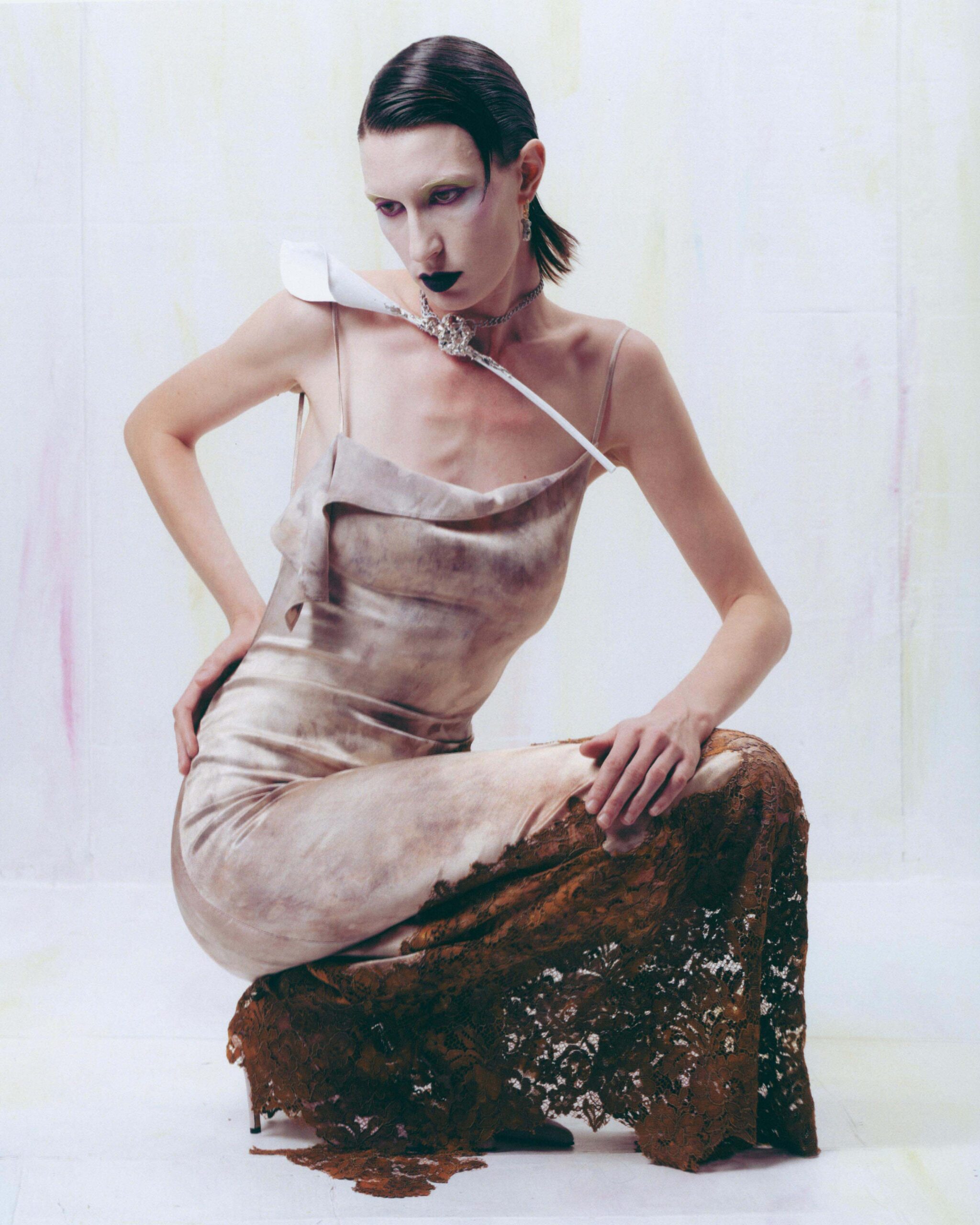
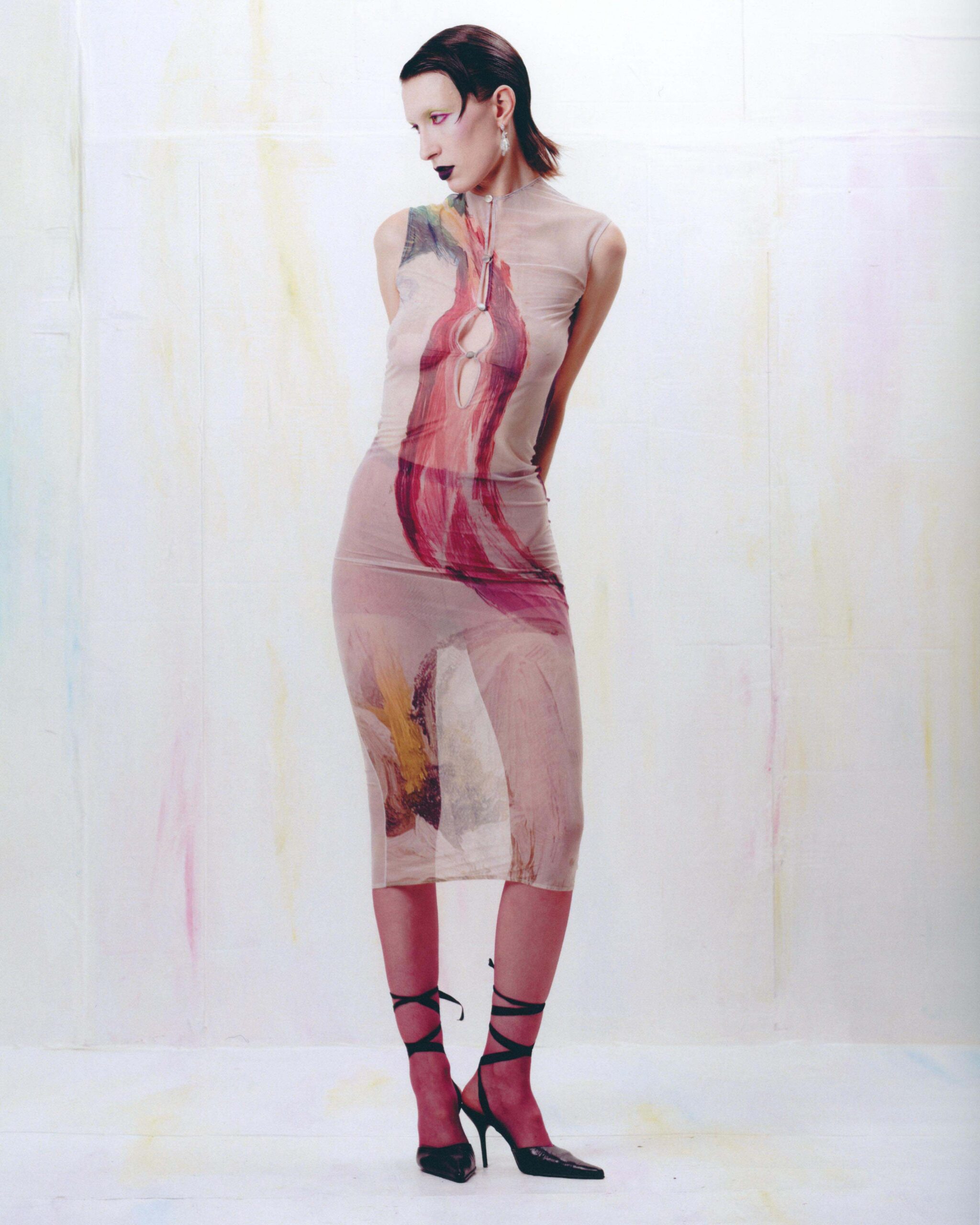
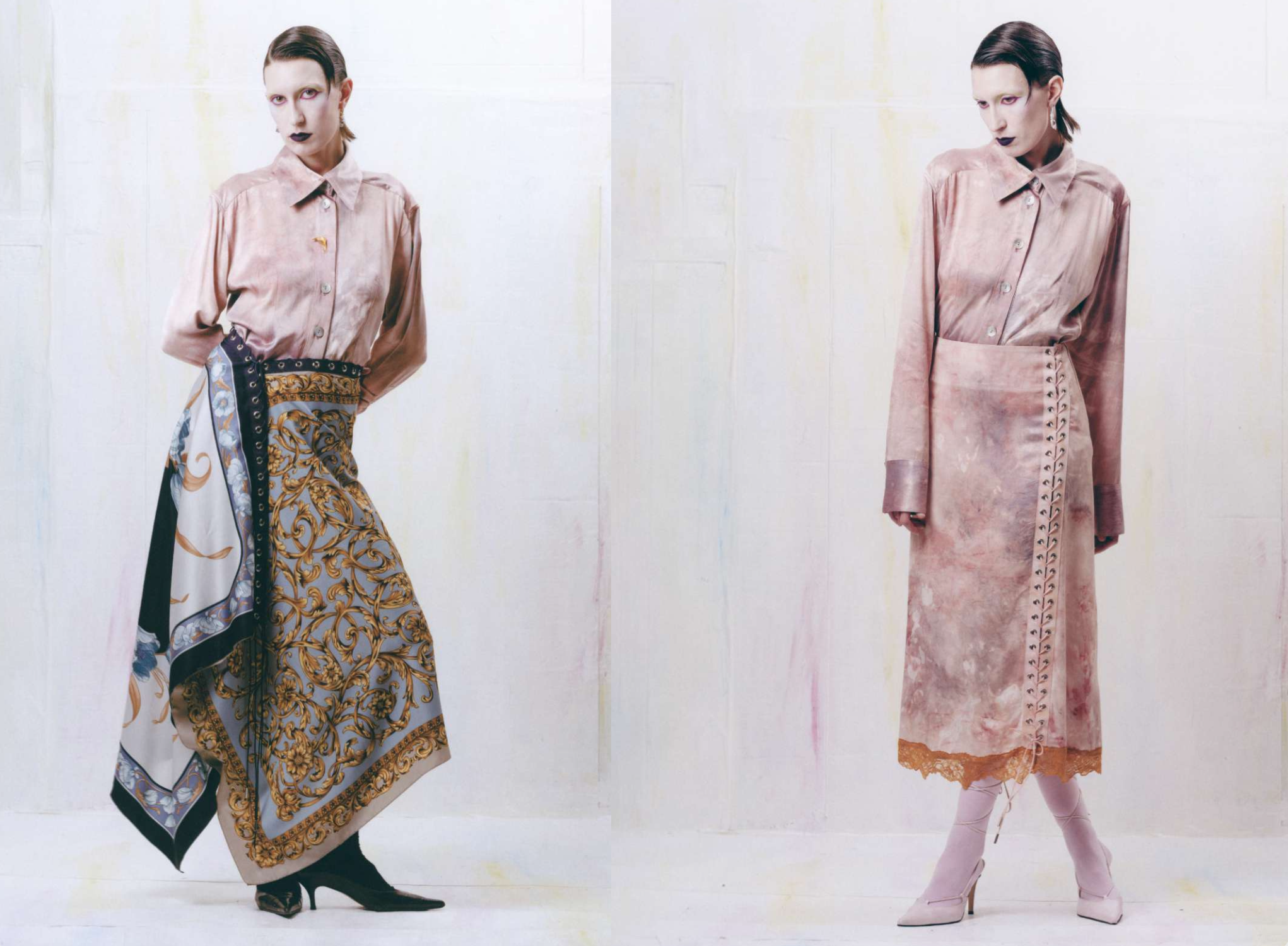
Her SS26 collection, Inside the Bloom, draws inspiration from hard-edged abstract paintings that subtly evoke the sensuality of the female body. Rappaz credits Georgia O’Keeffe’s sculptural approach to flowers as her north star. Throughout the collection, a subtle stream of calla lily inspiration cascades, creating a dialogue with O’Keeffe’s visual world and transforming life into living artwork. “I was inspired by tattooing with rose and floral motifs,” Rappaz explains. “The idea was to put forward different women who represent strength in their essence of being. The jacket, for example, is very corseted and quite voluminous but also with precisely embroidered scarves, which reflects the duality I’m trying to convey.”
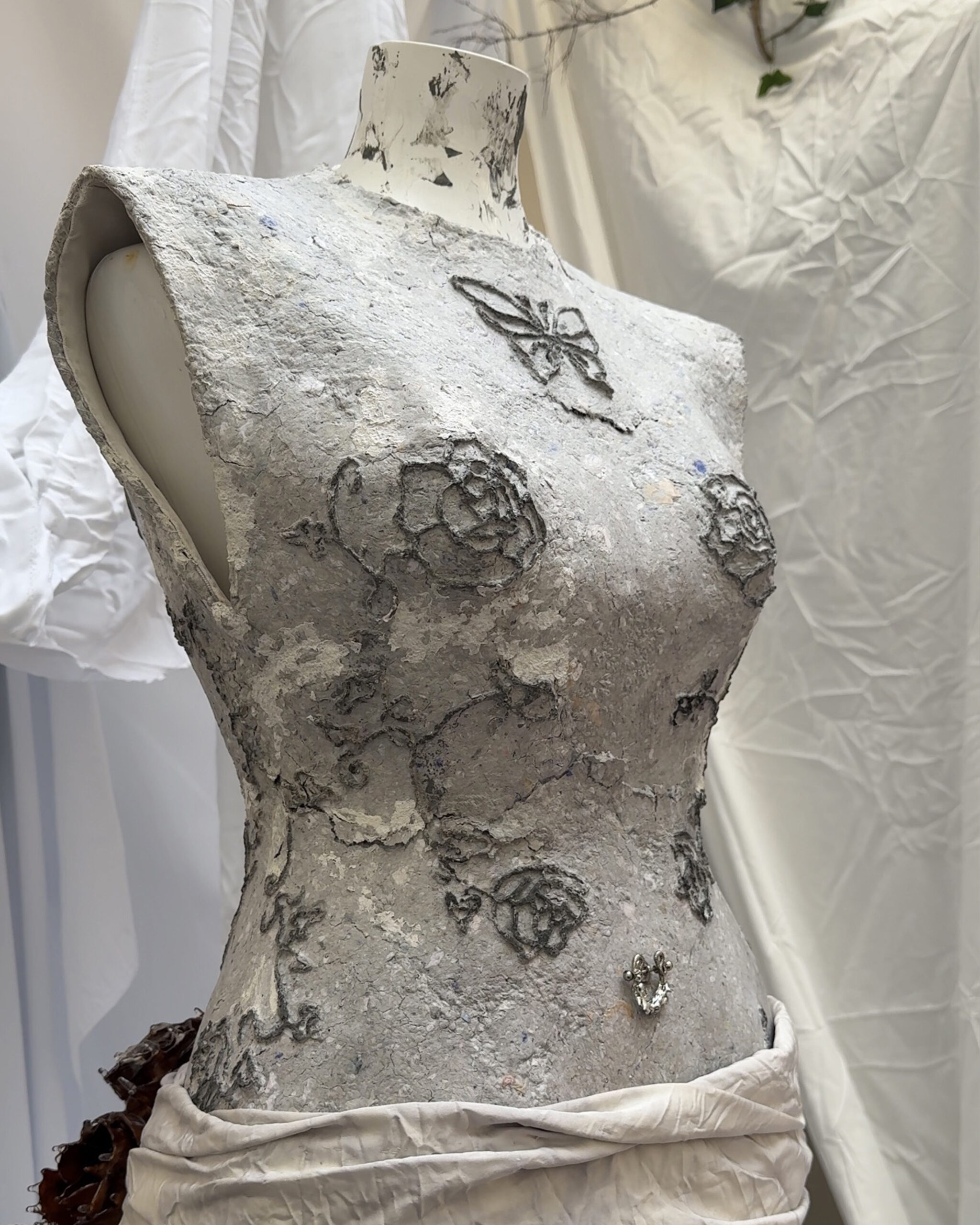
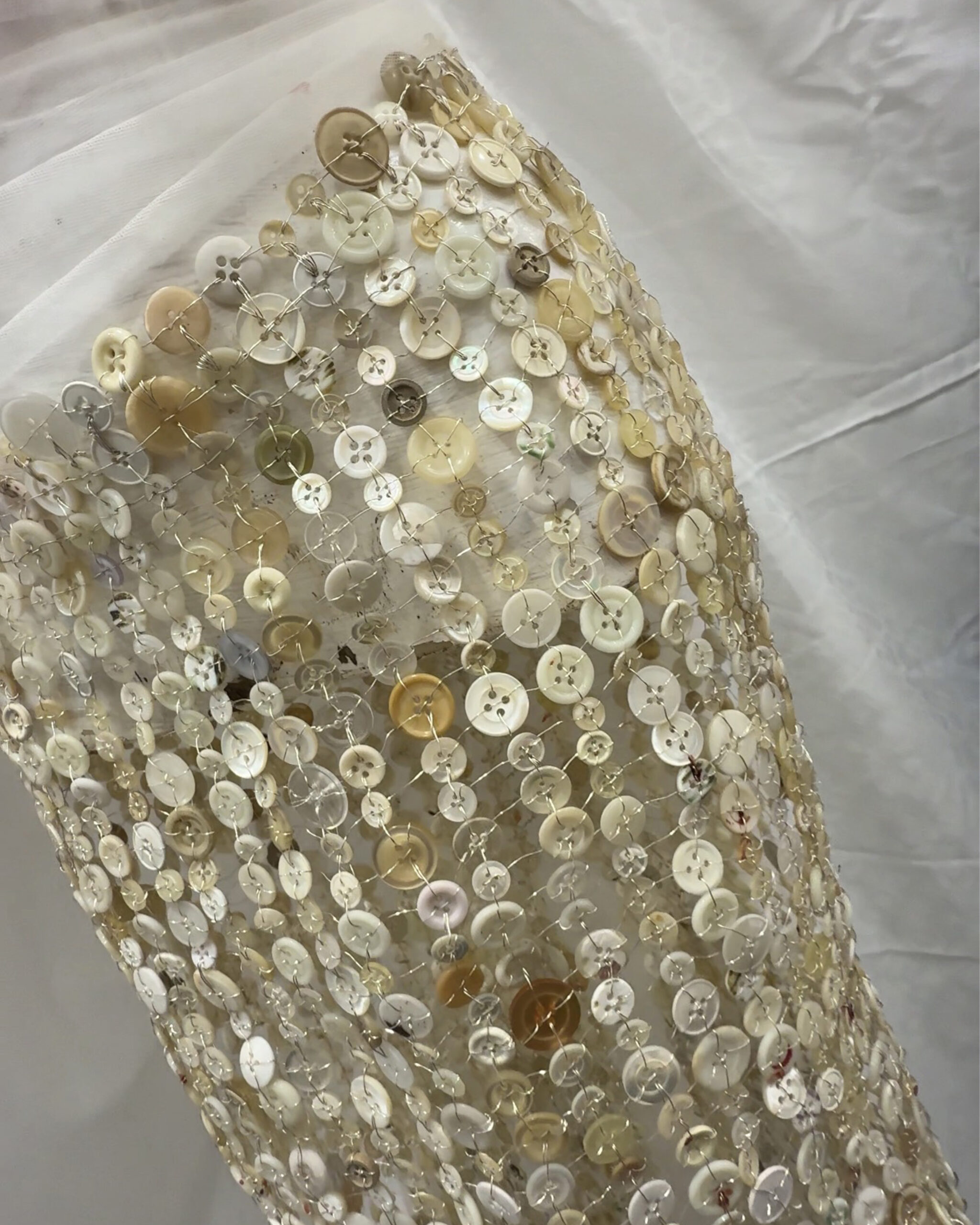
The most challenging piece? A skirt constructed entirely from mother-of-pearl buttons, a painstaking process requiring extensive research for raw materials and a complex assembly system to achieve its delicate, airy quality. Her favorite, though, is the papier-mâché corset created in collaboration with artist Tiffany Bellenot. “I love this idea of a slightly ephemeral and very sculptural piece,” she says. Bellenot’s sensitive, visceral drawings created a sense of living tattoos, turning each piece into a true second skin.
Who do I imagine wearing this collection? Picture Katniss Everdeen storming the Capitol. Moira Rose making social commentary she’s blissfully unaware of. Jobu Tupaki from Everything Everywhere All at Once, Leeloo from The Fifth Element, and Alice from Resident Evil mid-fight. Women who are morally grey, untamed, beautifully human, resilient, questionable, radically self-affirming, and free.
The collection itself is inspired by transgressive female figures such as Marlene Dietrich, Siouxsie Sioux, tattooed women from freak shows, and cabaret icons, blurring the boundaries between glamour and subversion, power and desire. It’s a conversation that feels urgent in 2026, when Gen Z continues to raise concerns over the lack of women’s voices in womenswear design. In an industry still dominated by men, seeing a woman’s perspective feels radical.
Rappaz collaborated with diverse expressions of femininity throughout: Moon, Chéri, Aurore Guez, Gloria Tropical, Mami Watta. Even the creative teams were composed exclusively of women: photographers, videographers, set designers. “It was a real challenge to find women photographers and videographers,” she admits. “It’s still a very male-dominated field.”
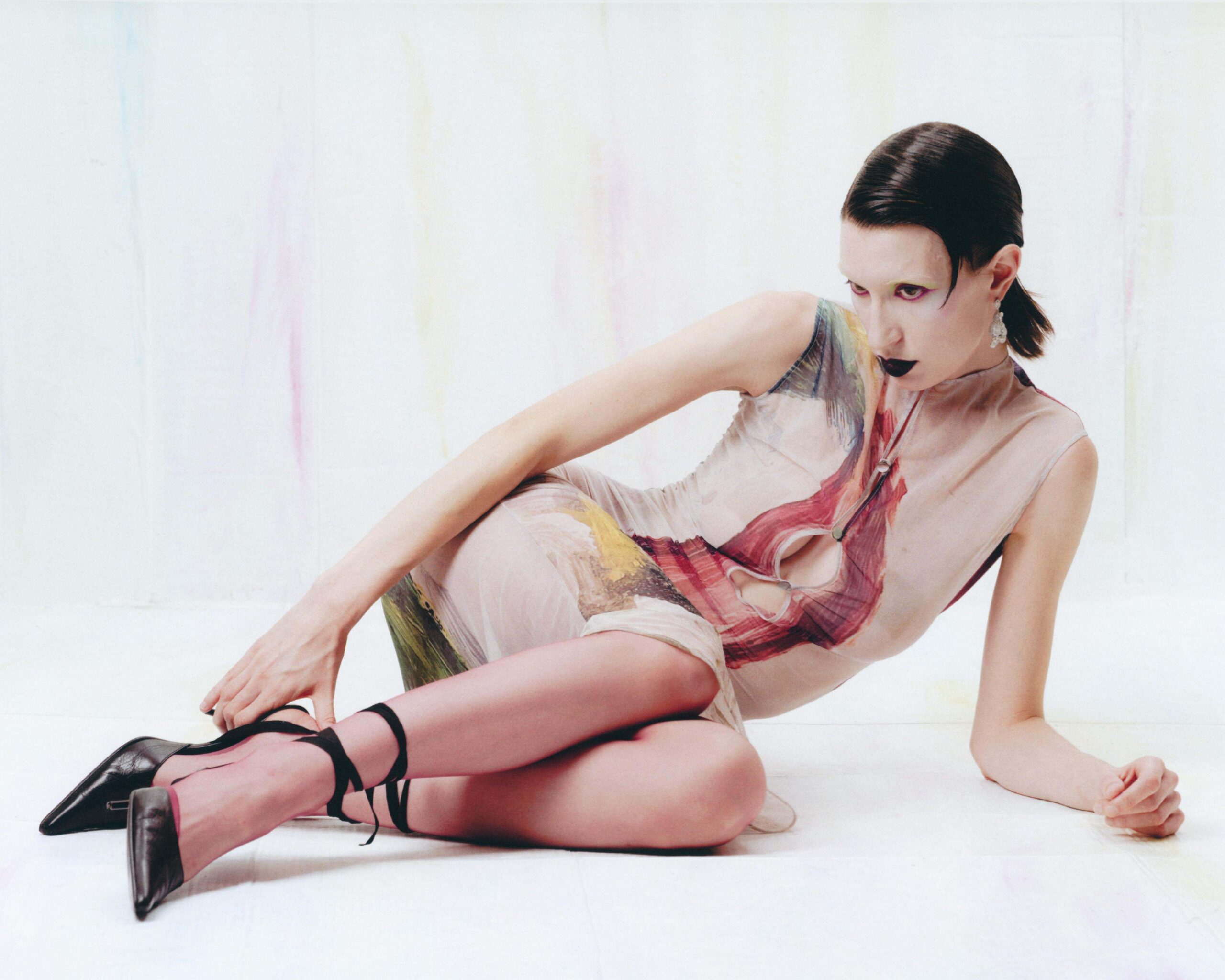
The frayed edges, asymmetrical lines, textured fabrics, and garter-style yet structured silhouettes create a visual tension. It’s feminine but daring. It asks a question and lingers. Strong yet contradicting. This blend of post-apocalyptic punk and floral delicacy visually conveys a message where nature reclaims its rights, not through force, but through quiet, undeniable presence. In Rappaz’s hands, discarded materials don’t just find new life; they demand to be seen, worn, and celebrated. And that, perhaps, is the revolution.
author PRIYAM MISHRA
images COURTESY