

August 30, 2026
GRAND HOTEL BELVEDERE – THE LUXURY OF DISAPPEARING FOR A FEW DAYS
Some journeys begin when you arrive. Others begin much earlier. In my case, the journey to Wengen started at Zurich’s main station, surrounded by the constant movement of a major European railway station, suitcases, announcements and the coming and going of hundreds of people. About two and a half hours later, everything felt completely different. There were fewer people, the trains had become smaller, and the mountains had begun to take over everything.
Perhaps that is the first experience of Grand Hotel Belvedere: getting there somehow means leaving something behind.
From Zurich, the train passes through several stations before reaching Wengen, a car-free village perched at 1,274 metres above the Lauterbrunnen Valley. The journey gradually changes in scale. The train gets smaller, the landscape opens up, and the city seems to disappear behind every turn. Wooden houses, meadows, cows, forests — all those images one immediately associates with the most familiar idea of Switzerland — begin to appear. What I found interesting was that it never happens all at once. It is gradual. Almost like a process of letting go.
First the noise disappears. Then the crowds. Finally, the feeling that you have to get somewhere.
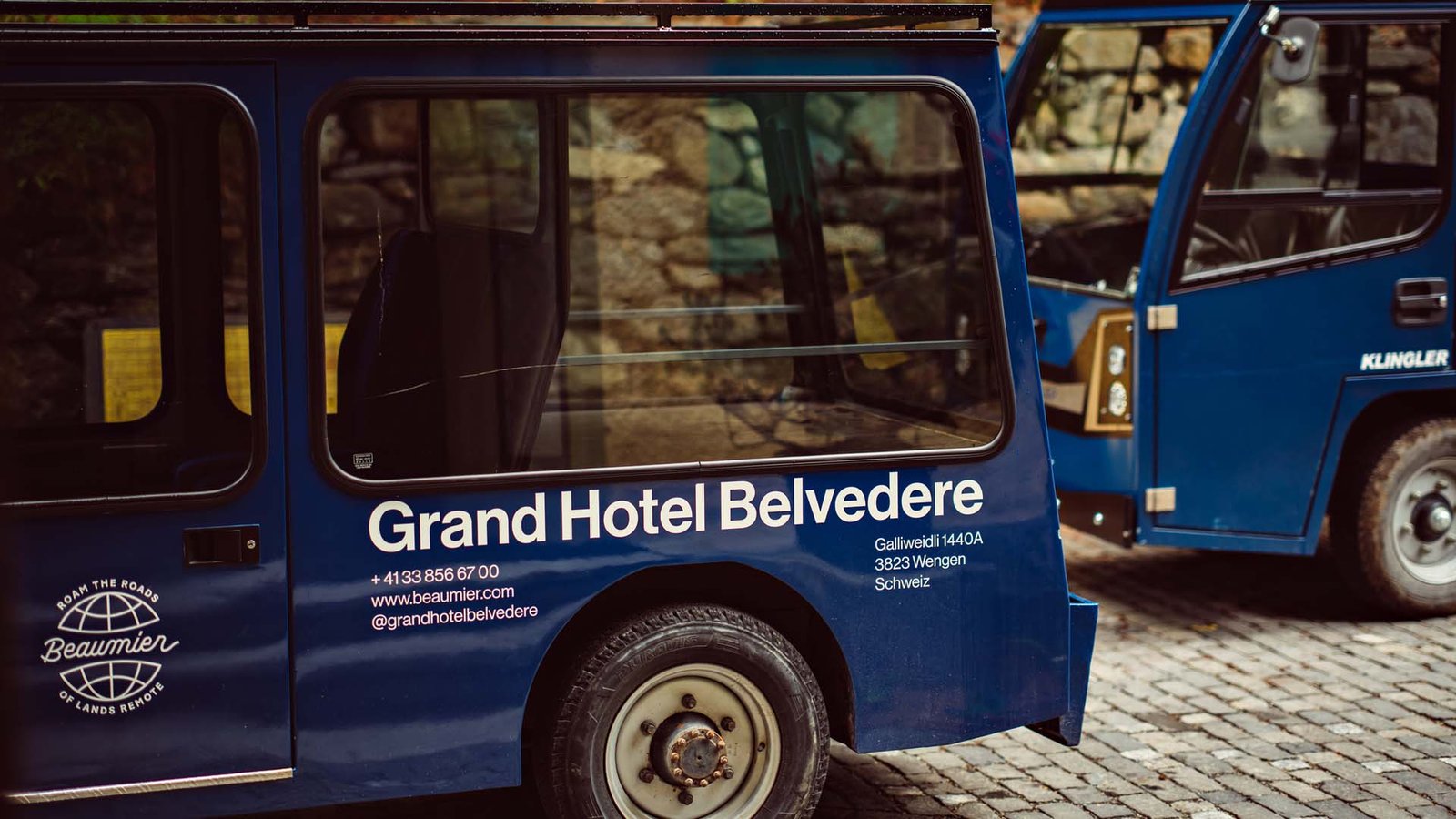
By the time the train reaches Wengen, very little remains of the Zurich station we left behind. In our case, a small hotel vehicle was waiting to take us the final few minutes to Grand Hotel Belvedere. It is a simple detail, but it completely changes the arrival. Someone is there to meet you, take your luggage, ask how the journey was and, without too much ceremony, make you feel that you have already arrived.
That same feeling continues once you walk through the door. The check-in does not have the formality that can sometimes accompany luxury hotels. They ask how the journey was, where you are coming from, whether you need anything. Small gestures, perhaps, but they make the arrival feel less like a procedure and more like a welcome. Maybe that is where the relaxation begins, too.
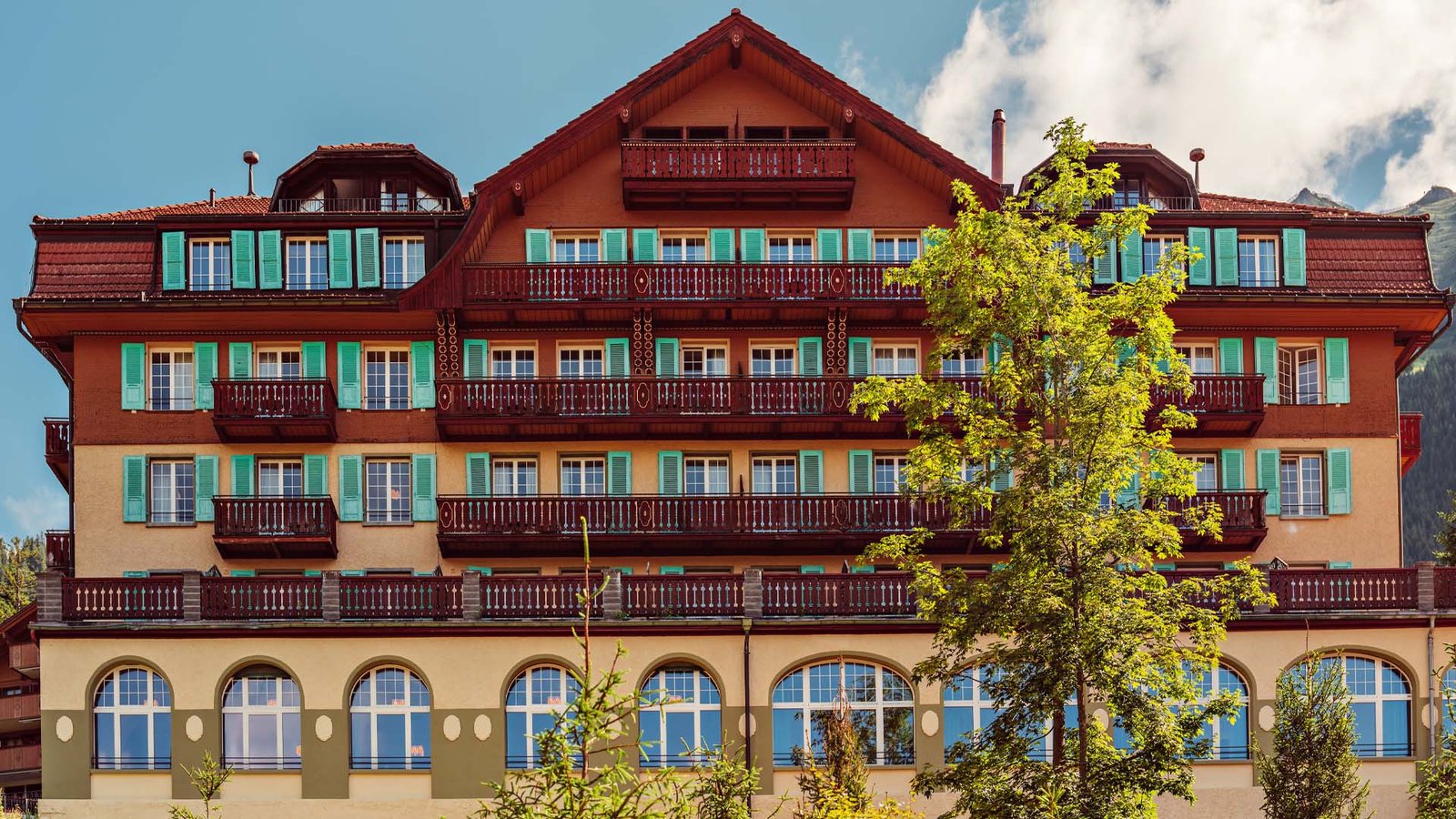
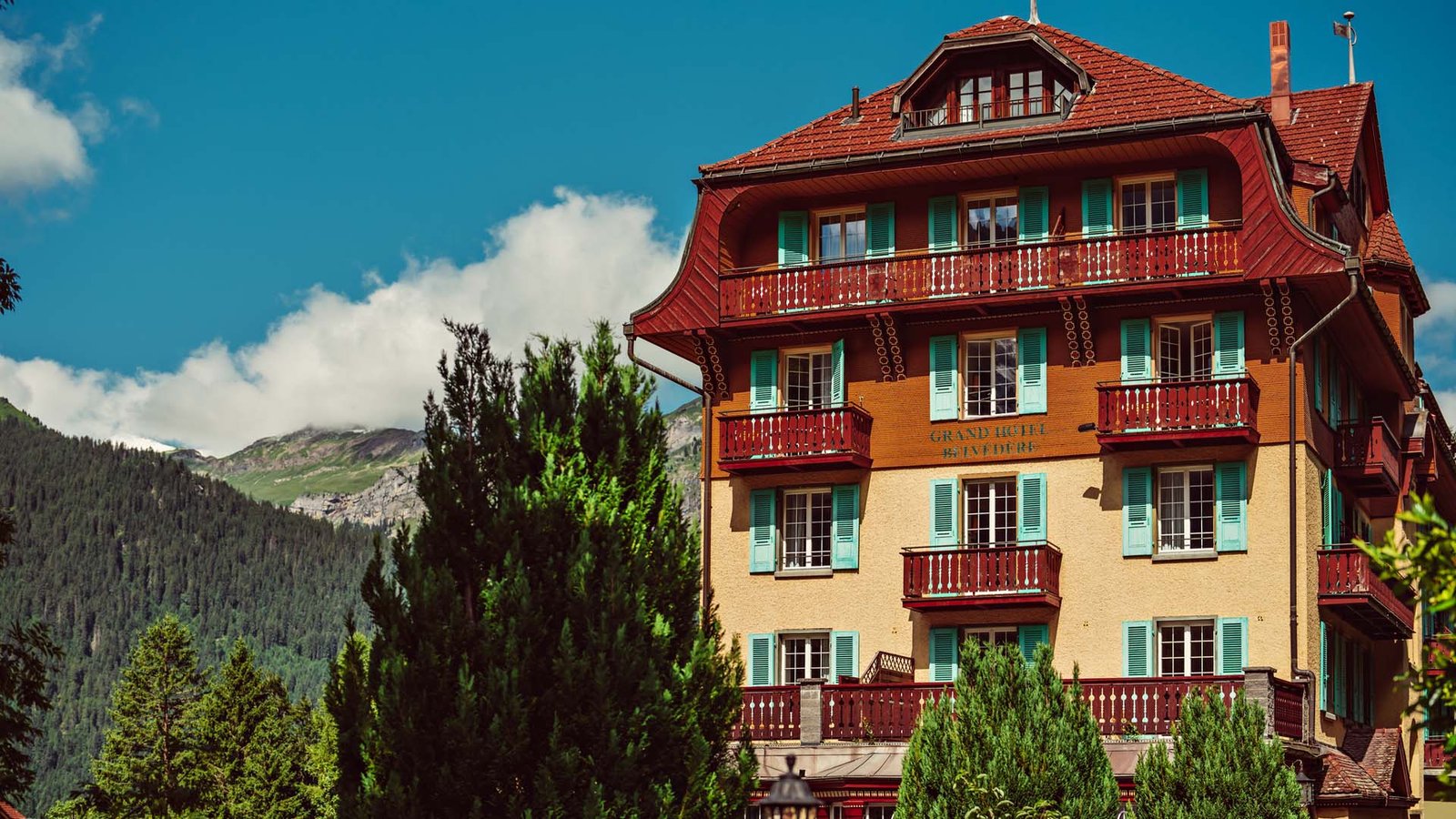
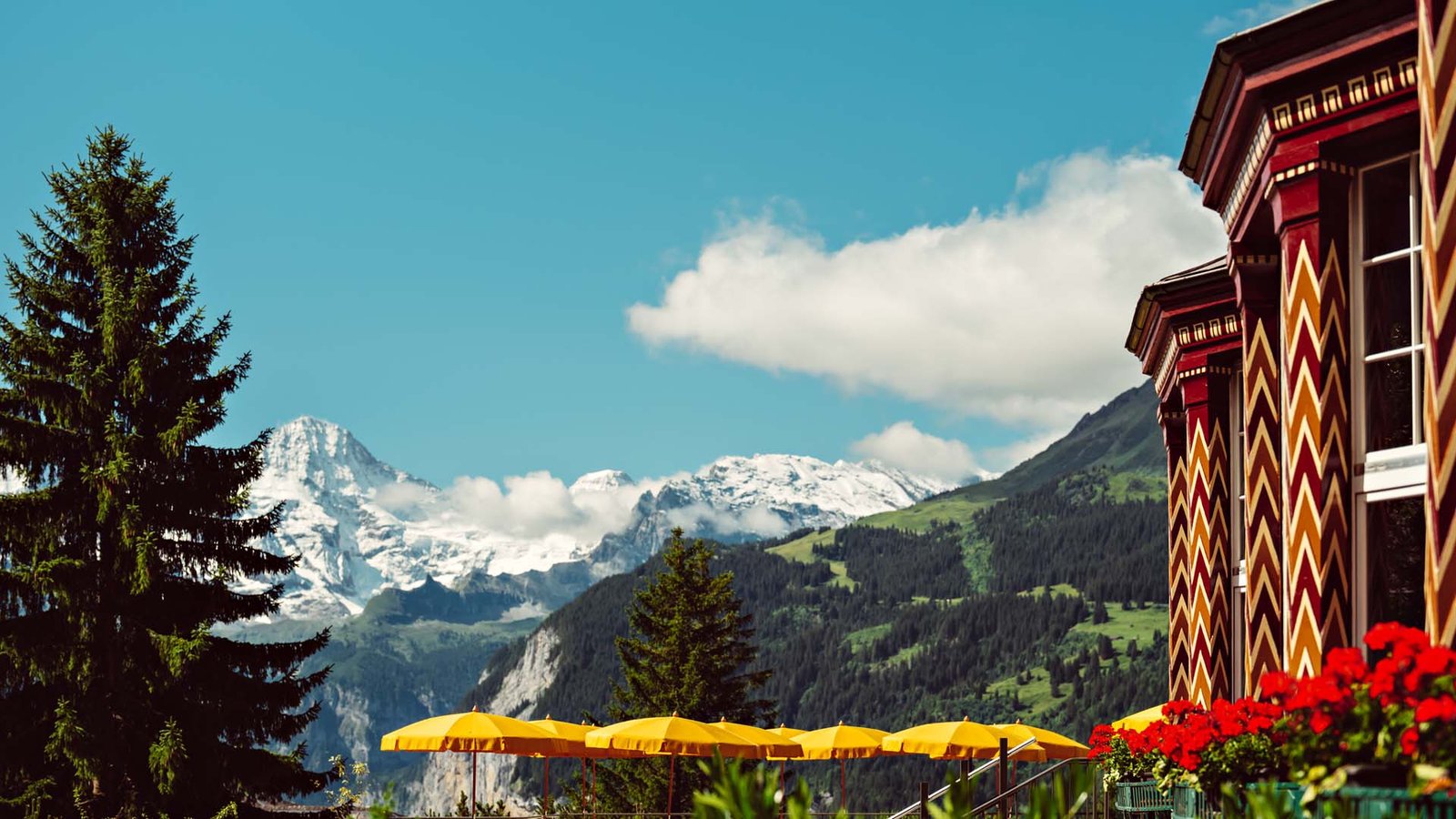
Wengen is a village where time seems to move differently. Set above the valley and facing the Jungfrau, Grand Hotel Belvedere feels as though it naturally belongs to its surroundings. At first glance, there is something about it that resembles a large Alpine chalet, but a closer look reveals a much more sophisticated architectural language. Originally built in the early 20th century, the property has been carefully reinterpreted by Swiss architects Complete Works and Clavien & Associés, who preserved elements of Heimatstil and Art Nouveau while bringing them into a contemporary setting.
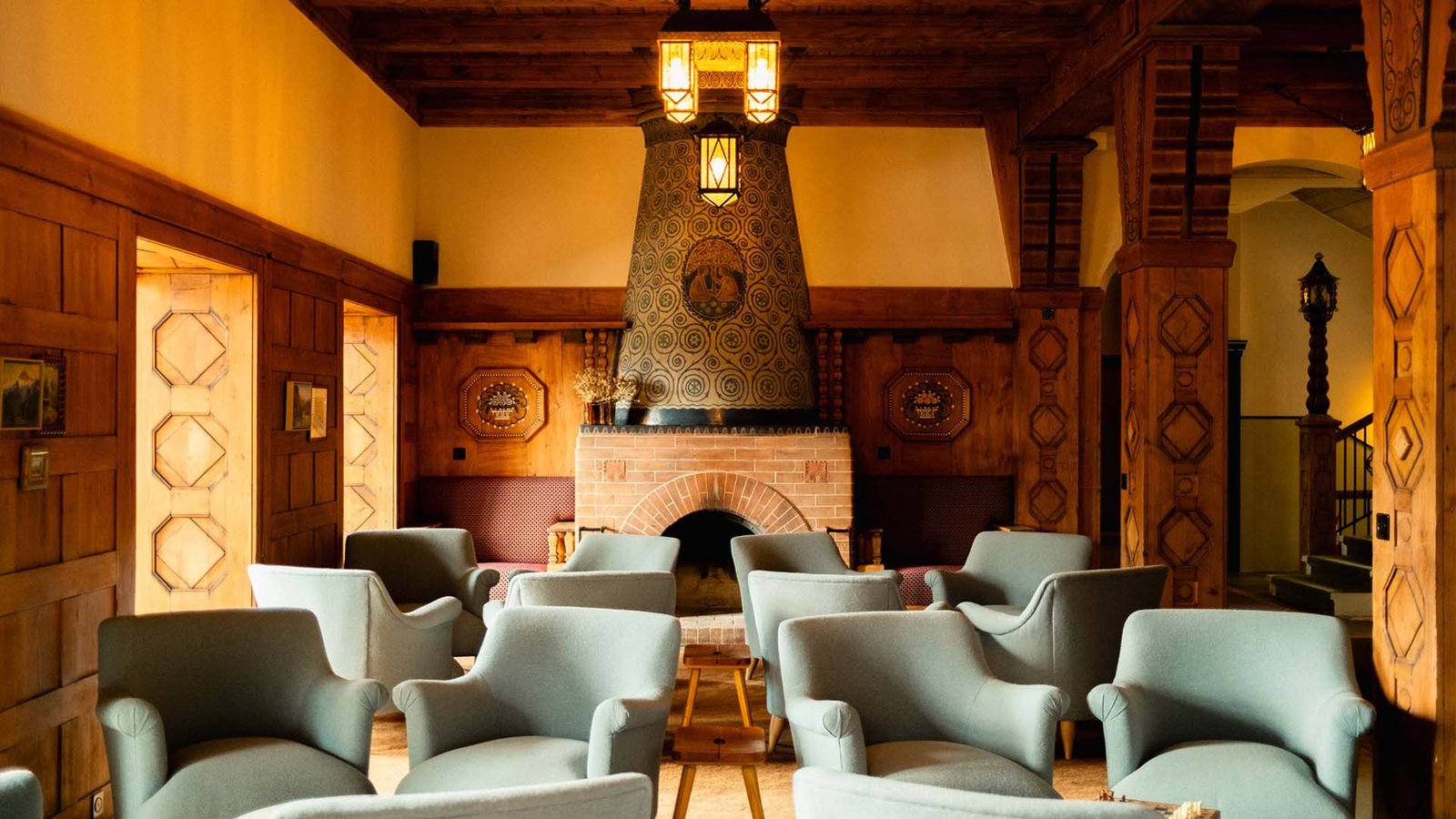
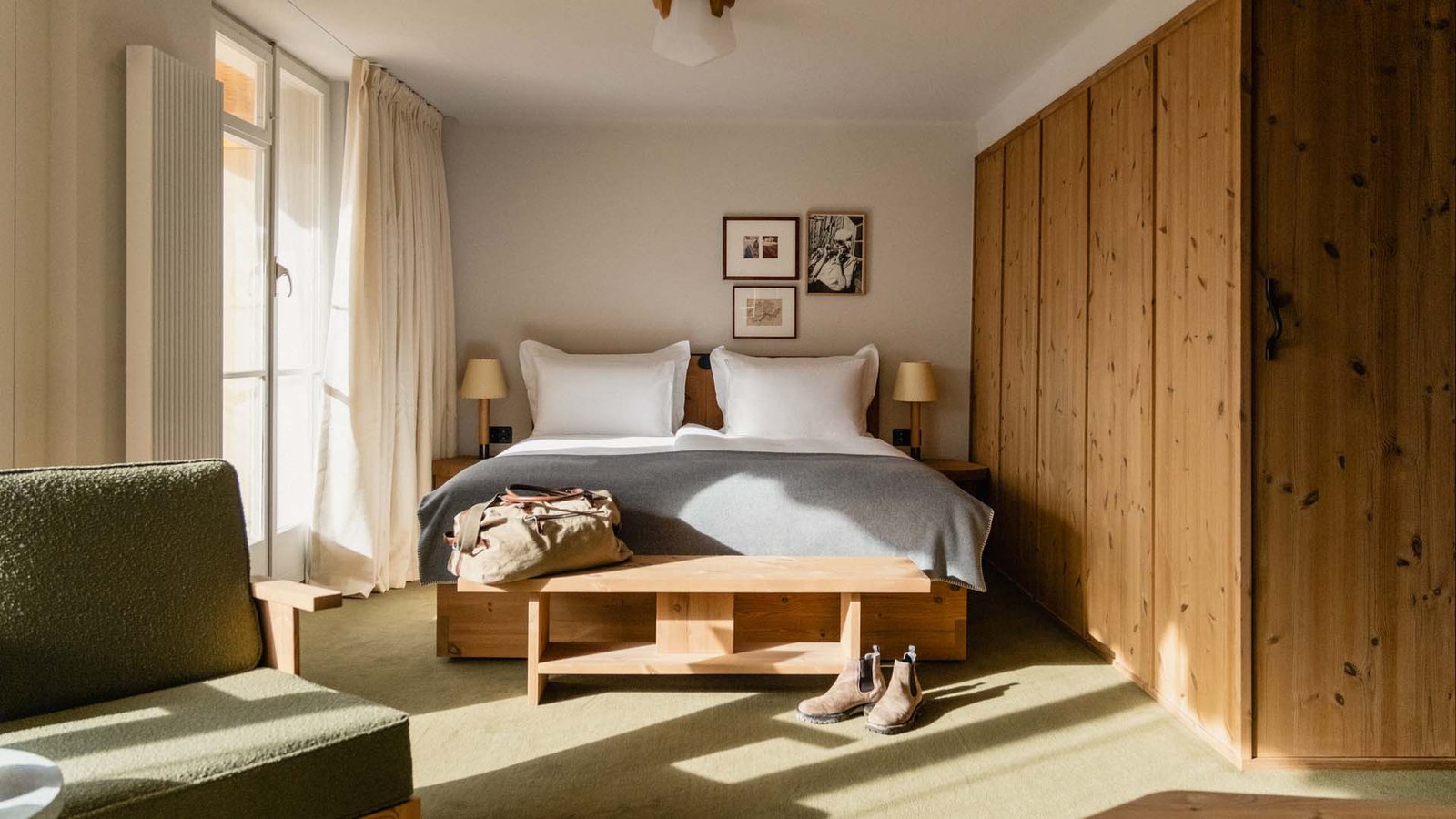
But what struck me most was not the decoration itself, but how it feels to be there. Some hotels seem to constantly need to remind you that you are staying at a luxury property. Here, the opposite happens. There is a very well-considered simplicity. Wood, wool textiles, custom-made furniture, stone and natural tones create warm, elegant spaces without ever feeling excessive. The mountain is already there; there is no need to compete with it.
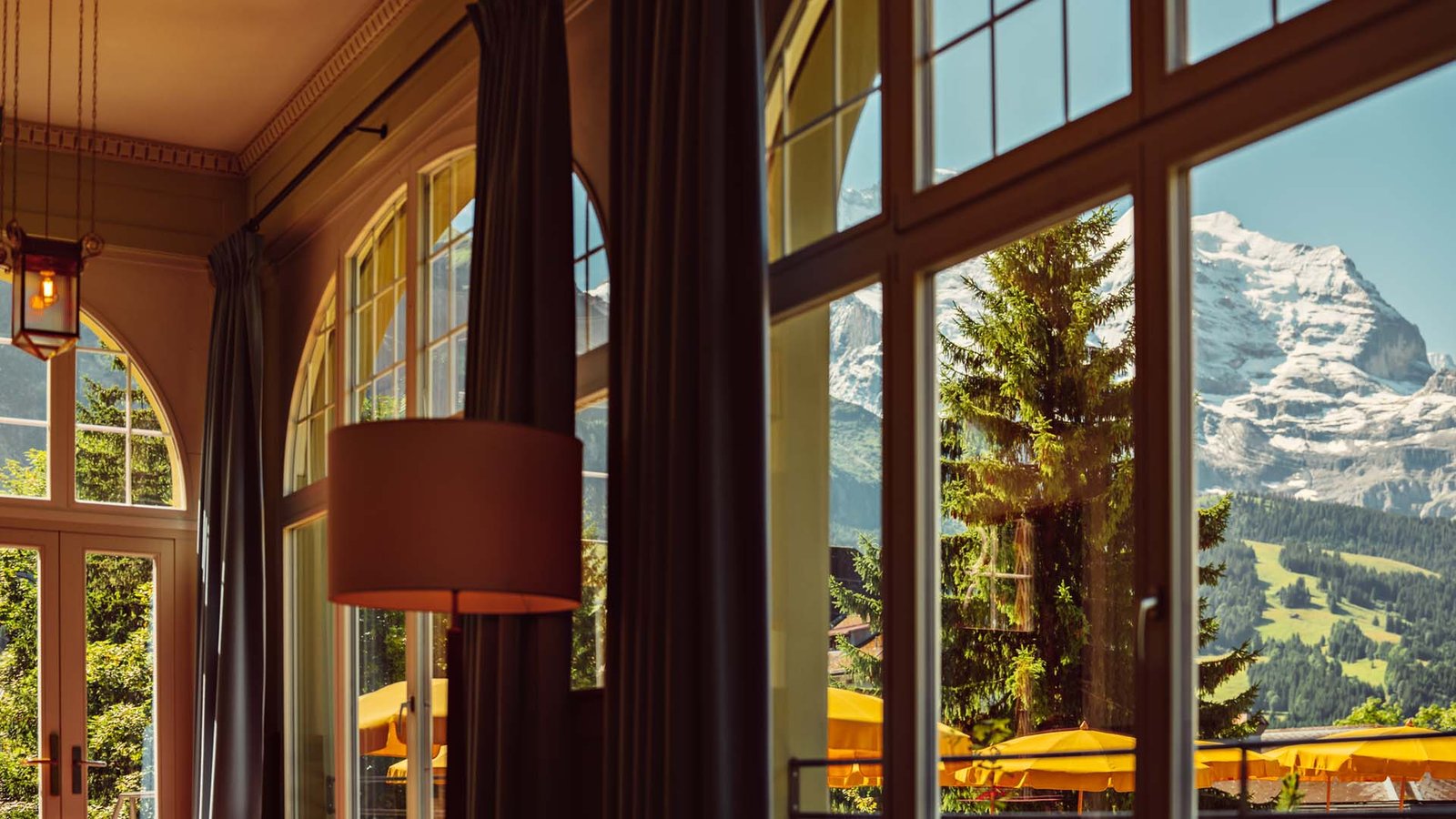
And perhaps that is one of the smartest decisions behind the project. In a place like Wengen, where nature has such a powerful presence, luxury should not try to impose itself. It should know when to disappear.
The 90 rooms and suites follow precisely this idea. Their interiors establish a direct relationship with the landscape through local materials and a restrained aesthetic. In my case, the room also had a particularly comfortable workspace, which I appreciated as it allowed me to combine some work with the pleasure of being there, without feeling as though I had simply relocated my office to the Alps. But working was not easy when there was so much to look at outside. From the balcony, the mountain changed colour as the light moved across it, making it rather difficult to return to a screen.
There is something I discovered during those days that has very little to do with the stars of a hotel and much more to do with quality of life: silence.
Walking from the hotel towards the village and suddenly finding the valley opening up in front of you is a surprisingly simple experience. There is no need to do much. No need to organise an excursion or search for some extraordinary activity. You simply walk, look, breathe. The views from Wengen across the Lauterbrunnen Valley towards the Eiger, Mönch and Jungfrau are the kind of images that seem exaggerated until you are standing in front of them.
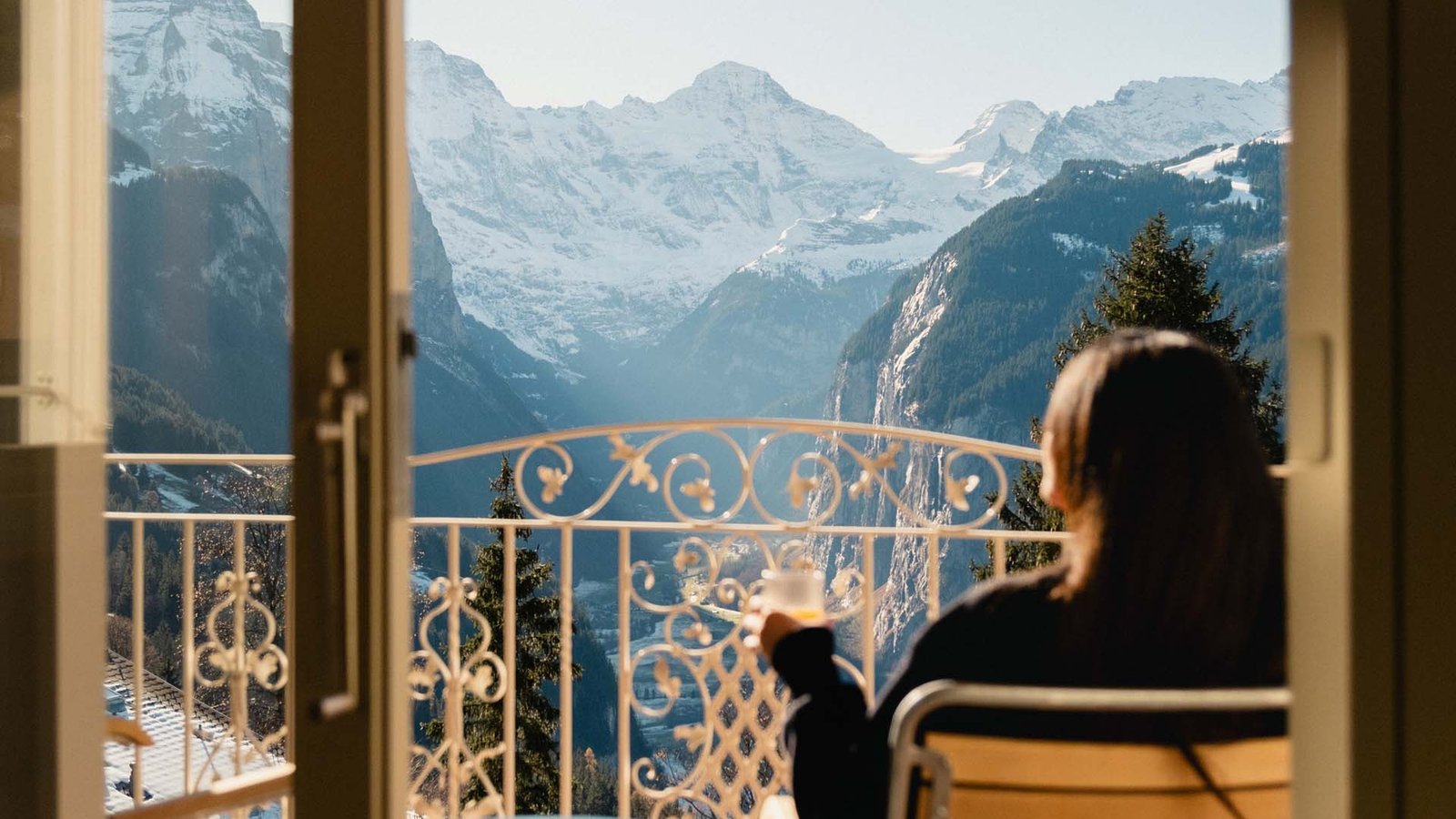
That silence, in fact, becomes one of the greatest luxuries of the journey.
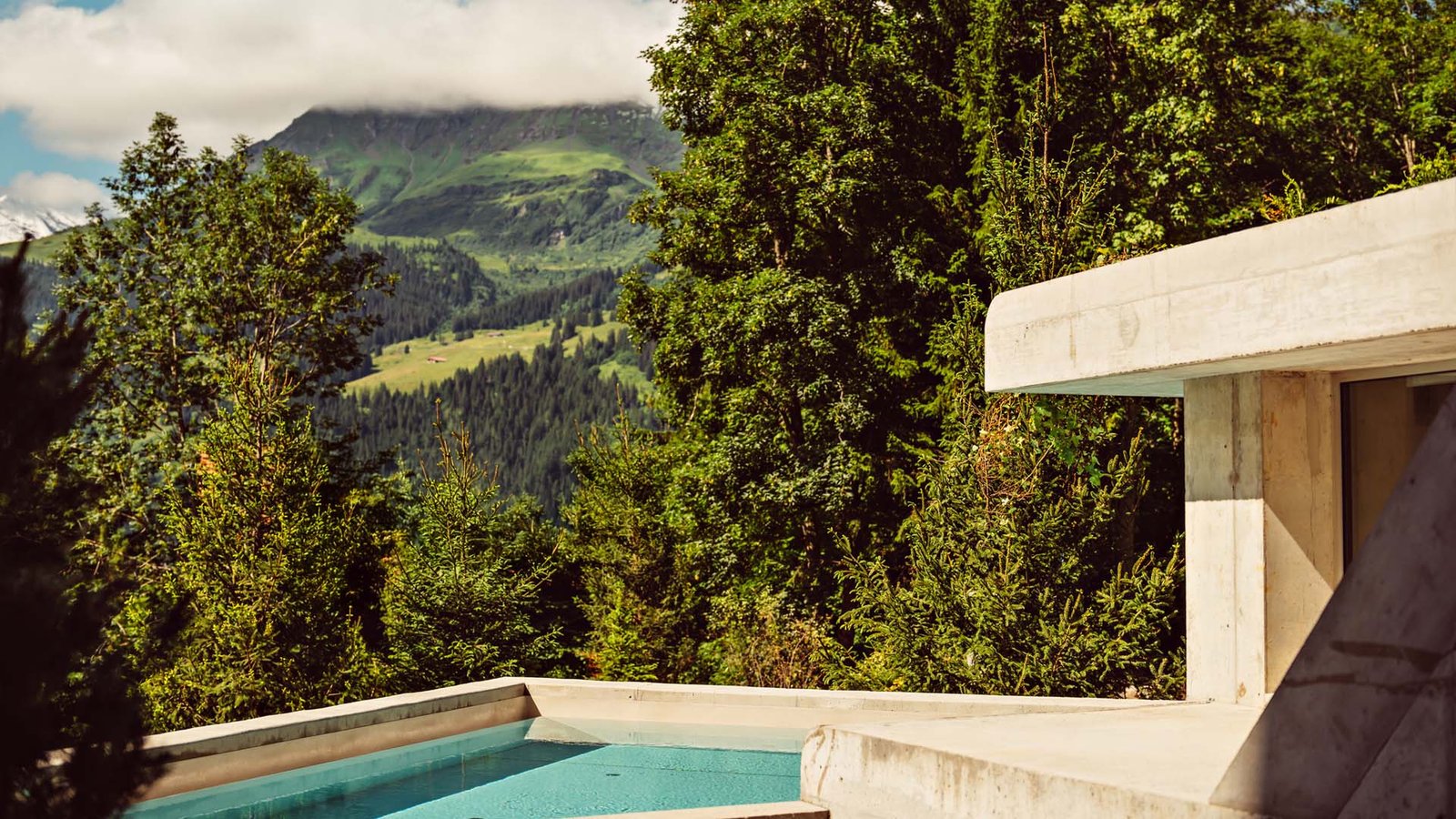
The hotel understands this idea in its spa, too. Inspired by Japanese onsens, the space combines concrete, water and mineral materials in an architecture of clean, essential lines. There is a sauna, hammam, treatment rooms and a relaxation area overlooking the Jungfrau, as well as a heated indoor-outdoor pool and a cold plunge.
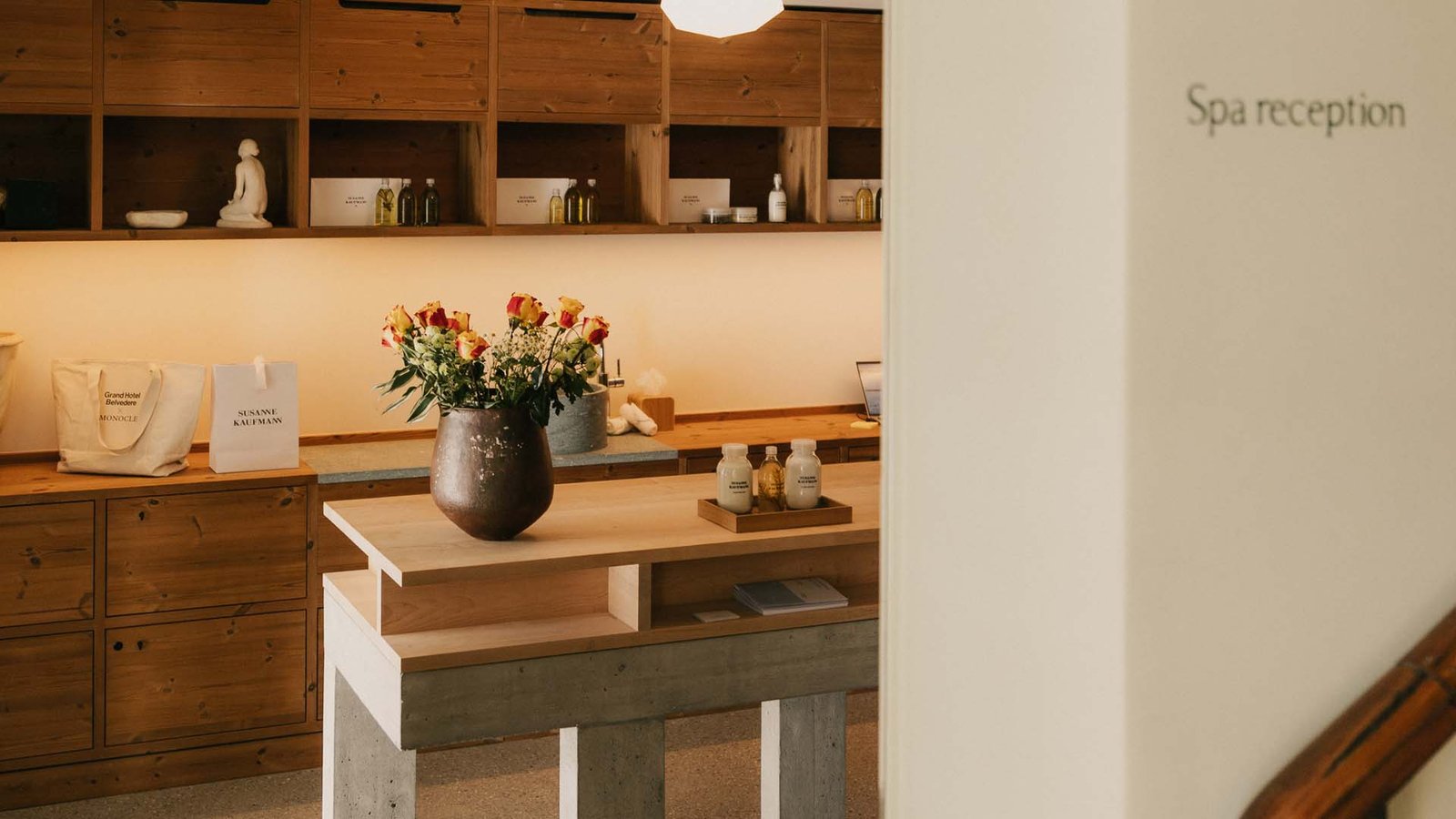
For me, the pools were among the most memorable moments of the stay. Being in warm water while the cold mountain air remains outside is difficult to describe. Your body begins to relax while the landscape simultaneously reminds you exactly where you are. Treatments by Susanne Kaufmann continue this philosophy, rooted in natural ingredients and a direct connection between wellbeing and nature.
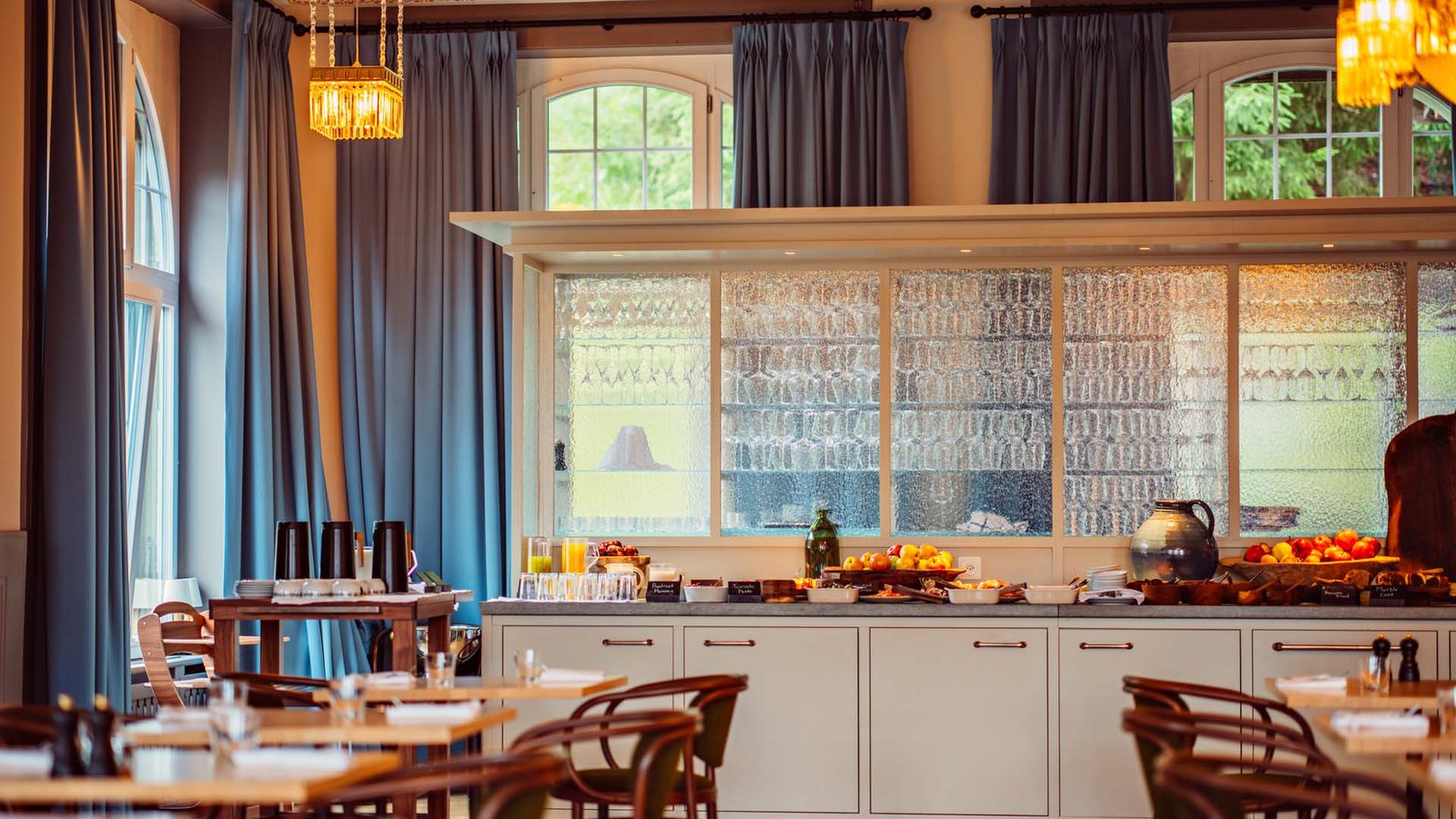
The food follows the same principle. Breakfast is generous, varied and substantial, with both sweet and savoury options — exactly what you want before heading out into the mountains. At Brasserie Belvedere, Alpine traditions meet a contemporary interpretation of the classic brasserie, while Sonnenbad Lounge & Terrace offers a more relaxed setting facing the Jungfrau. The cuisine focuses on seasonal produce and, whenever possible, ingredients sourced locally, respecting the surroundings without sacrificing pleasure.
But one of the best recommendations we received at reception was to leave the hotel and simply keep going upwards.
From Wengen, it is possible to reach Jungfraujoch – Top of Europe, the highest railway station in Europe, at 3,454 metres above sea level. Once again, the journey itself becomes part of the experience: more trains, more mountains, another transformation of the landscape. At the top, ice, snow and the Aletsch Glacier create an almost unreal setting
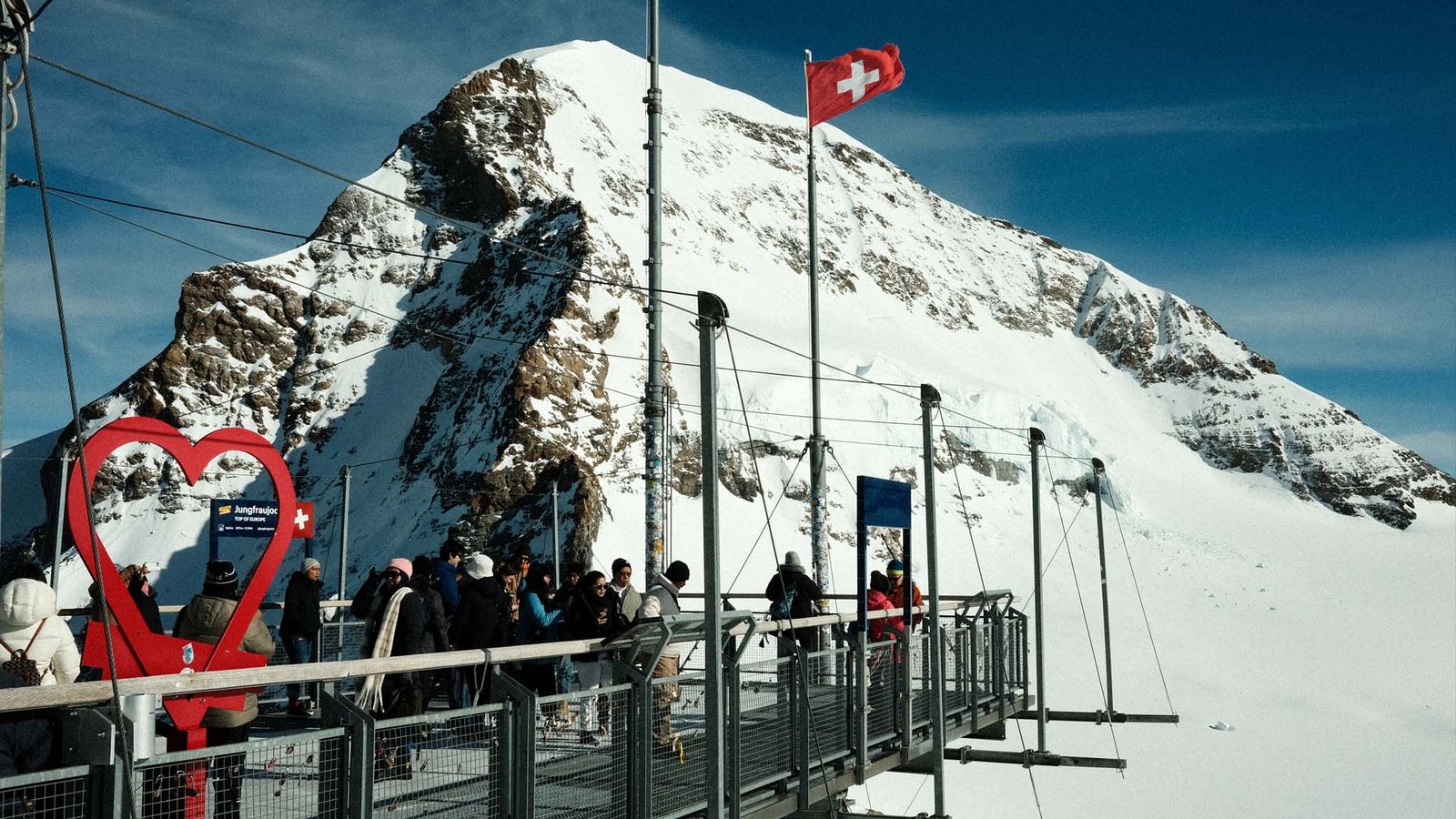
In a way, it was the perfect continuation of the journey that had begun in Zurich. If the journey to Wengen had been a process of leaving the noise behind, the ascent to Jungfraujoch took that feeling even further. Continuing upwards, leaving everyday life further behind, until you find yourself facing a landscape that quite literally forces you to stop.
Perhaps that is why Grand Hotel Belvedere works so well. It does not try to become the centre of the experience. The experience is outside: in the train, in the valley, in the silence, in the mountains, in the early morning light coming through the window. The hotel simply knows how to accompany it.
Beaumier, whose identity has been built around hotels deeply connected to their destinations, seems to have understood something essential about Wengen: here, true luxury is not about having more, but about needing less. Less noise. Less hurry. Less stimulation.
After a few days, you begin to understand that relaxation does not necessarily mean having a treatment, sleeping late or getting into a pool. Sometimes it simply means walking without hearing cars. Looking at a valley without thinking about the next meeting. Having breakfast without rushing. Sitting on a balcony and watching the mountain change with the light.
Perhaps that is the real luxury of Grand Hotel Belvedere: not giving you more things, but giving you the chance to forget about them for a while.
author SEBASTIAN MAGUNACELAYA