
August 19, 2026
Rooted in Thought – conversation with Edgar Le Govic
Edgar Le Govic is a Paris-based artist who has developed a refined visual language across a variety of media. His work pays particular attention to form, line, and texture. He explores the tension between the human silhouette and botanical forms, moving between figuration and abstraction.
You grew up in Brittany, a region with a strong cultural identity and rich folklore. Which memories or images from your childhood continue to shape your work today?
Growing up in Brittany gave me a strong connection to nature. I spent a lot of time by the sea and in the countryside, observing the shapes of plants, rocks and coastal landscapes. These observations developed my sensitivity to lines, silhouettes and organic structures. I also think they influenced my interest in vegetable flowers, such as those of carrots, fennel and garlic, which now appear in my work.
What continues to influence my work today is not a specific memory, but a way of looking at the world. Brittany has a quiet atmosphere where nature is always present. That sense of calm and contemplation continues to nourish my practice.
Do you remember the moment you realized that art would become your path in life?
I don’t think there was a single moment when I decided that art would become my path. What I do remember is the moment I found my artistic voice.
I believe every artist goes through a period of searching and self-discovery, a stage that simply can’t be rushed. I never experienced it as a frustration, but as something completely natural in an artist’s journey. It is a necessary time to understand what you truly want to express, to develop your visual language, and to find your own artistic identity.
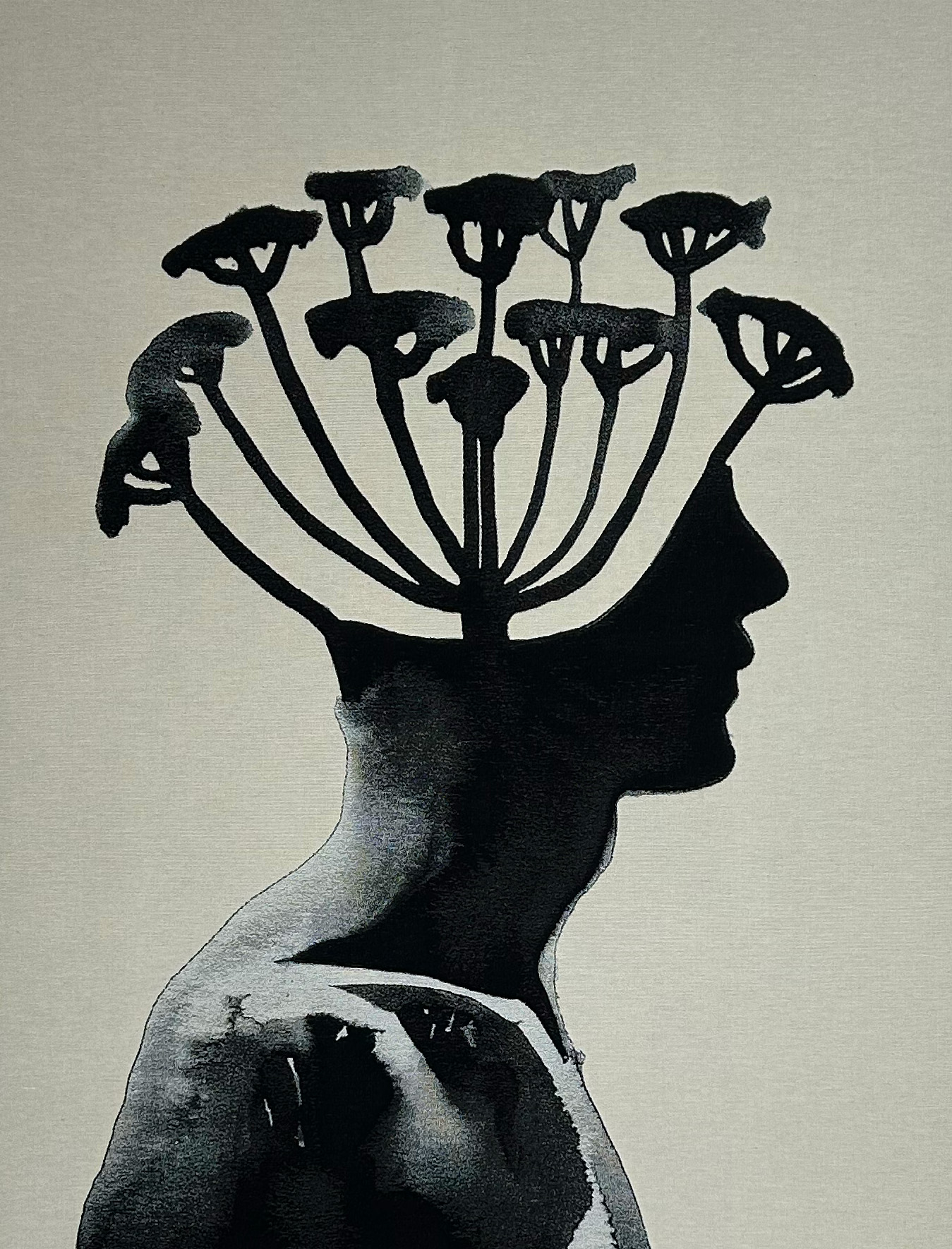
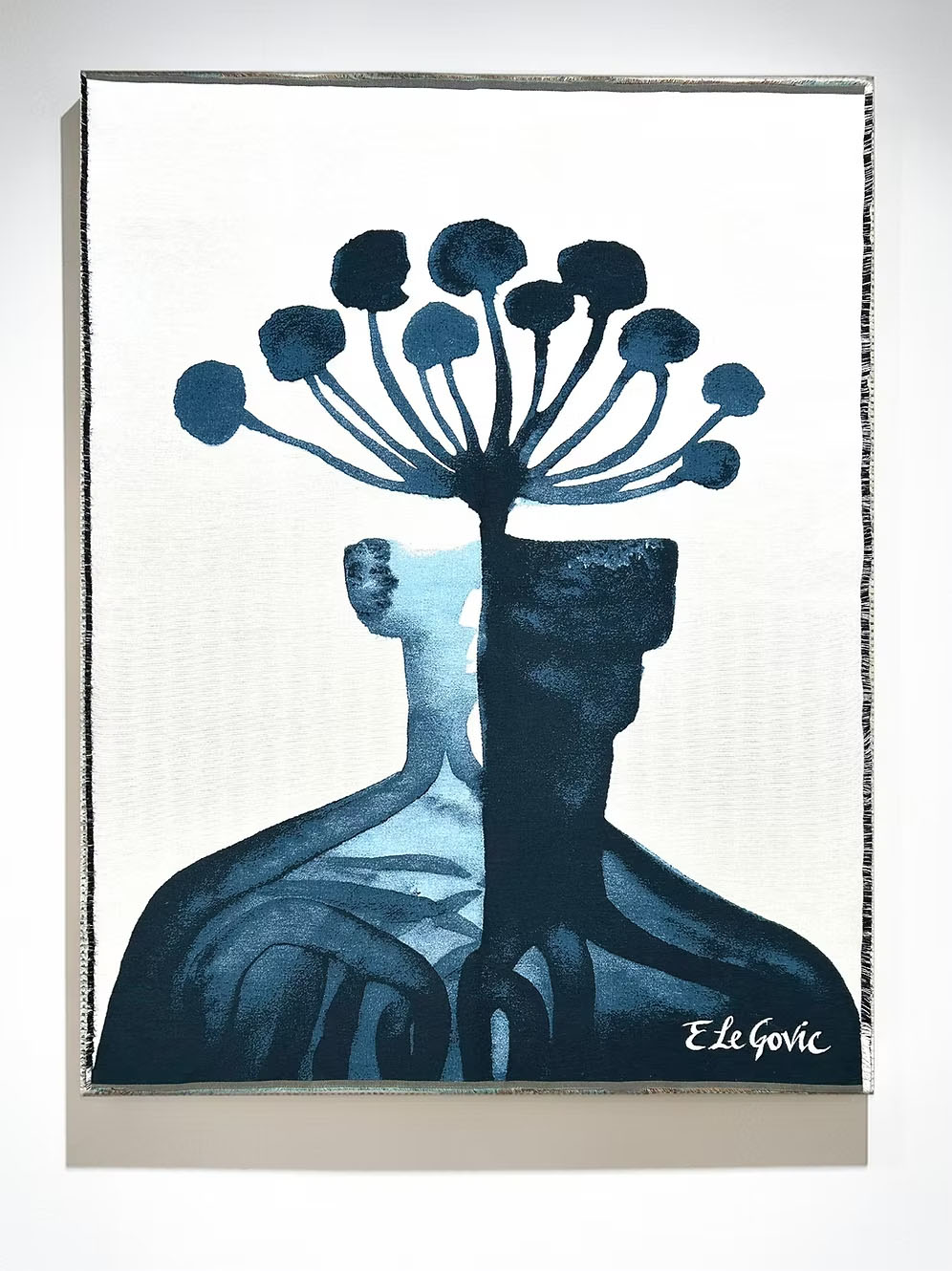
The real turning point came when I realized that the core of my work was to represent human thought. Today, I explore this through simplified human silhouettes whose heads become the starting point for botanical forms inspired mainly by umbel flowers.
Finding that direction gave me confidence, but also the motivation to keep going. Without it, I’m not sure I would have continued my artistic practice with the same conviction.
Your work often blurs the boundary between the human figure and the botanical world. What first drew you to this relationship between people and nature?
What first drew me to this relationship was my desire to represent human thought. I was looking for a way to make something invisible visible. It felt important that thought should be embodied by a living element, capable of suggesting growth, movement and transformation. The botanical world naturally became that language.
Flowers allow me to represent thoughts that branch out and evolve. There is also a strong formal connection: a stem can become a spine, while the branching structure of a flower echoes the branching of the brain.
I also like the idea that plants, like people, are constantly evolving and deeply influenced by their environment. We could almost represent our emotions through flowers, or different periods of our lives through the seasons. That closeness between the human and the botanical world is what continues to inspire my work.
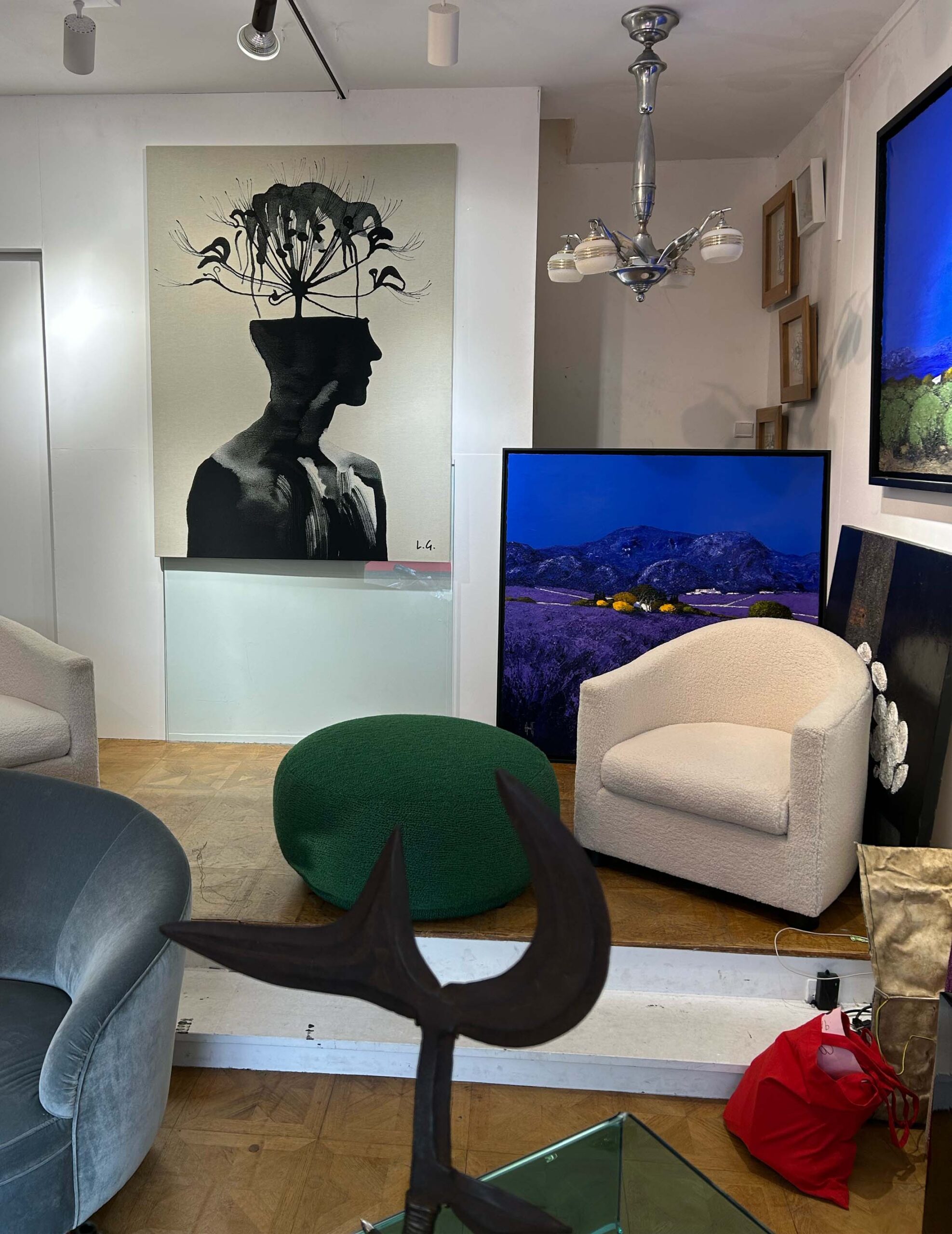
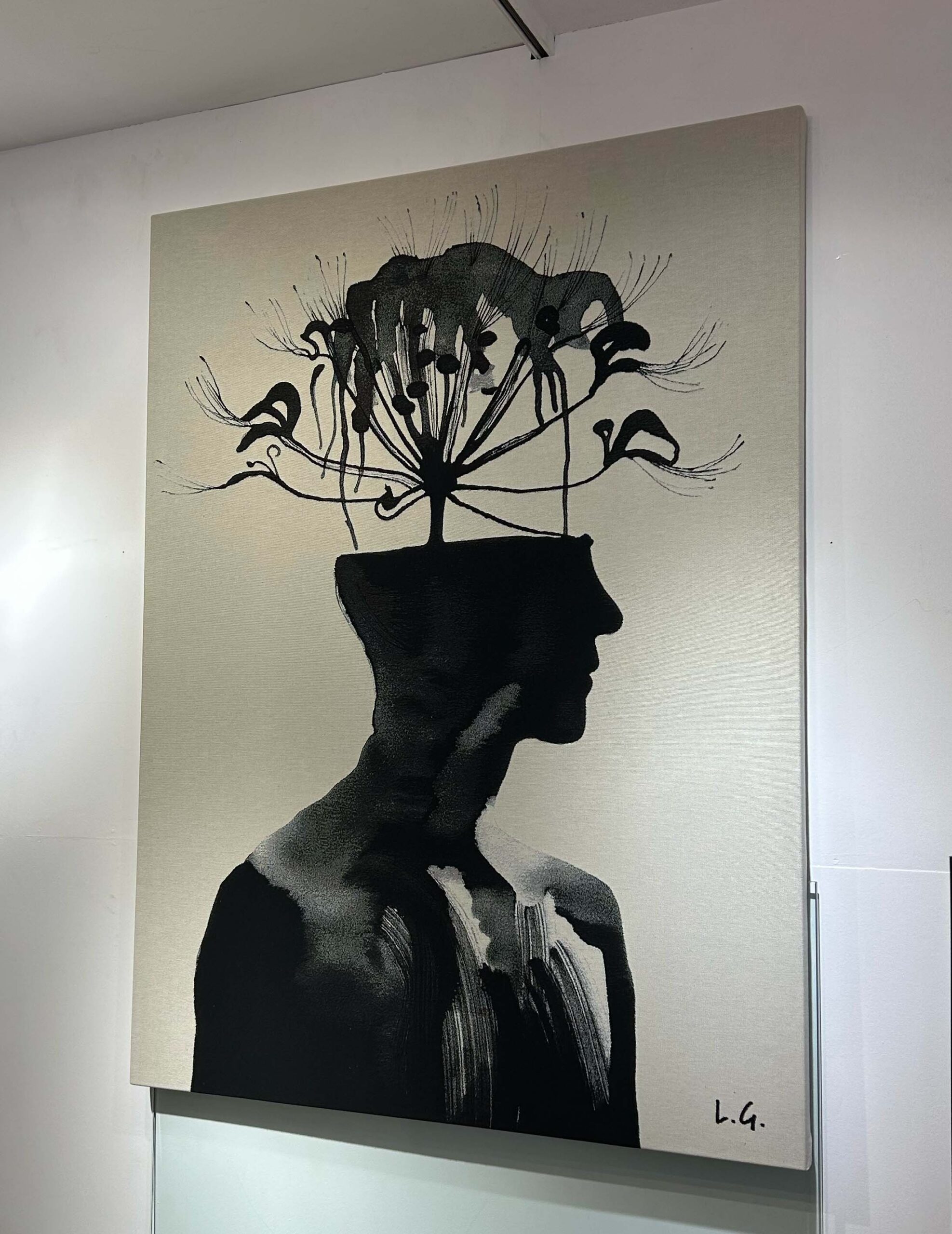
Your practice moves between figuration and abstraction. Do you hope viewers discover a specific narrative within your work, or do you prefer to leave the interpretation entirely open?
I prefer to leave the interpretation open. My goal is not to tell a single story, but to create a space where each viewer can bring their own memories, emotions and experiences.
This is one of the reasons why I simplify the human figure. By reducing the silhouette to its essential form, it becomes more universal and easier to identify with. Rather than portraying a specific individual, I want the figure to act as a visual anchor that anyone can project themselves onto.
The botanical forms guide the viewer without imposing a fixed meaning. I like the idea that the same work can resonate differently from one person to another.
Your pieces are created with remarkable precision—from watercolor paintings to jacquard textiles and intricately hand-cut wood. Could you walk us through your creative process, from the initial idea to the finished artwork?
Every work begins with a research phase. As a visual artist, I always start with a concept. I first imagine a human silhouette with a strong presence.
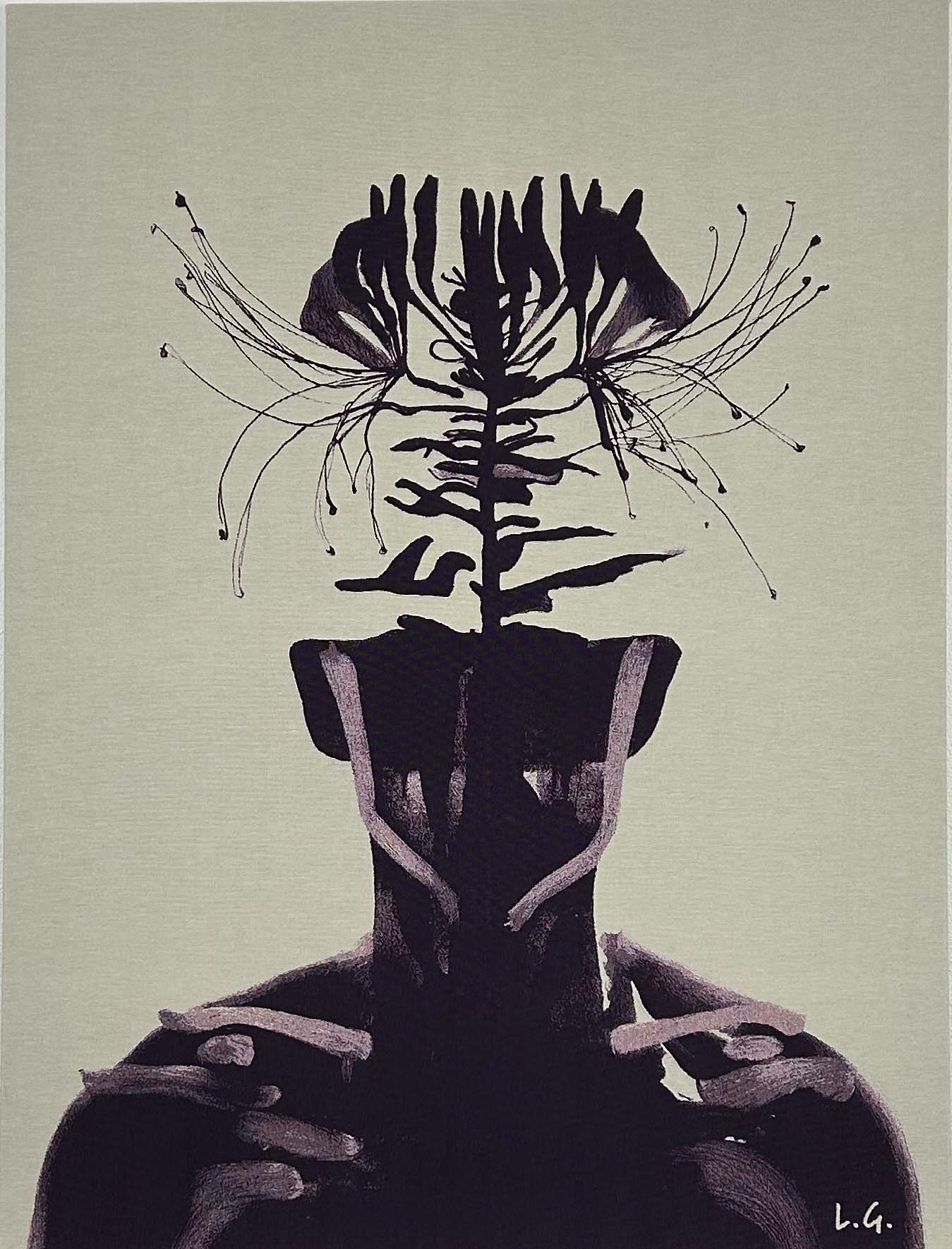
At the same time, I conduct visual research on flowers using my own photographs, herbarium specimens and other botanical references. I look for species with a strong graphic identity and generous forms, such as umbel flowers or the cleome, whose long filaments create a particularly dynamic visual structure.
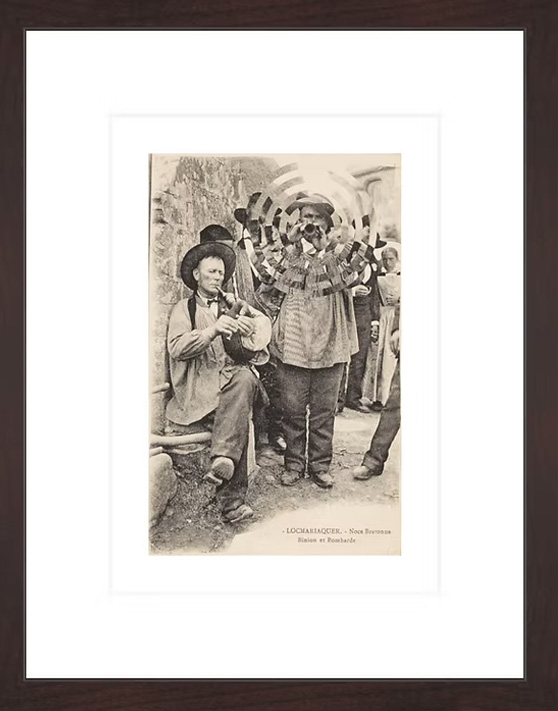
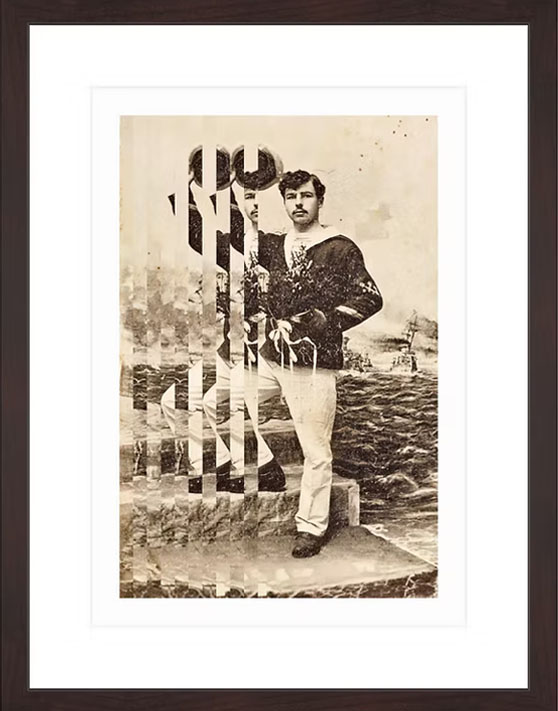
I then bring these elements together through collage, testing different compositions before creating a digital watercolor drawing. At this stage, I introduce a final layer inspired by hypnotic art: at the top of the botanical structures, the patterns gradually become more diffuse, suggesting the movement of thought.
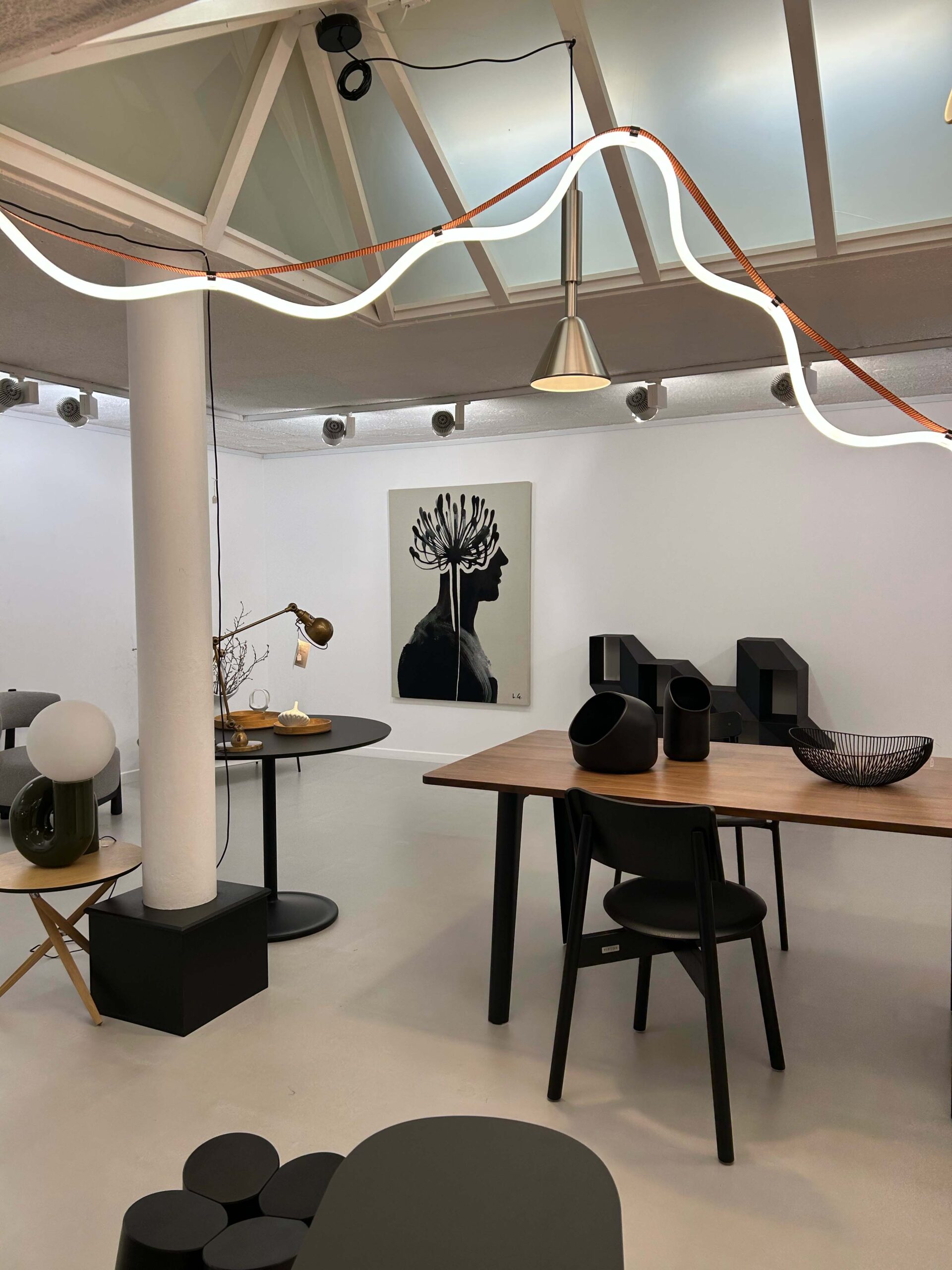
The image is then digitally indexed and translated into a weaving file. The final tapestry is woven using approximately 24 kilometers of recycled cotton thread while preserving the spontaneity of the original drawing. What I find particularly fascinating is how faithfully the weaving reproduces the effects of watercolor and ink. Using cotton rather than wool is essential, as its finer threads make it possible to preserve delicate washes, subtle gradients and precise lines. With wool, the result would be much denser and this level of precision would be far more difficult to achieve.
As a result, many people assume that I draw directly onto the textile because the woven image is so faithful to the original artwork. I always take it as a wonderful compliment to the Jacquard weaving process.
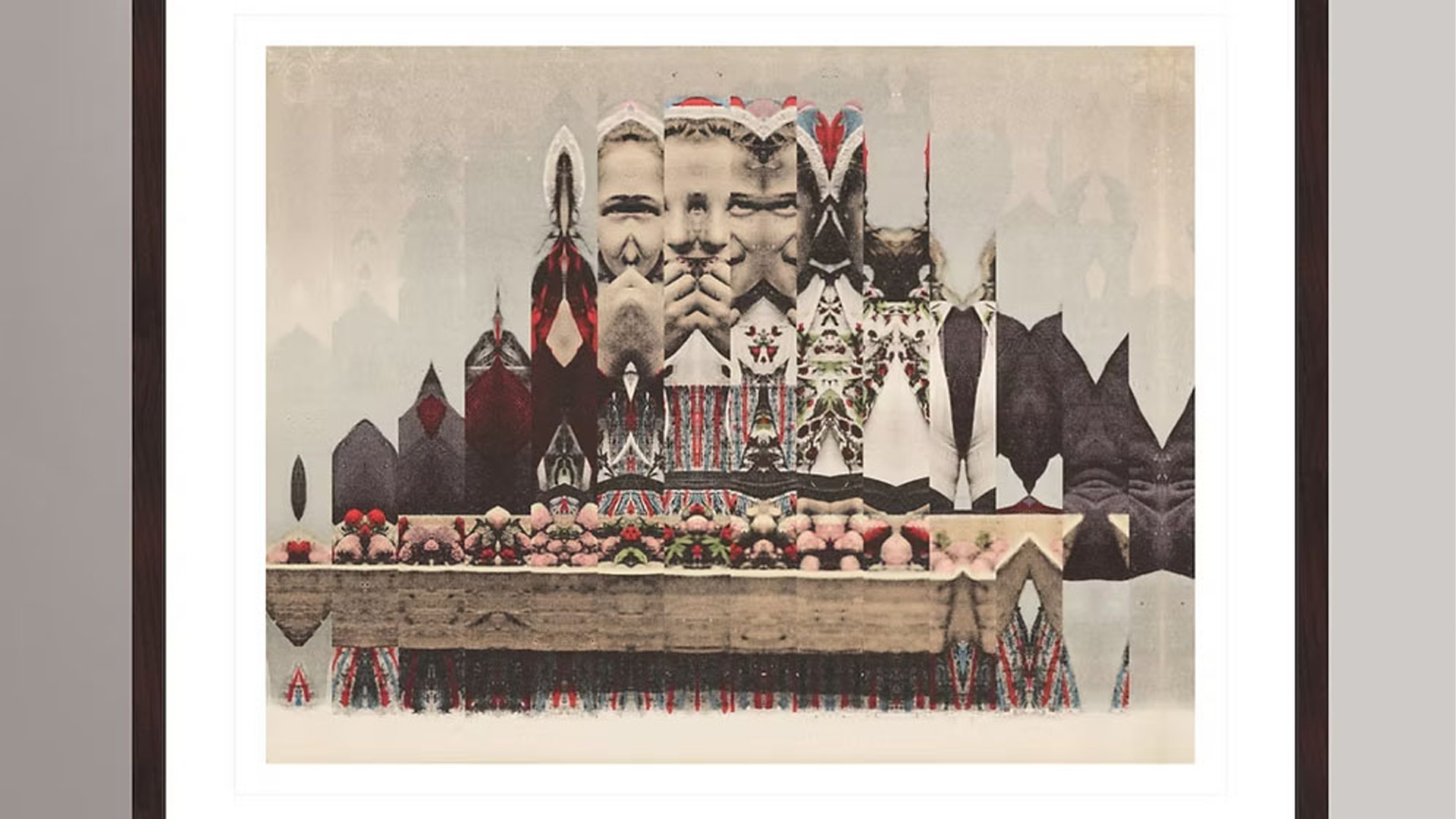
Which stage of the creative process brings you the greatest satisfaction: developing the concept, making the work itself, or seeing the finished piece for the first time?
Without hesitation, developing the concept. That’s the stage where the work truly comes to life.
I enjoy asking myself questions, making connections between ideas and finding the right visual language to express them. Once the concept feels clear, the rest of the process naturally falls into place.
Of course, seeing the finished tapestry for the first time is always a special moment. I’m often amazed by how faithfully the weaving captures the watercolor and ink effects of the original drawing. But for me, the greatest satisfaction comes much earlier, when an idea suddenly makes sense and I know I’ve found something worth exploring.
Wood is a beautiful but unforgiving material. Have there been moments when the material itself changed the direction of a project?
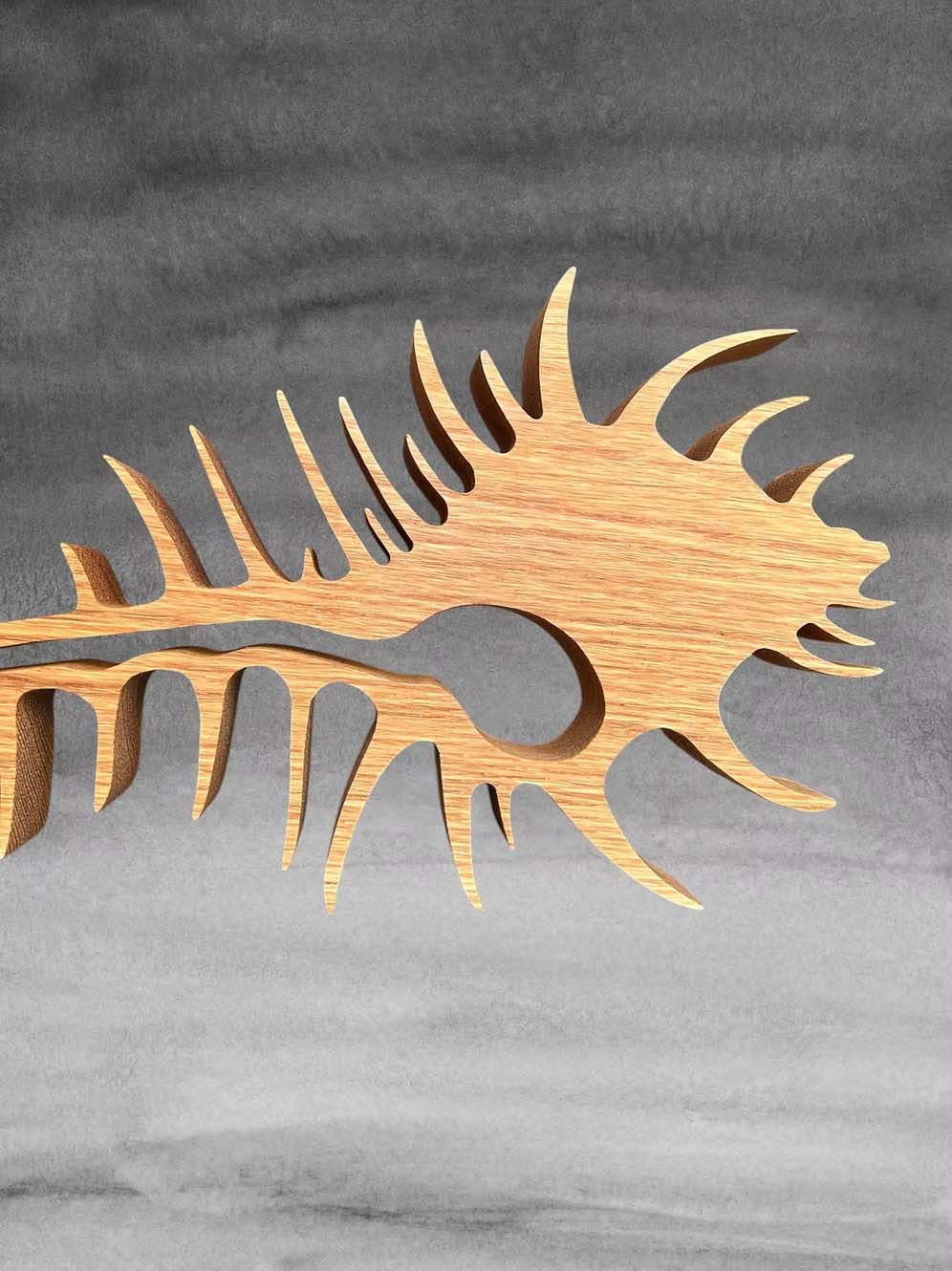
Wood was the first medium I worked with. As a visual artist, I’ve always enjoyed exploring different materials, and wood taught me a great deal. Because it is tangible, it gave me a very concrete understanding of line, form and volume, lessons that continue to influence my work today.
I mainly worked with solid oak, using single-piece boards rather than laminated panels. It’s a beautiful but expensive material, so I couldn’t afford to work through trial and error. Before making the first cut, I needed to know exactly where I wanted to go.
Working with wood also requires a great deal of anticipation. You constantly have to predict how the material will behave because every cut is irreversible. Over time, this becomes a highly empirical process. I spent a great deal of time observing, analyzing and understanding the behavior of the wood. The more knowledge you acquire about the material, the better you become at anticipating its reactions. It’s a highly technical practice in which experience plays a fundamental role.
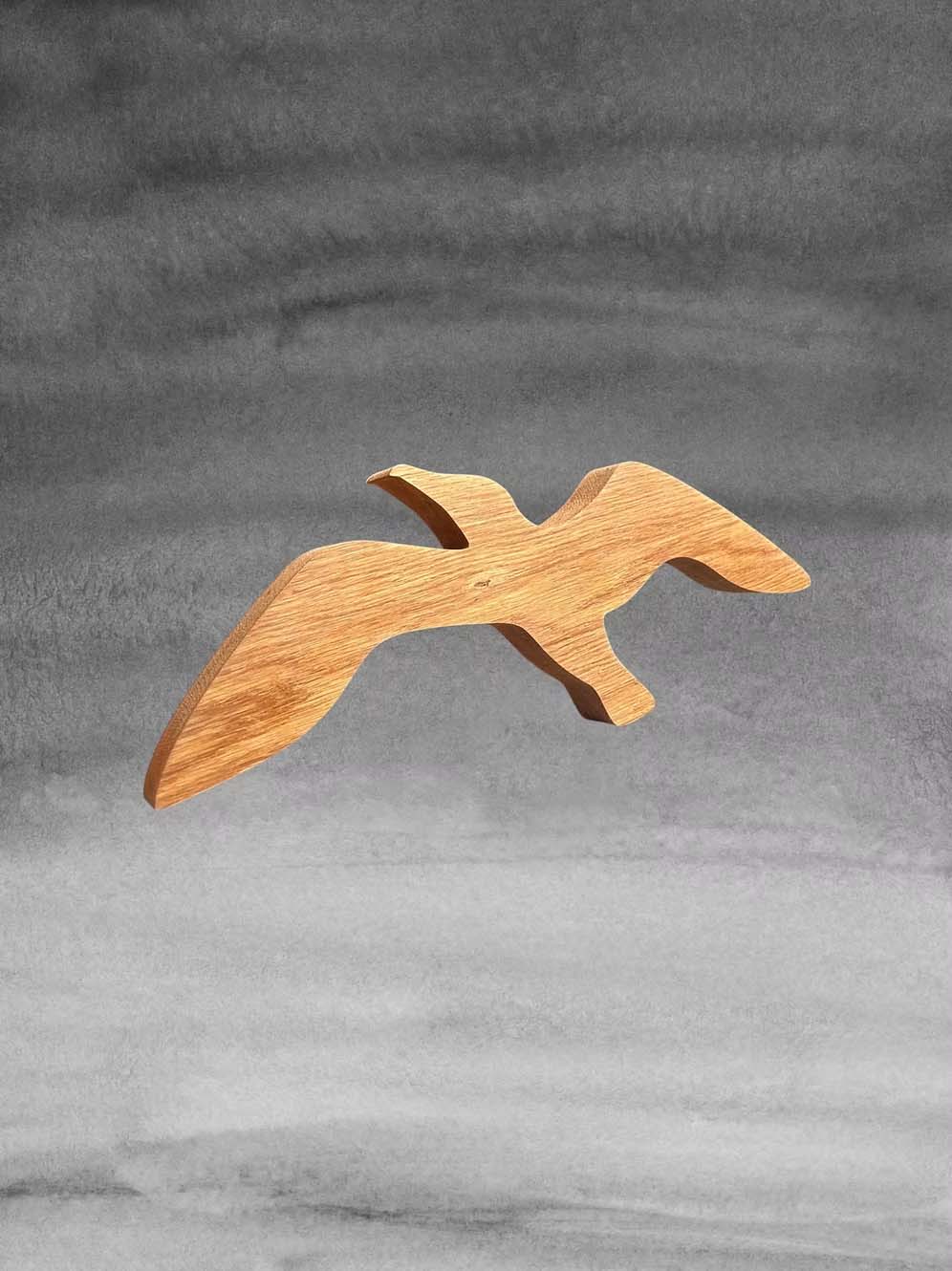
You once said that being an artist is one of life’s greatest privileges. What does that statement mean to you today?
To me, being an artist is one of life’s greatest privileges because I get to create every day. I’ve always been a creative person, and what I enjoy most is that every new project feels like a game.
At the same time, it’s not complete freedom. I like working within a framework that I set for myself. My artistic language has its own rules, its own constraints and its own vocabulary. Paradoxically, that’s where I find the greatest freedom. Having a clear framework allows me to explore ideas more deeply and continually discover new possibilities within it.
That’s what still excites me today. Every new work is an opportunity to push that visual language a little further while remaining true to it.
When you’re creating, are you thinking more about yourself and your own artistic journey, or about the person who will eventually experience your work?
Honestly, neither. When I’m creating, I’m not really thinking about myself or about the future viewer. I’m much more in an instinctive state, fully focused on the present moment and on the image itself.
My attention is on the balance of the composition, the dialogue between the human figure and the botanical forms, and whether the visual language feels coherent. I’m not trying to tell my own story or anticipate someone else’s reaction.
The only outside influence during the process is probably music. I almost always work while listening to it, and it can shape the atmosphere I’m immersed in or the mood I’m working with. Beyond that, I’m simply focused on making the image feel right.
What emotion or feeling do you hope visitors take away after encountering your work?
More than a specific emotion, I hope my work offers a positive experience. It’s important to me that it creates a sense of calm, contemplation and serenity. I’m drawn to the ideas of purity, stillness and quietness, both in the visual language of my work and in the feeling it leaves behind.
I hope it gives people a moment away from everyday life, a more poetic and dreamlike pause. I often compare it to watching a great film: when you’re completely absorbed, you almost forget you’re watching it. I’d like my work to create that same feeling of immersion, even if only for a moment.
Is there a material or technique you haven’t explored yet but dream of incorporating into your practice one day?
At the moment, I’m continuing to develop my series of Jacquard textile tapestries exploring the relationship between the human figure and botanical forms. I already have many ideas that I haven’t had the opportunity to explore yet, and that’s what excites me most.
In the coming years, I’d like to keep developing this visual language while remaining true to it. I’m particularly interested in experimenting with new materials and new ways of observing the natural world. My work already begins with photography, but I’d like to take that much further through alternative photographic techniques such as botanical scanning, cyanotypes, thermal imaging, or electrical imaging processes that reveal structures normally invisible to the eye.
For me, these techniques are never the goal. They are simply new ways of discovering forms that can enrich my visual language. If I can continue evolving my work while staying faithful to the ideas that define it, I’ll feel that I’m moving in the right direction.
If you could create one artwork that tells the story of your entire life, what would it look like?
If I could create one artwork that tells the story of my entire life, it probably wouldn’t be a conventional piece. I’d love to create a large-scale site-specific textile installation in Brittany, a place that has deeply shaped the way I see the world.
I imagine it becoming part of the landscape or a landmark, perhaps integrated into the sails of a boat, around a lighthouse, or as a monumental textile work designed to be seen from above. I like the idea of the artwork entering into a dialogue with its surroundings rather than simply hanging on a wall.
For me, it would bring together everything that has shaped my artistic journey: Brittany, nature, textile, and the relationship between the human figure and the landscape. I think that would be the most meaningful way to tell my story.
Images COURTESY
Author: Margaret Dzierżęga
Artist: Edgar Le Govic instagram: Instagram