
July 7, 2026
The Architecture of Light: Andrea Solaja and the Art of Second Life
In a world dominated by the smooth surfaces of glass screens and fleeting, hurried images, the paintings and sculptures of Andrea Solaja act as an invitation to pause. Her works do not tolerate haste; they demand our physical proximity and presence, which in time transforms into a quiet, intimate dialogue. Traditional boundaries between the viewer and the object blur here, and the mere act of observing art gives way to a pure sensory experience.
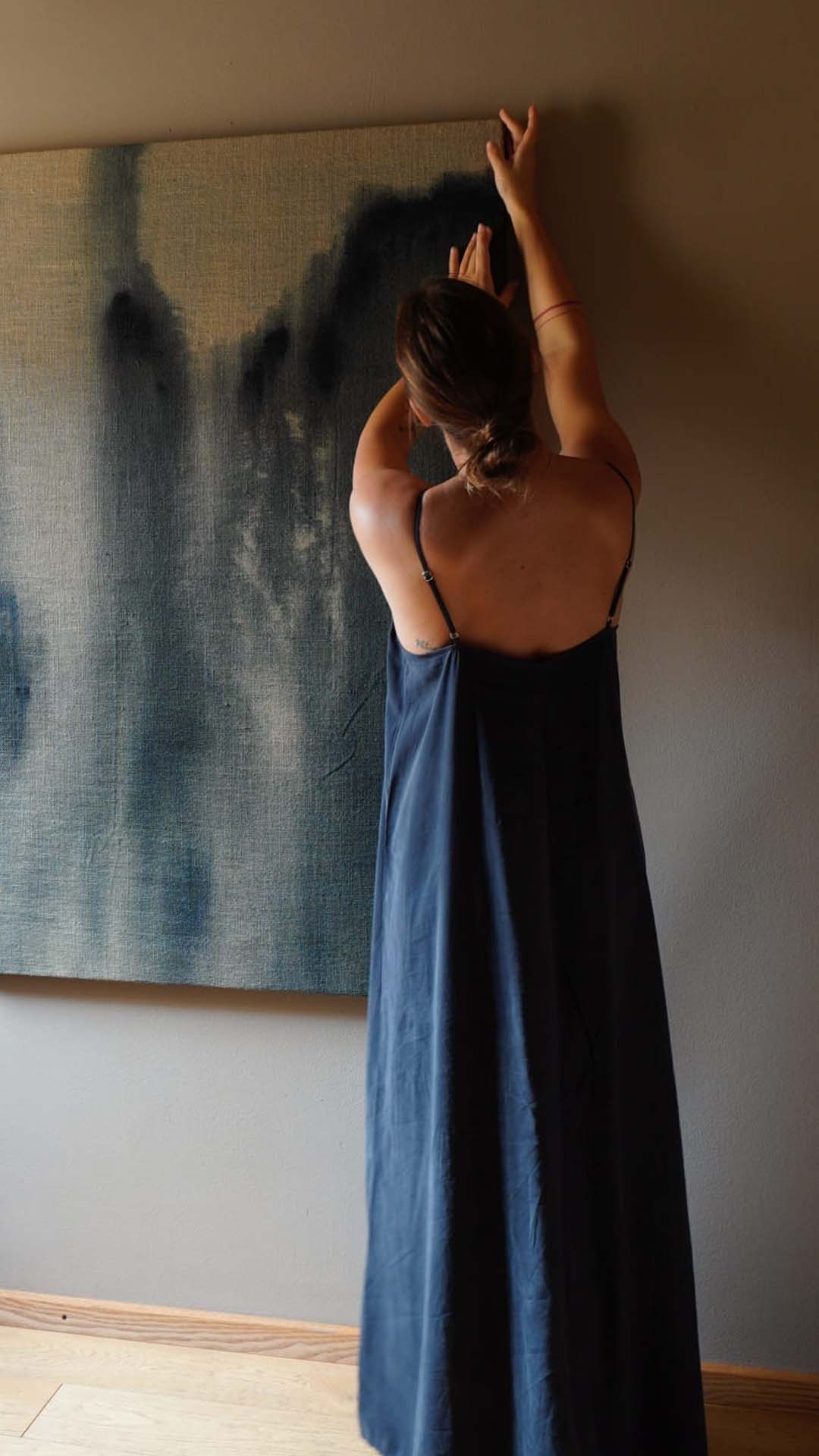
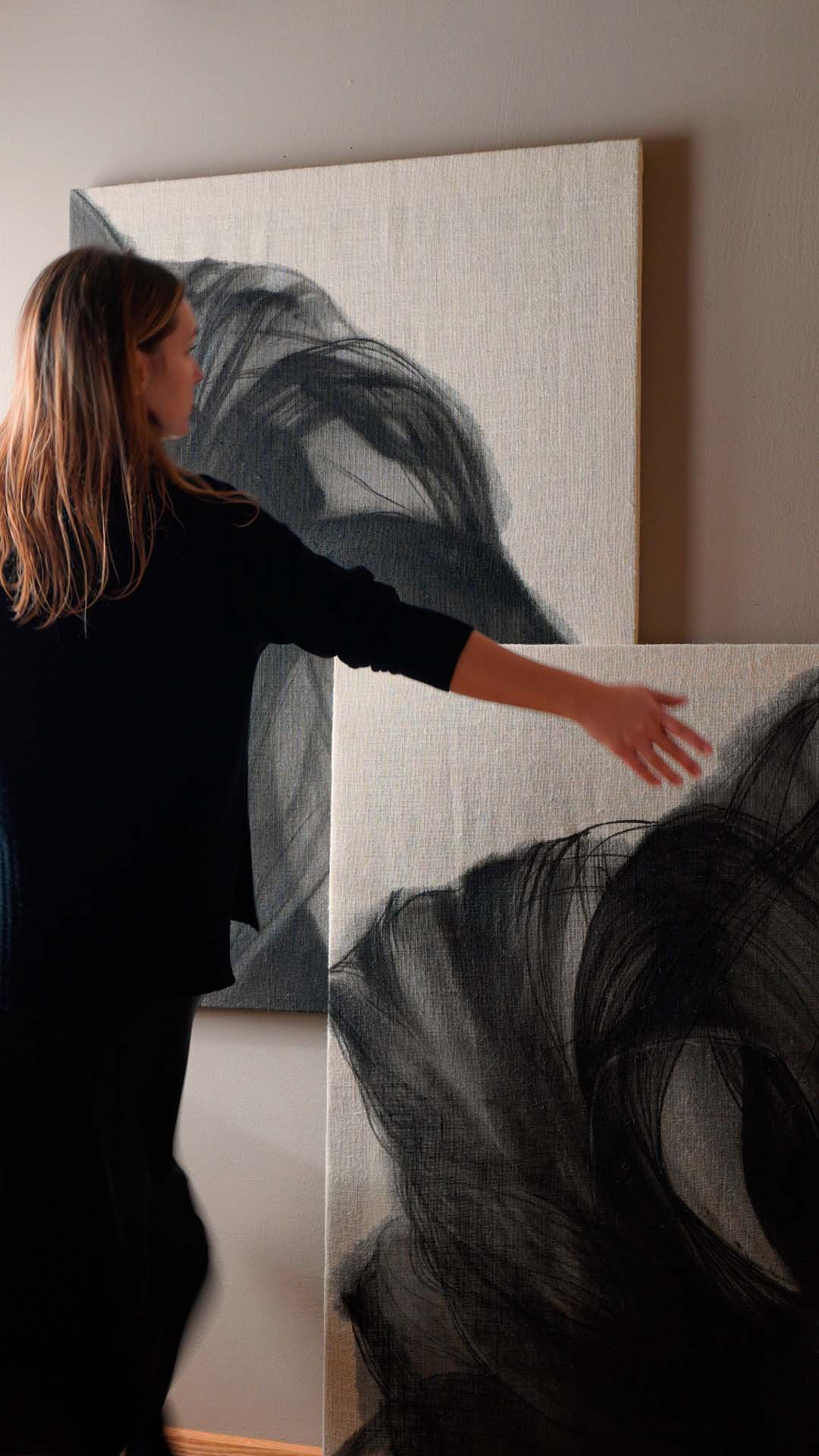
Through her choice of jute, Andrea possesses a rare ability to capture what is most precious, evoking a raw, organic essence that brings to mind the texture of moss, the roughness of bark, and the depth of the earth.
Her sculptures, in turn, carry a deep, resinous chill of Swiss pine, which releases slowly and naturally fills the space. There is no cold calculation in this process, no desire to please critics, and no intent to build an artificial distance. There is only a simple, unpretentious, and honest presence of the material, beneath whose rough, fleshy structure lie deep human emotions—intimate stories that the viewer discovers unhurriedly, layer by layer.
At the source of this hazy, calming aesthetic lies a fragile childhood memory—time spent in the dense darkness of a Serbian bunker. As a ten-year-old girl, hiding for long months from wartime bombardments, Andrea learned to seek salvation and inner peace in the narrow beam of light from a single, solitary candle. This small, flickering flame allowed her to cast shadows onto the raw, cold walls of the shelter and weave stories in her imagination filled with a hidden, safe warmth, which for a brief moment pushed away the fear of the surrounding emptiness and darkness.
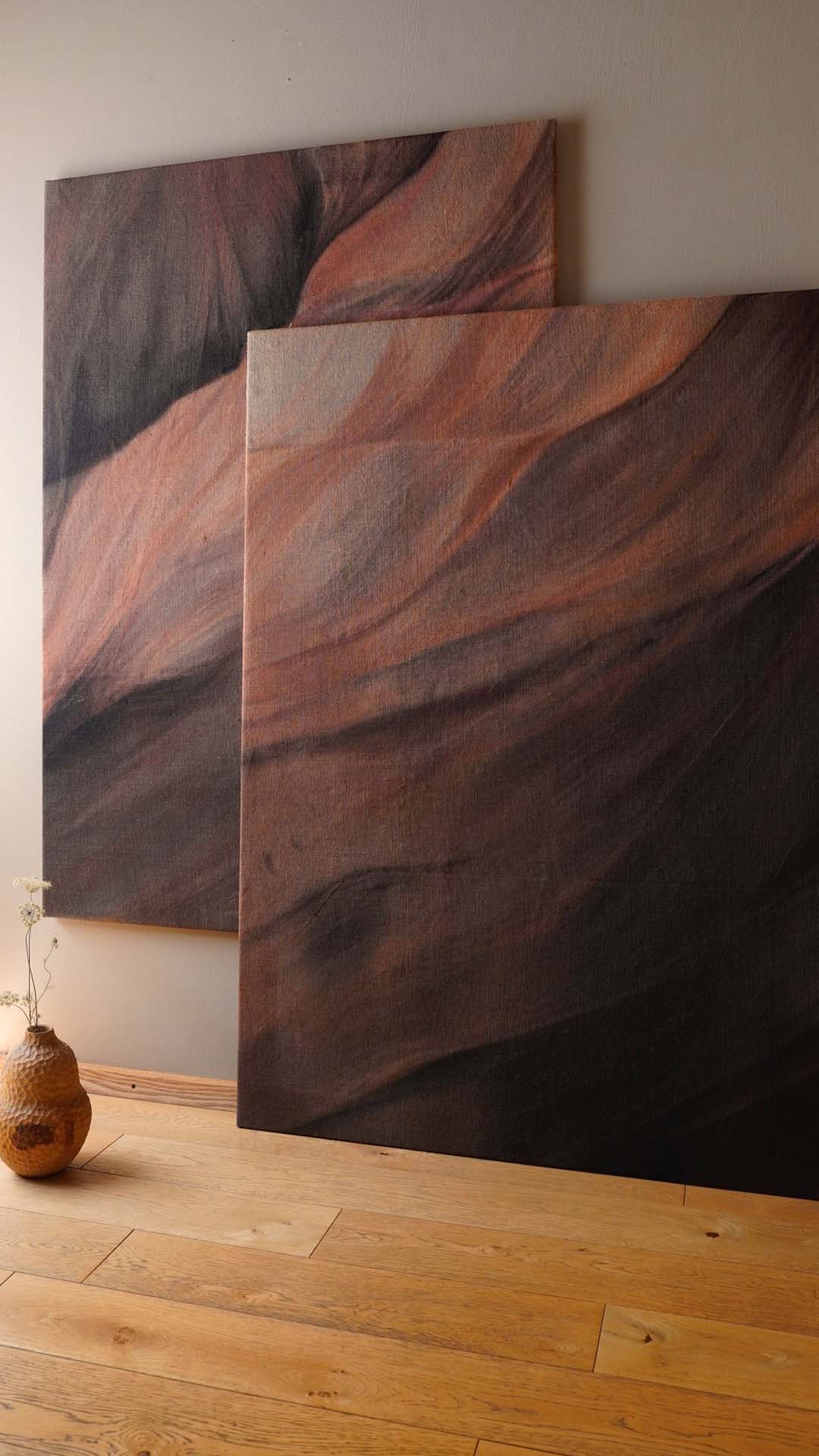
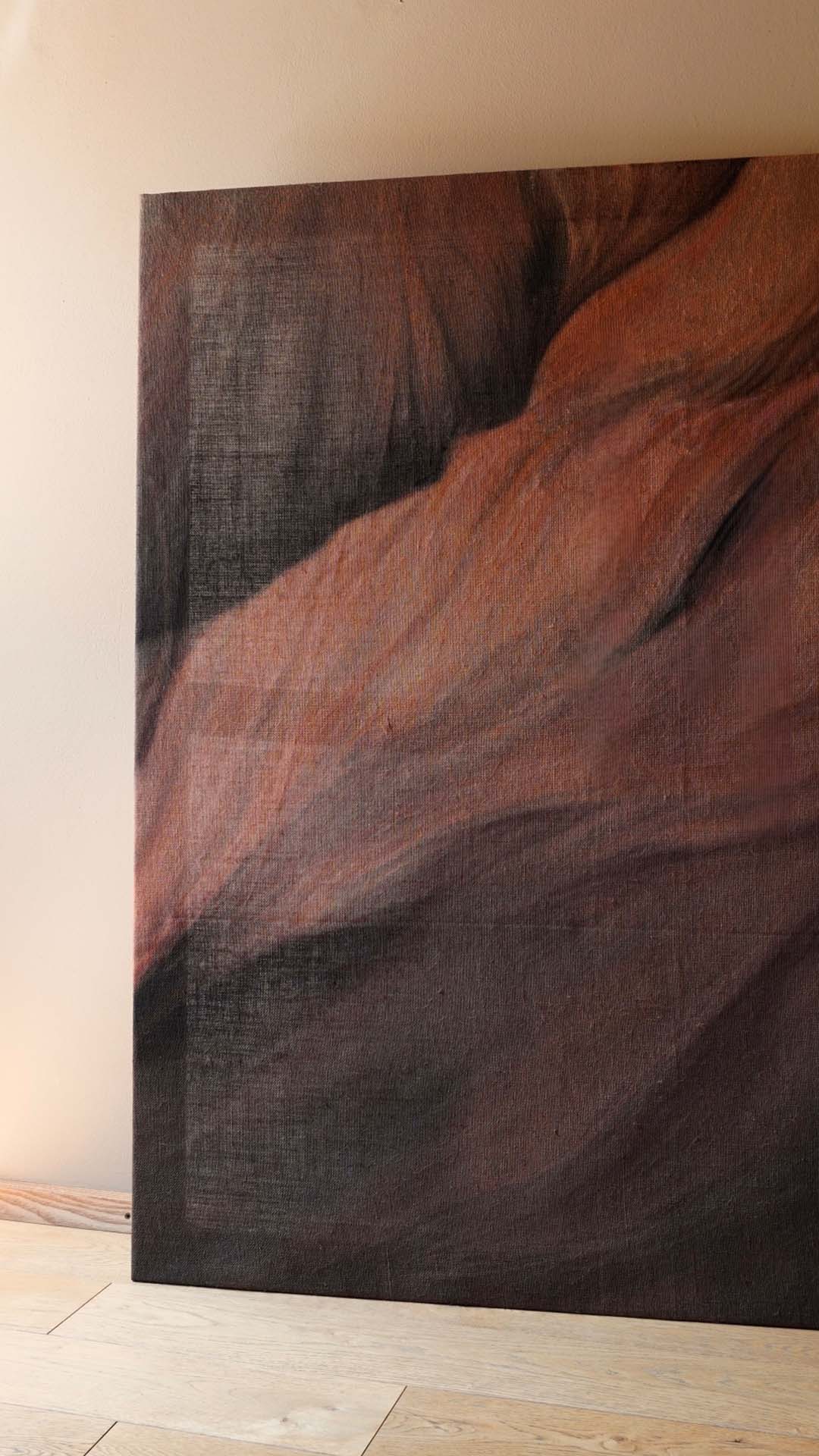
This memory of light and shadow intertwining returns today as the most important axis of her painting. The painter operates with a unique technique she calls “shortsightedness”—contours and figures become blurred, oneiric, suspended somewhere between figuration and pure abstraction. Shadow in Andrea’s works is not simply an absence of color or a black stain; it is a soft, deep space from which the artist, with a quiet and unhurried mindfulness, draws out inner peace, subtle nuances, and light that carries hope.
An important, remarkably tactile part of this landscape is jute. Sandbags, which were once placed around houses to protect human lives from shrapnel, have gained the status of her primary medium within her studio space. This common, coarse material, usually associated with coffee transport and worthless waste, gains a new, dignified existence under Andrea’s fingers. Working with it is long and physically demanding, because the rough structure resists. Yet, this daily struggle with an unyielding surface brings solace. By giving forgotten jute a second life, the painter, in a natural and unhurried way, gives one to herself as well.
In daily life, upon which past wartime experiences have left their mark, Andrea often wears an invisible armor. She builds a certain distance and hardness around herself, which help protect her own sensitivity and ensure the safety of her loved ones. It is a rational, calm structure that keeps daily life grounded and allows her to fully fulfill her role as a wife and mother.
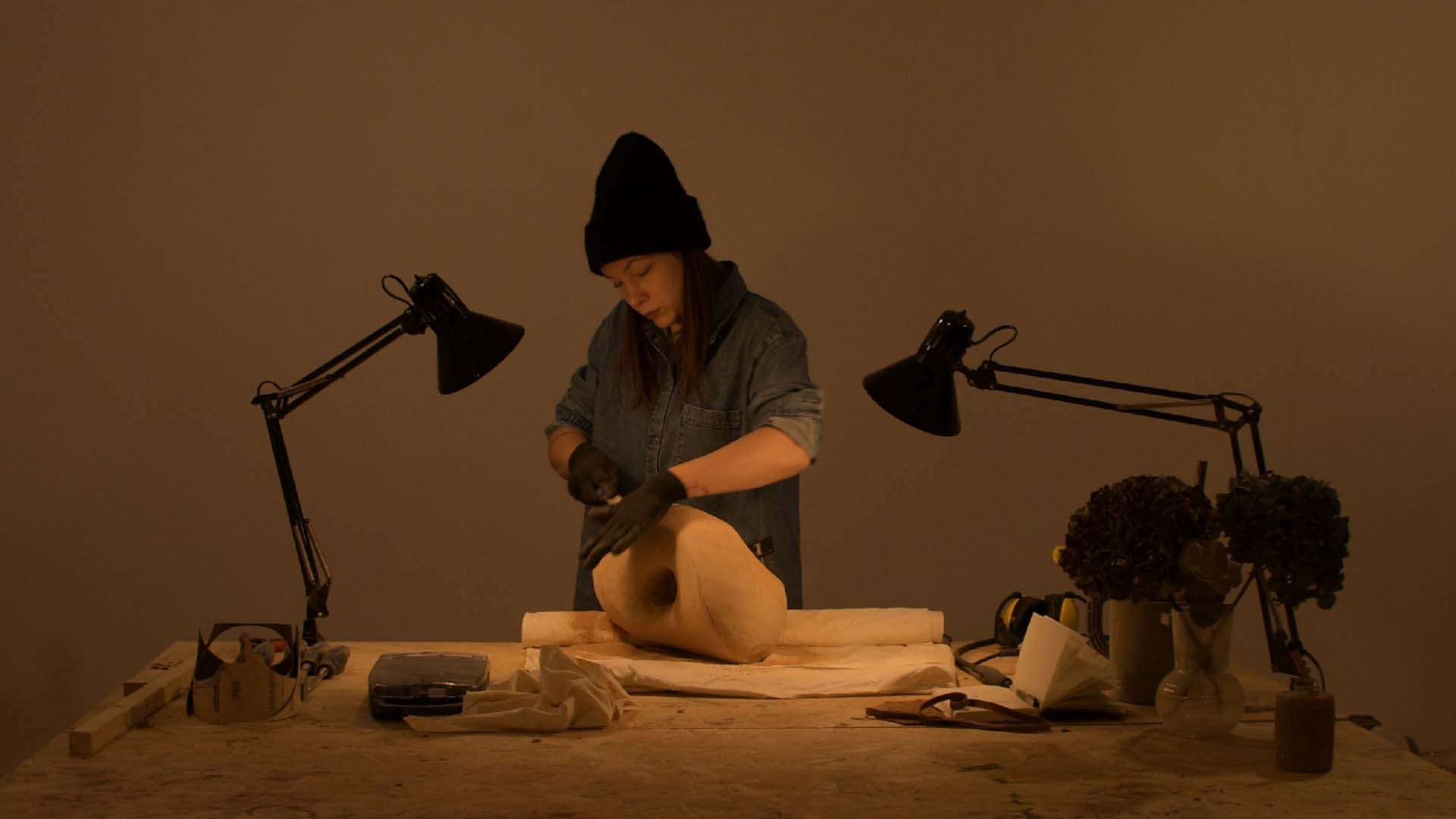
Everything changes, however, the moment Andrea leaves the outside world behind and steps across the threshold of her workspace. The studio becomes her own quiet enclave, where “Andrea-the-artist” awakens and flourishes anew. This entry into a bright, intimate space of discreet elegance dissolves all defensive barriers, allowing the full spectrum of emotions hidden on a daily basis to come forward—from a melancholic sadness, through a cleansing anger, to the freedom of pure passion and unrestricted creation.
It is there, through the slow process of creation, that the painter symbolically meets that ten-year-old girl lost in the bunker. She takes her by the hand and allows her to grow up safely on her own terms, step by step weaving the fragmented past into a single, harmonious, and peaceful whole.
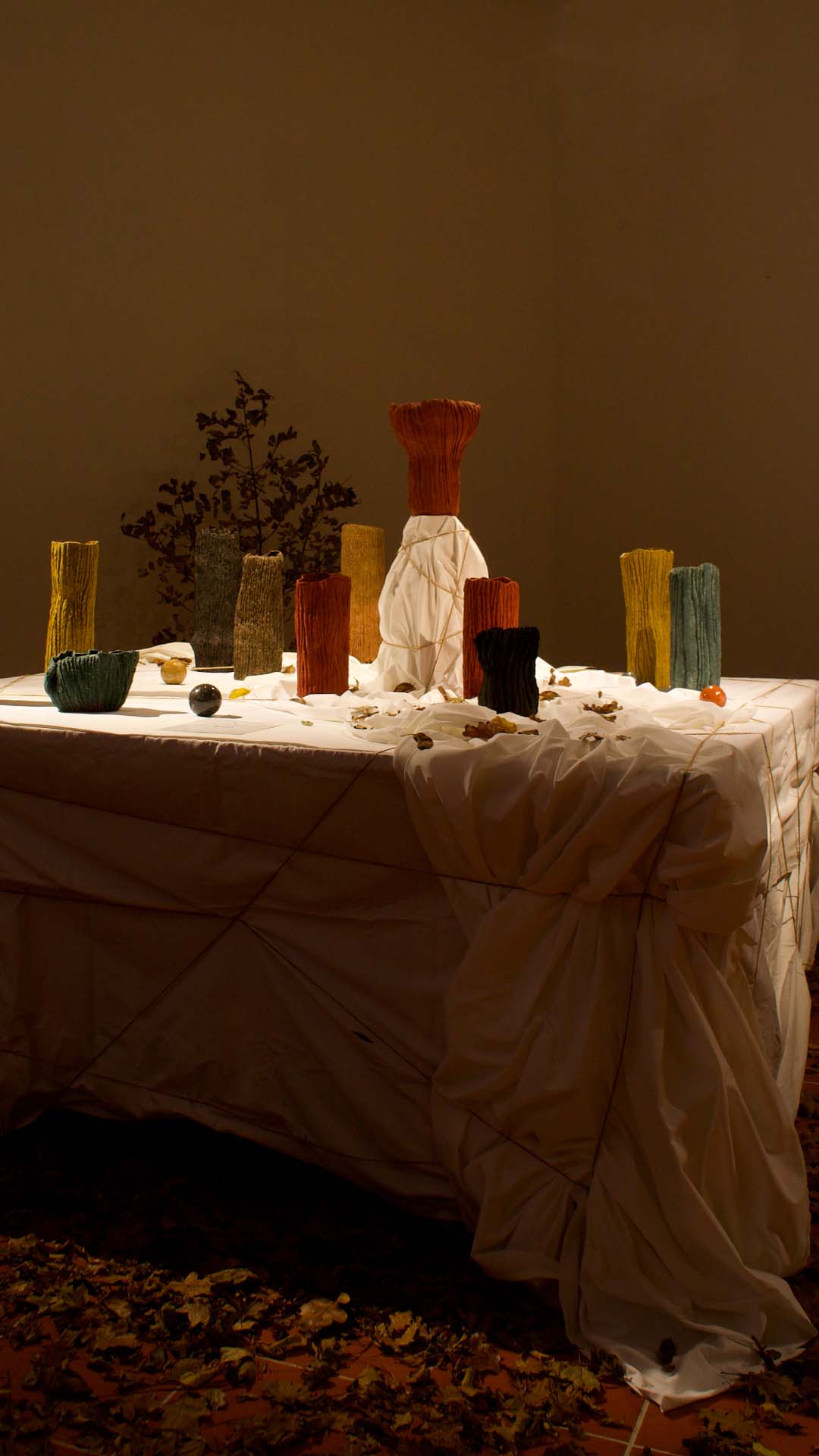
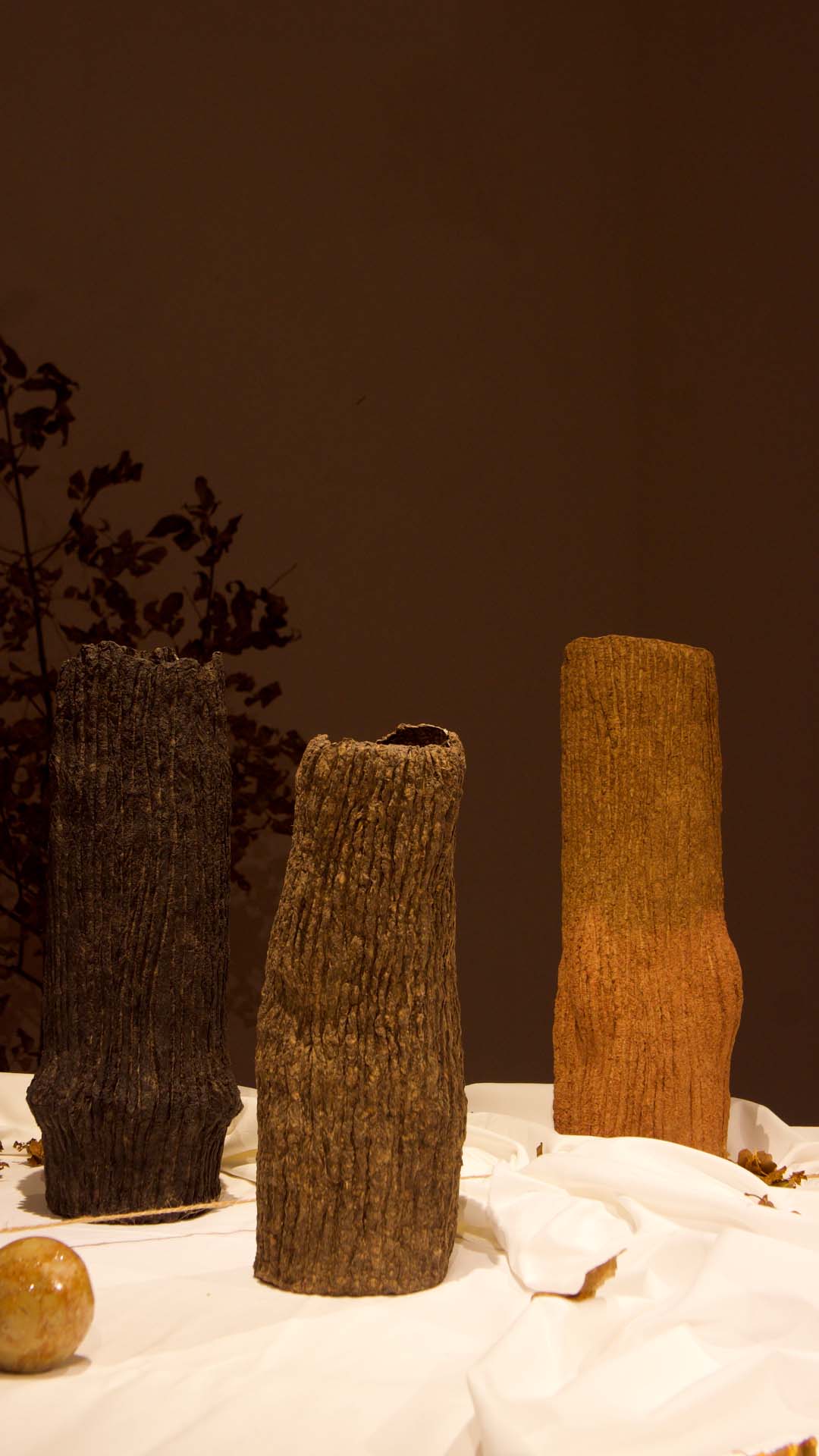
The sculptural path in Andrea Solaja’s work is the pure fruit of intuition and a mystical alliance with the forces of nature. The artist sculpts primarily during the summer, escaping the urban clamor into the raw solitude and absolute silence of the mountains, where nothing disturbs her rhythm of work. There, she works with a unique raw material—the wood of the Swiss pine (cirmolo). The choice of this material is deeply sensory and subconscious; it is an attraction fed by the texture, scent, and color that comes alive under the chisel.
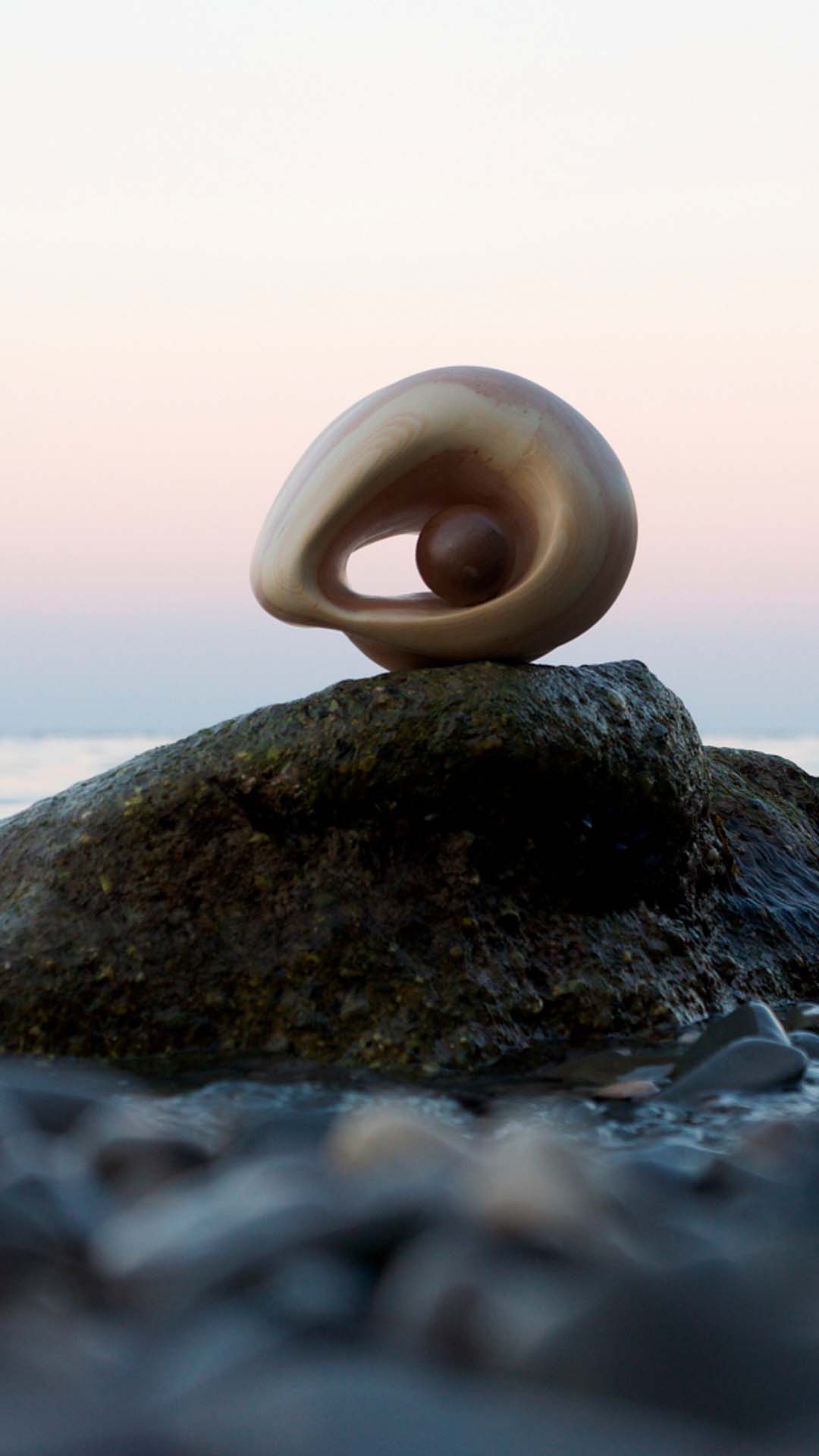
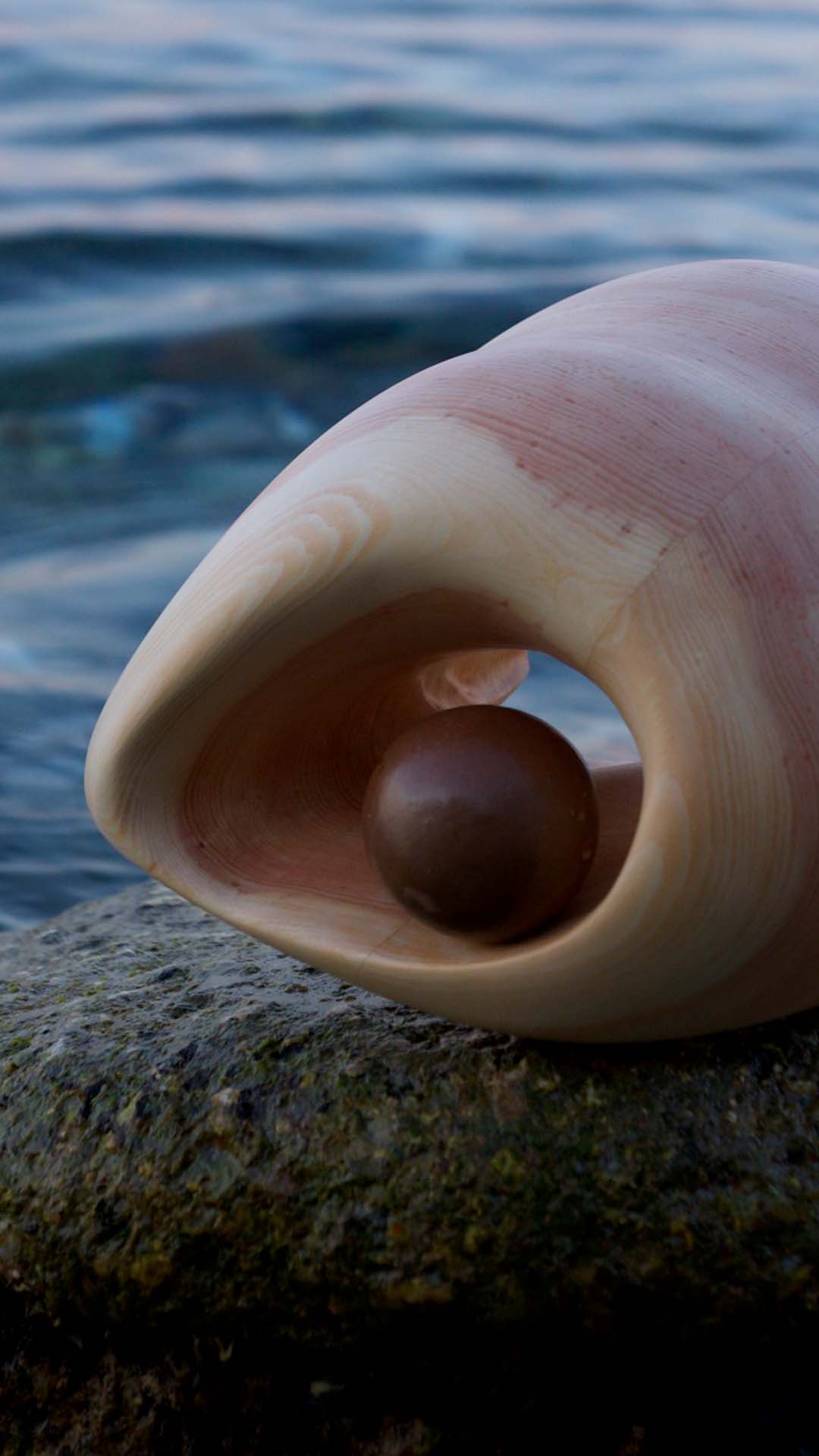
The Swiss pine yields to her hands in a specific way—in the early stages of carving, it is soft and responsive to every movement, only to naturally mature over time, hardening and slowly shifting in color from a pale beige to a saturated, warm red. In her spatial objects, such as the installation Semi di luce (where organic wood merges with translucent resin and a flawlessly polished sphere of earth, dorodango), Andrea seeks a fleeting, subtle balance between the biological weight of the matter and the lightness of mountain air.
To these sculptural forms, the painter also brings the motif of dry, fallen leaves found on the forest floor. She does not care for their faithful, mechanical reproduction or the copying of their vein lines. The fragile structure of a leaf is a quiet message to her about delicacy, tenderness, and the inevitable passage of time, which cannot be captured within the rigid frameworks of language. By pouring this fleeting, fragile emotion into the dense structure of the wood, the artist creates a subtle record of her non-verbal, intimate conversation with the world around her.
Andrea Solaja’s uncompromising nature does not stem from a desire for a loud rebellion against the art market, but from a simple, deep fidelity to herself. The most beautiful validation that her painful journey through shadow and darkness made sense came from a deeply personal experience involving her son. When, as an eleven-year-old, following a complicated knee surgery, he had to suddenly set aside his dreams of playing professional football, he poured his pain onto paper, writing a short, three-sentence poem:
“A passion that burns, A full Galaxy of love, Passion never ends.”
These words brought Andrea tears of pure emotion, releasing the accumulated anger at the injustice of fate. She realized that despite her own difficult memories and wounds, she had managed to pass on to her child what matters most: an inner, quiet strength and the ability to look for beauty in life’s hardest moments. This newly found peace of motherhood spread gently over her subsequent weeks of work in the studio, filling her paintings with a sense of creative fulfillment.
In this state of grace, where art no longer needs to prove anything, the artist’s name ceases to matter. Solaja’s decision to consciously leave her paintings unsigned on the front becomes, in this light, a natural gesture of humility before the mystery of creation. Andrea conceals her name because she wants her canvases and sculptures to speak solely with their own, untainted voice, free from marketing labels and imposed narratives. She wishes for us, as we touch the coarse jute or stroke the cool grain of the Swiss pine, to find our own space, shelter, and authentic presence there. Her art is the light once rescued from the bunker, which today glows with a calm, pure flame—reminding us that passion and proximity can disperse even the deepest human darkness.
author Maya Nieścier
images COURTESY