June 24, 2026
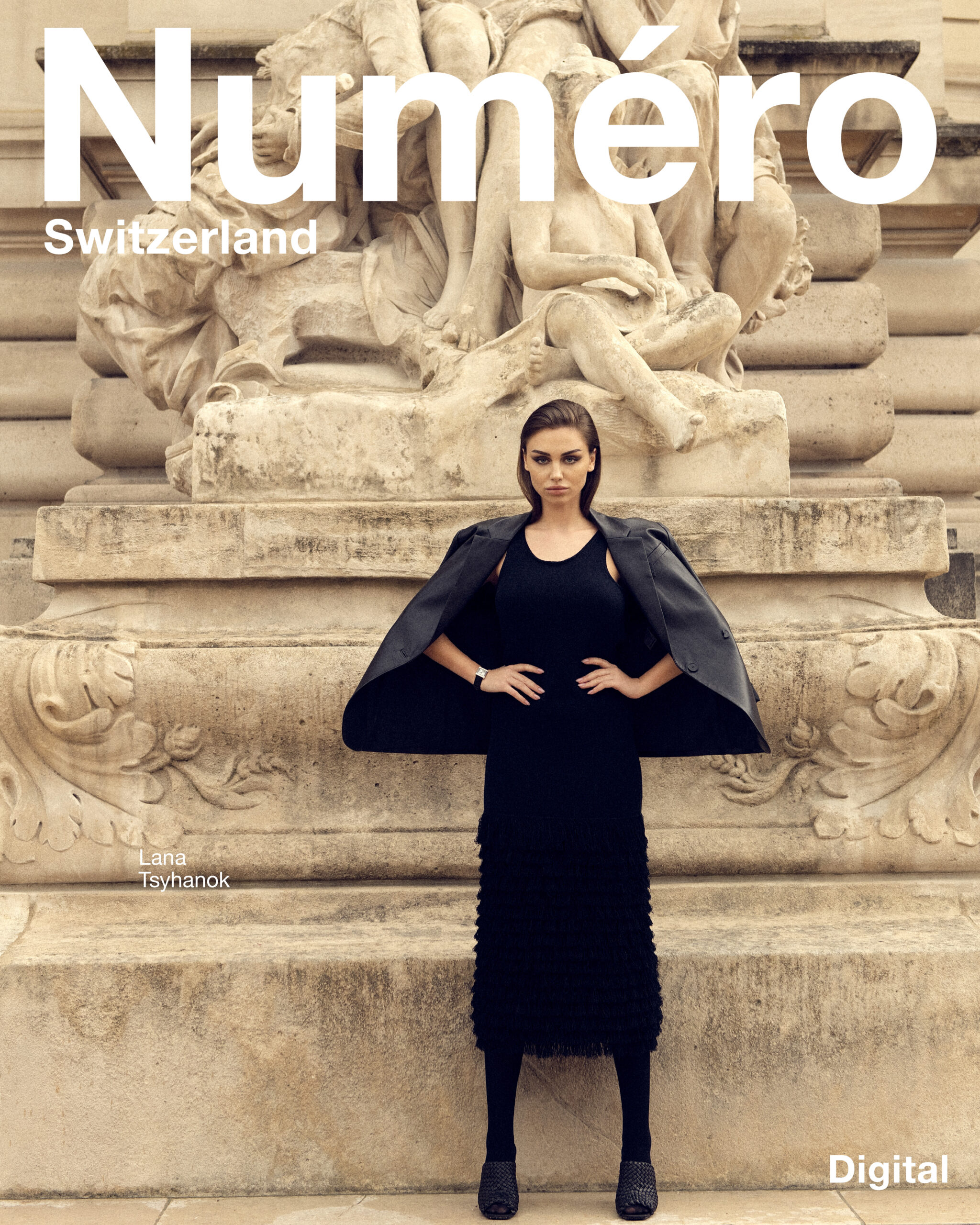
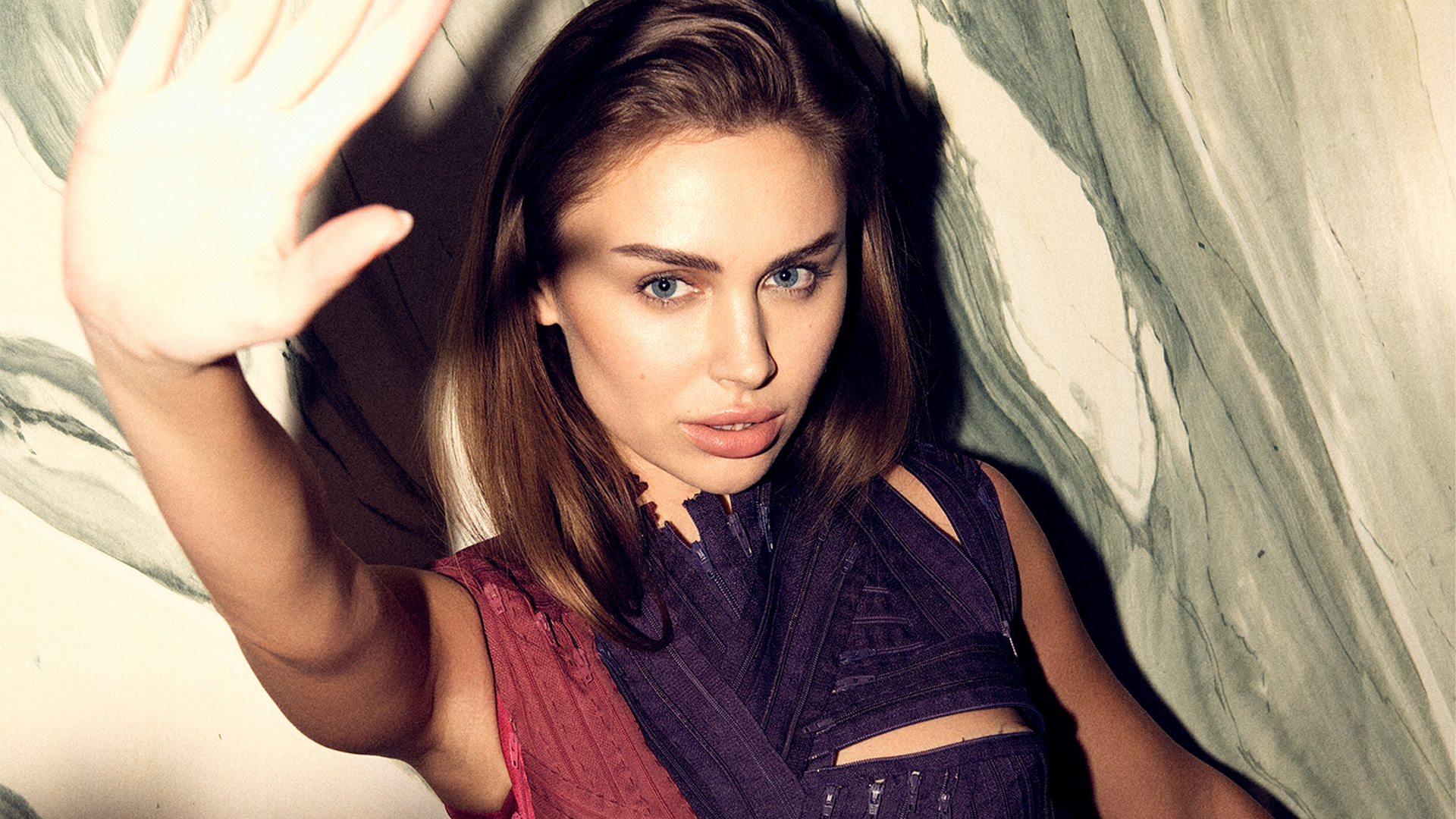
Still Life, a Picture and a Portrait. In conversation with Lana Tsyhanok
You need to be particularly and interestingly adaptive to move through the fashion industry without being entirely consumed by it. Ukrainian-born and internationally trained, Lana Tsyhanok has built a modeling career that has taken her across continents and cultures; and yet the most striking thing about her, in conversation, is how anchored she remains. To Ukraine, to memory, to the rhythms of nature she absorbed growing up. To painting, which she pursues with the same passion she pours in her career in fashion. To a set of values the war in her country has only sharpened.
She is preparing for her first gallery exhibition in London. She overcame a fear of heights for a rooftop editorial. She practices nail standing and water fasting in the interest of mental clarity. She has an open conversation about eating disorders inflicted by the very industry that she works in, a job that is obsessed with image. And yet she is not consumed by it, rather, strives for the balance between both physical and mental health. None of this is the version of modeling most people imagine. That, perhaps, is what makes her particularly interesting.
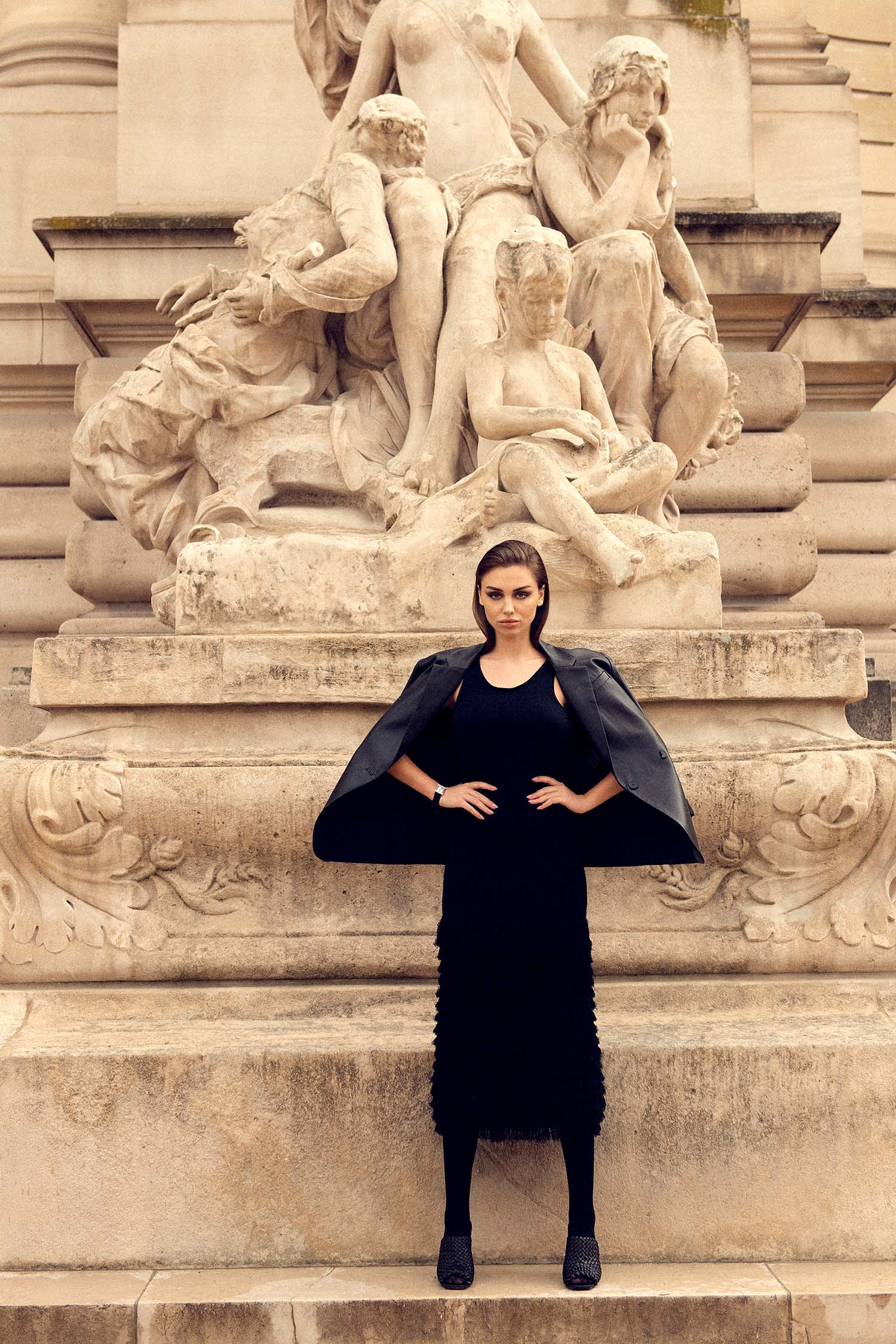
Watch POIRAY
Jacket and dress KATERINA KVIT
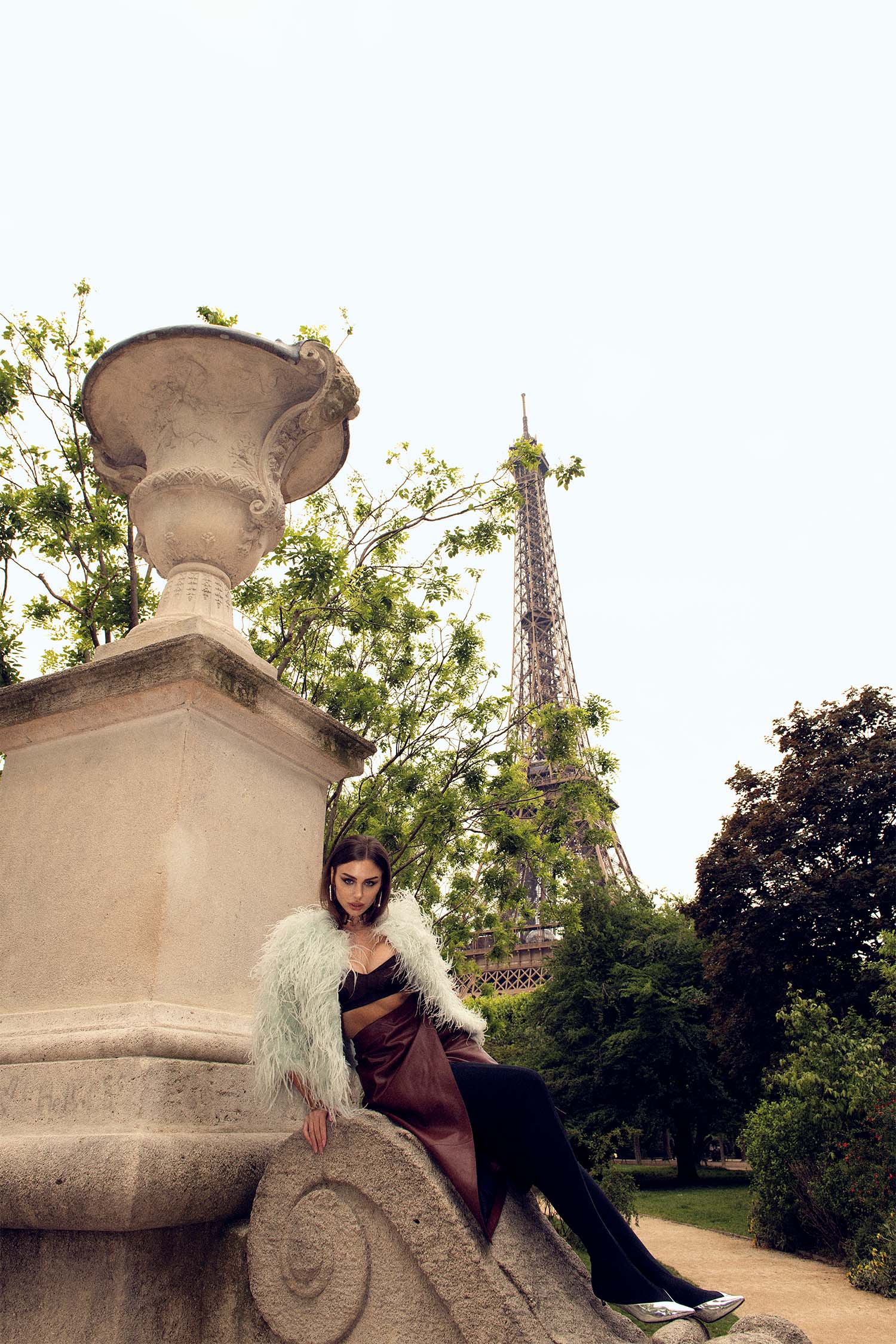
fur and skirt YVES SALOMON
top MARINE SERRE
boots GIVENCHY
You were born in Ukraine and later built your career internationally. In what ways does your Ukrainian identity still shape your artistic world, whether through modeling, painting, or the way you see beauty and emotion?
My Ukrainian identity remains a profound part of who I am. One of the qualities I associate most strongly with Ukrainians is resilience. I believe this has deeply influenced both my artistic journey and my career: the ability to adapt, to remain strong and composed, to continue creating, and to preserve sensitivity and grace even during uncertain times.
I was also shaped by the richness of Ukrainian culture — its poetry, music, traditions, visual symbolism, and emotional depth. There is both softness and strength within it. And experience growing up there is reflected in the way I perceive beauty, the impressions still influence my palette, my sensitivity to light, and the emotional atmosphere I seek to create in my paintings. Ukraine taught me to find beauty in subtle transformations and in the dialogue between people and nature.
With Ukrainian artists gaining greater visibility on international platforms such as the Venice Biennale, do you ever imagine yourself representing your country through art in a more direct or cultural way someday?
Yes — this genuinely interests me. At the moment, I am focused on developing my painting practice and working toward what I hope will become my first exhibition in one of London’s galleries. My paintings are strongly connected to atmosphere, emotion, and the relationship between memory and landscape, which naturally carries a part of my Ukrainian identity within them.
I find it incredibly inspiring to see Ukrainian artists receiving more international recognition. Ukrainian contemporary art carries a powerful emotional depth and authenticity, and I believe the world is becoming increasingly interested in these voices. For me, art is not only about aesthetics, it is about presence, emotion, and creating a lasting connection between cultures.
You left Kyiv quite young and have spent years moving between countries and creative industries. What does the idea of “home” mean to you today?
That’s a very good and complex question. After years of living between different countries, I realised that we often idealize places from a distance. But over time, I came to understand that the true meaning of home has very little to do with geography. For me today, home is where I am loved, understood, and awaited. It is where my people are.
I think constant movement changes your perception of home. You begin to carry parts of it within yourself in memories, language, rituals, and the people you love. Home is no longer one fixed place, but a feeling of connection and presence.
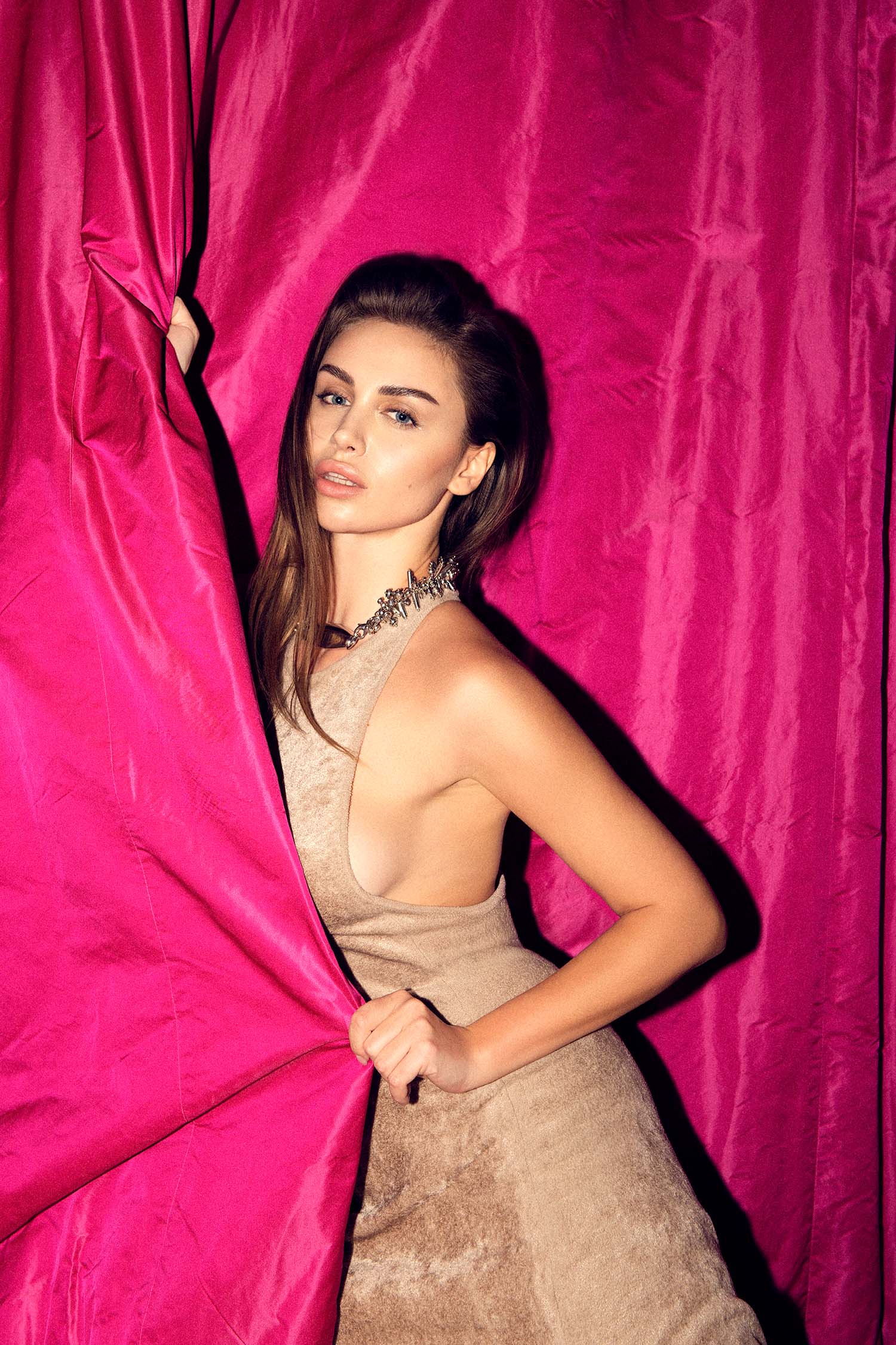
necklace DRIES VAN NOTEN
dress SOVEN
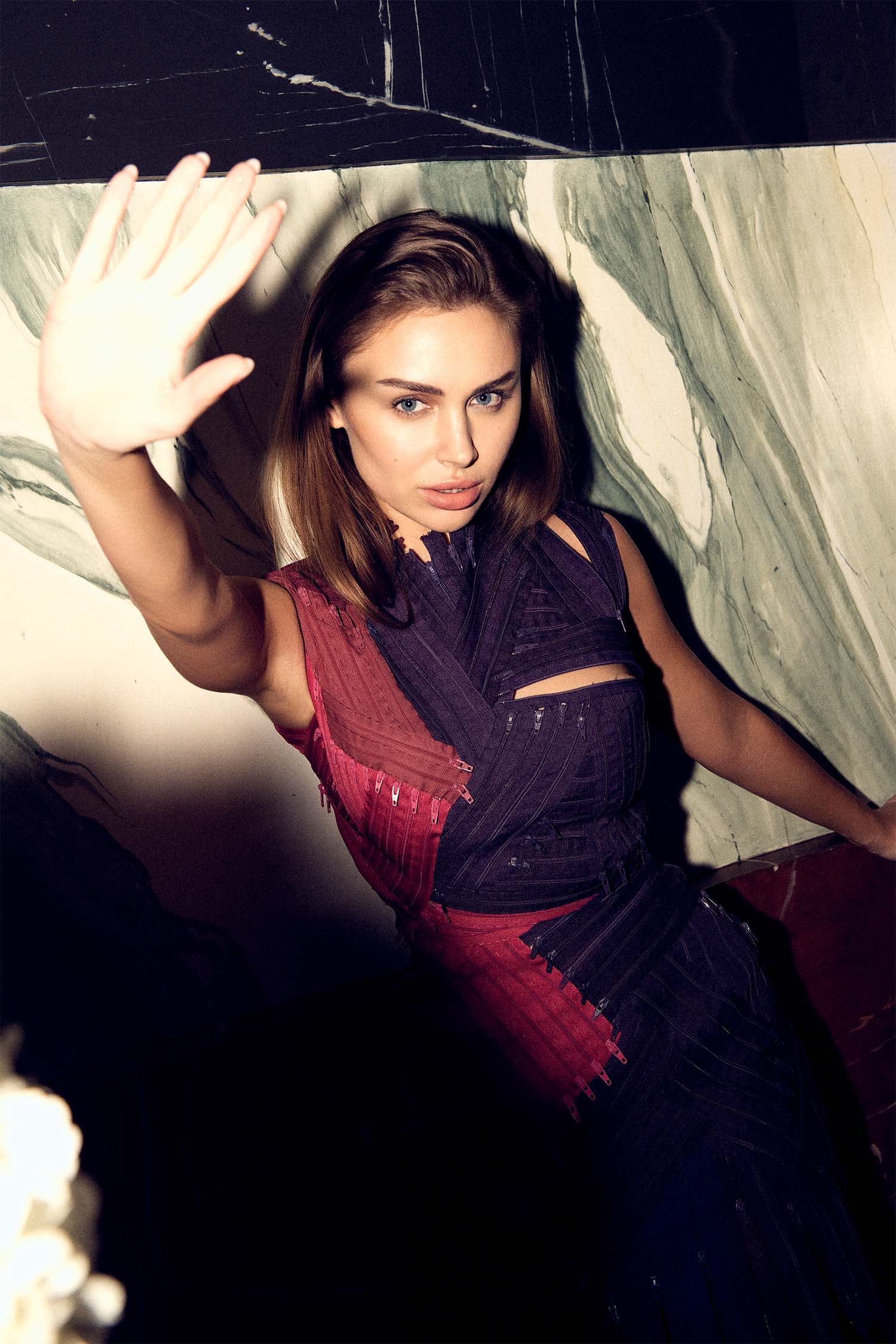
dress XUAN
Being away from your country during such a difficult period in Ukraine’s history must carry its own complexity. How has the warchanged your relationship to your roots, your family, or even to yourself?
The war made me rethink my relationship to life and to what truly matters. It created a much deeper awareness of how fragile and temporary everything material can be. You begin to understand that the most important things are actually very simple: the health and safety of the people you love, being able to hear their voices, waking up after a quiet night without fear. Things that once seemed ordinary become incredibly precious.
At the same time, it strengthened my emotional connection to Ukraine and to my family. Even from a distance, you feel deeply connected to your people and your shared pain and resilience. It made me less attached to superficial things and more focused on emotional truth and living with gratitude for moments of peace.
In a previous interview, you said that rejection in modeling often has nothing to do with worth, but simply with being “different from what they are searching for.” What do you think makes you different, not just as a model, but as a person?
I think what makes me different is a combination of sensitivity and discipline. I’ve never seen myself as someone simply wearing beautiful clothes in front of a camera. For me, every shoot is more like stepping into a different emotional universe; I enjoy transforming, exploring different energies, and almost acting through the atmosphere the team is trying to create.
Because I also have a background in painting, I naturally understand visual composition and emotional storytelling. It allows me to intuitively feel what the photographer is trying to capture and what is needed from me to bring that vision to life. I think this artistic sensitivity, combined with emotional intelligence, shapes the way I work both as a model and as a person.
The fashion industry often sees only the image, not the inner life behind it. What are some struggles or realities of modeling that you feel people still fail to understand?
One of the biggest misconceptions is that people see only the final image without realising how much invisible work exists behind it. What theaudience sees for a few seconds in a magazine is often the result of many hours of collaboration from dozens of people: location, lighting, styling, makeup, hair. The creative ecosystem behind a single frame is rarely visible.
There are also realities that people rarely speak about openly. Maintaining your appearance requires enormous discipline and self-control, and many models experience intense pressure regarding their bodies. Eating disorders are something many girls in this industry encounter at some point, myself included, which made me much more conscious of the importance of both physical and mental health. There is also the constant physical toll of styling, heavy makeup, and sleep deprivation. Self-care becomes less of a luxury and more of a necessity.
Modeling taught me resilience and respect for everyone involved in the creative process. But it also taught me the importance of protecting your inner balance and remembering that behind every image is a real human being.
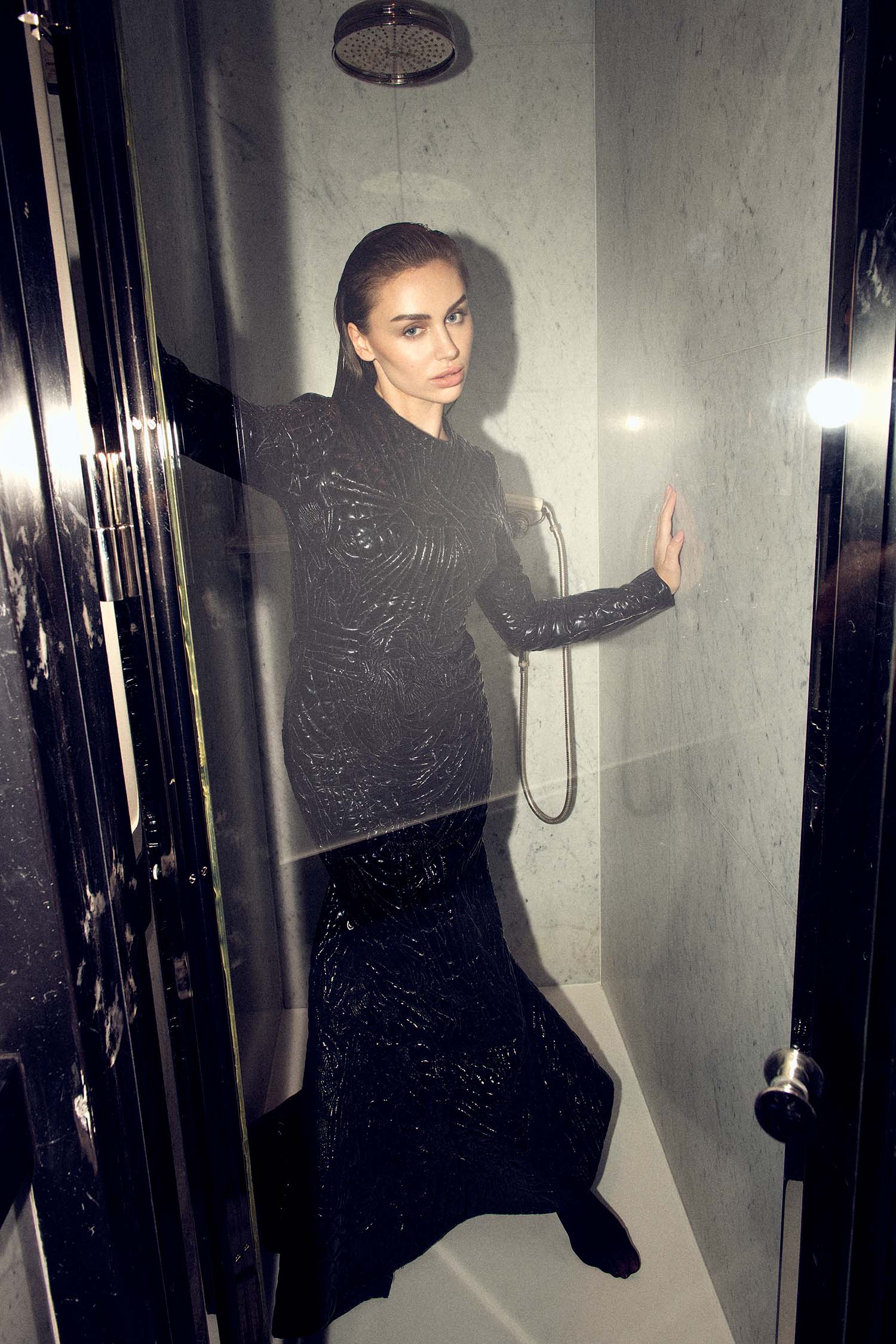
dress MOHAMAD BAYROUTI
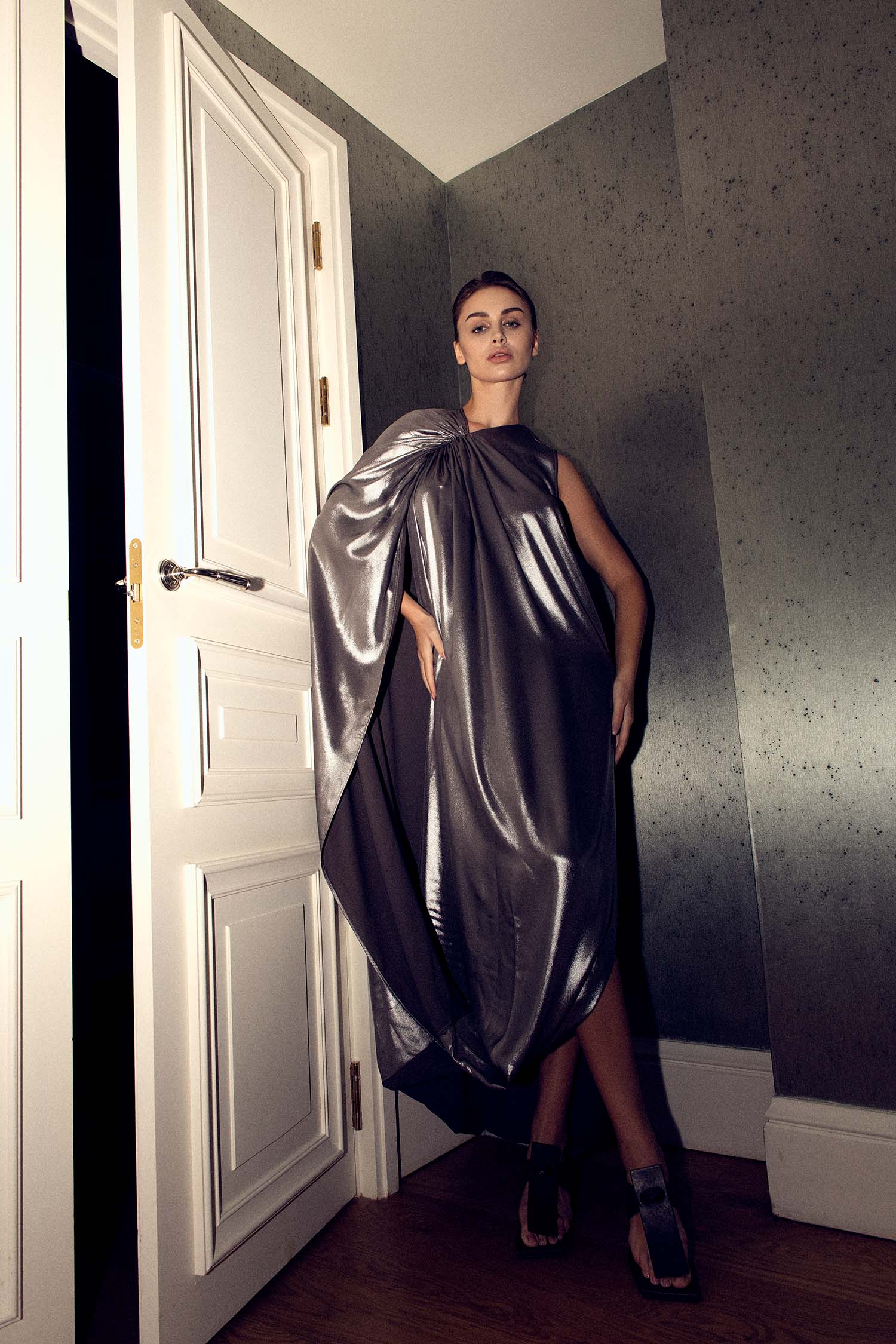
Full look UMA WANG
Your life seems to exist between many disciplines: fashion, painting, movement, performance. If modeling had never entered your life, who do you think you would have become?
I think I still would have found my way into a creative life. Even without modeling, I’ve always been drawn to visual expression and to creating atmosphere and feeling. I could imagine myself working in performance or art, or something connected to cinema and creative direction. I’ve always loved observing people, studying energy and body language, and translating emotions into something visual. Whatever path I chose, it probably would have existed somewhere between art and human connection rather than in a conventional world.
You’ve spoken about your ballet background and how it shaped your discipline and resilience. Looking back, what lessons did such an intense training environment teach you about ambition, perfection, or even self-worth?
Ballet teaches you discipline very early, you learn to repeat something hundreds of times, to keep going when exhausted, to understand that progress is built through consistency rather than talent alone. But such an intense world can blur the line between ambition and perfectionism. When you’re constantly being evaluated, your body, your technique, your presence, it becomes very easy to tie your self-worth to performance.
Looking back, one of the most important lessons was learning that perfection is not sustainable, and honestly, not even human. What people connect with most is individuality, emotion, and authenticity, not flawlessness. I’m grateful for that background because it gave me strength, but I also had to relearn softness and self-acceptance outside of it.
Some of your recent shoots have pushed you beyond your comfort zone, including overcoming your fear of heights for a rooftop editorial. What attracts you to experiences that challenge or even frighten you?
Fear has a strange way of making you fully present, in those moments, you stop overthinking and rely on instinct and inner strength. The rooftop editorial was a perfect example. I’ve always been afraid of heights, so initially it felt overwhelming. But once I pushed through that first wave of fear, the experience became strangely liberating. It reminded me that growth often exists just beyond the edge of what feels comfortable.
What attracts me is the possibility of transformation, the feeling that after facing something difficult, you return with a slightly different understanding of yourself. I don’t seek discomfort for its own sake, but I’ve learned that it can be where real evolution begins.
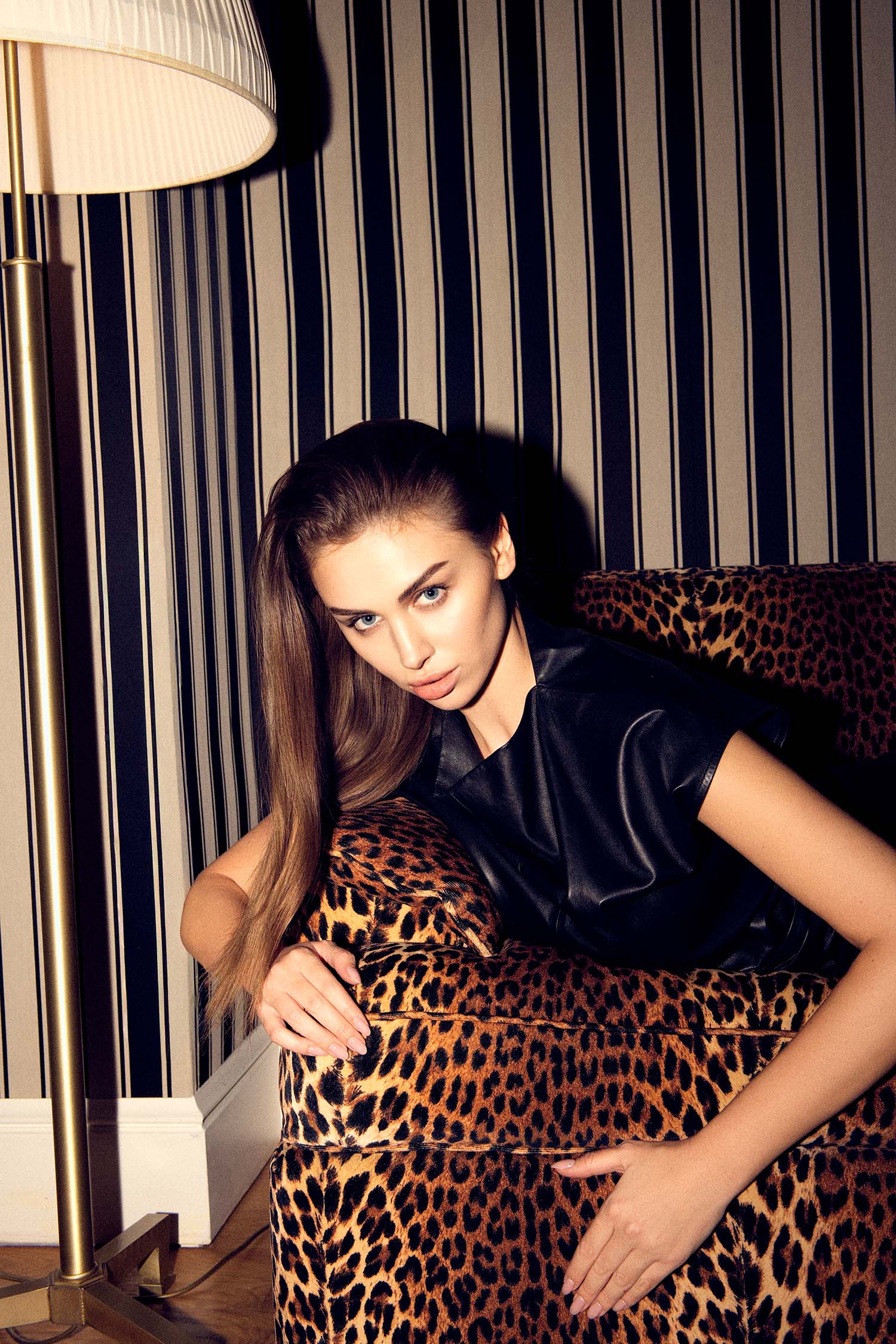
dress YVES SALOMON
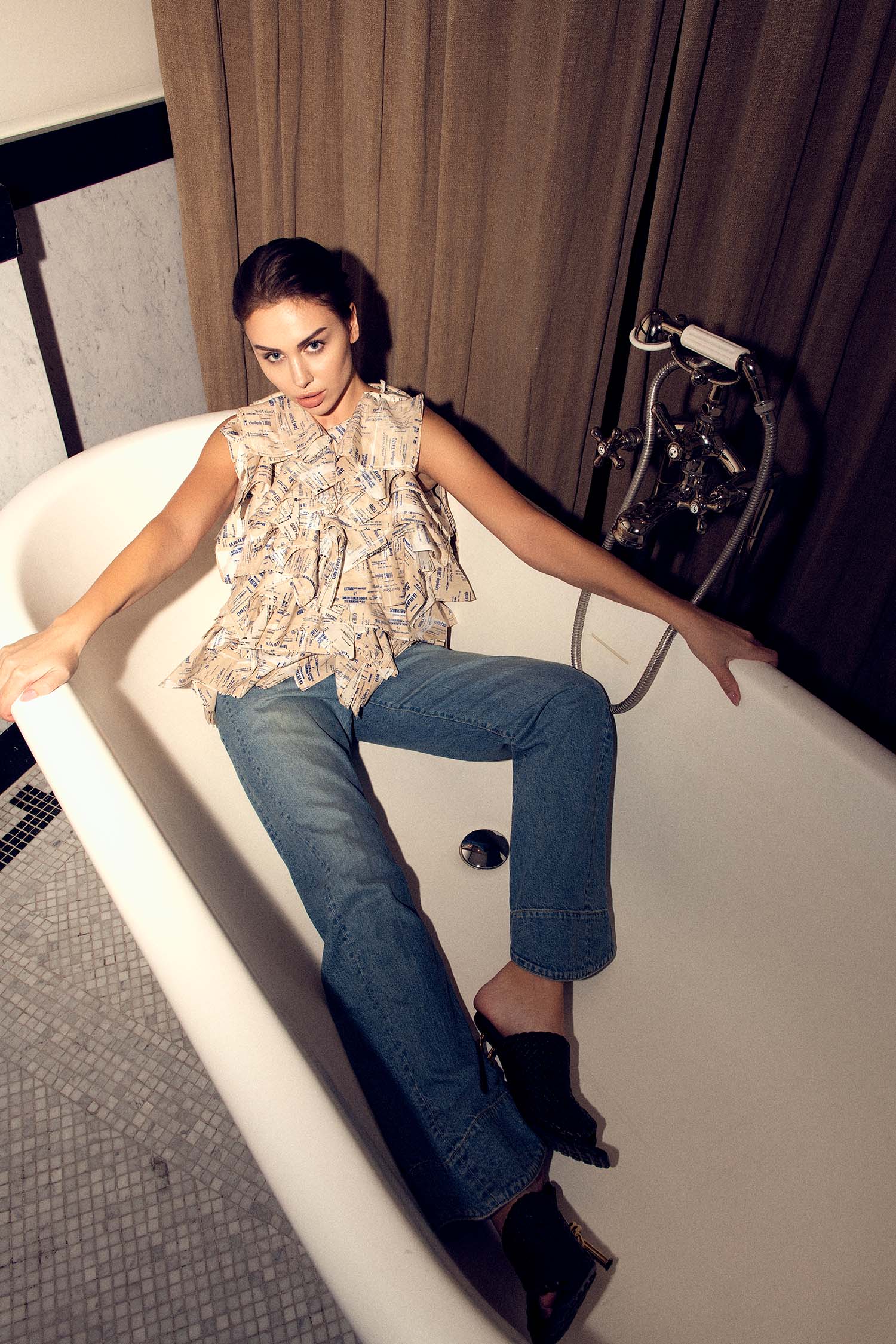
top EEENK
jeans SSSTEIN
Modeling is an industry centered so heavily on physical appearance. How do you protect your inner sense of self from becoming overly tied to external validation or perfection?
For me, it’s important to have an identity outside of modeling. Creativity helps, whether it’s painting, movement, or simply spending time in environments that have nothing to do with fashion. Those things remind me that I’m a person first, not just an image.
I’ve also learned that external validation is unpredictable. In this industry, one day you are exactly what people are looking for, and the next day the aesthetic changes. If your confidence depends entirely on that, it becomes emotionally exhausting. Maturity changes your perspective too, you begin to understand that presence, energy, and emotional depth are far morelasting than perfection. What makes someone memorable is usually authenticity, not flawlessness.
Outside of fashion and art, what keeps you emotionally grounded? What gives you clarity or peace when everything becomes overwhelming?
Movement is what keeps me most grounded. Even though I left professional ballet, maintaining a connection with my body through stretching and yoga still helps me feel centred. There’s something very meditative about movement, it brings me back to myself and quiets the noise around me.
I also practice nail standing and water fasting, which genuinely help me maintain mental clarity and reconnect with inner focus. These experiences teach me stillness and self-awareness in a world that can often feel very overstimulating. Having rituals that reconnect me to my body and mind is how I protect my inner peace.
When you imagine your future, beyond campaigns, editorials, and exhibitions, what kind of life do you hope to build for yourself as a woman, artist, and human being?
One of my biggest dreams is to open my own gallery one day and support young artists whose work deserves to be seen. I know how transformative it can be when someone believes in your vision early on, and I would love to create a space that gives emerging creatives opportunities, visibility, and freedom of expression.
At the same time, I have very deep family values. For me, success would not only mean being fulfilled professionally or artistically, but also as a woman and as a human being. The life I aspire to is ultimately about balance — between ambition and softness, public life and private peace, creativity and genuine human connection.
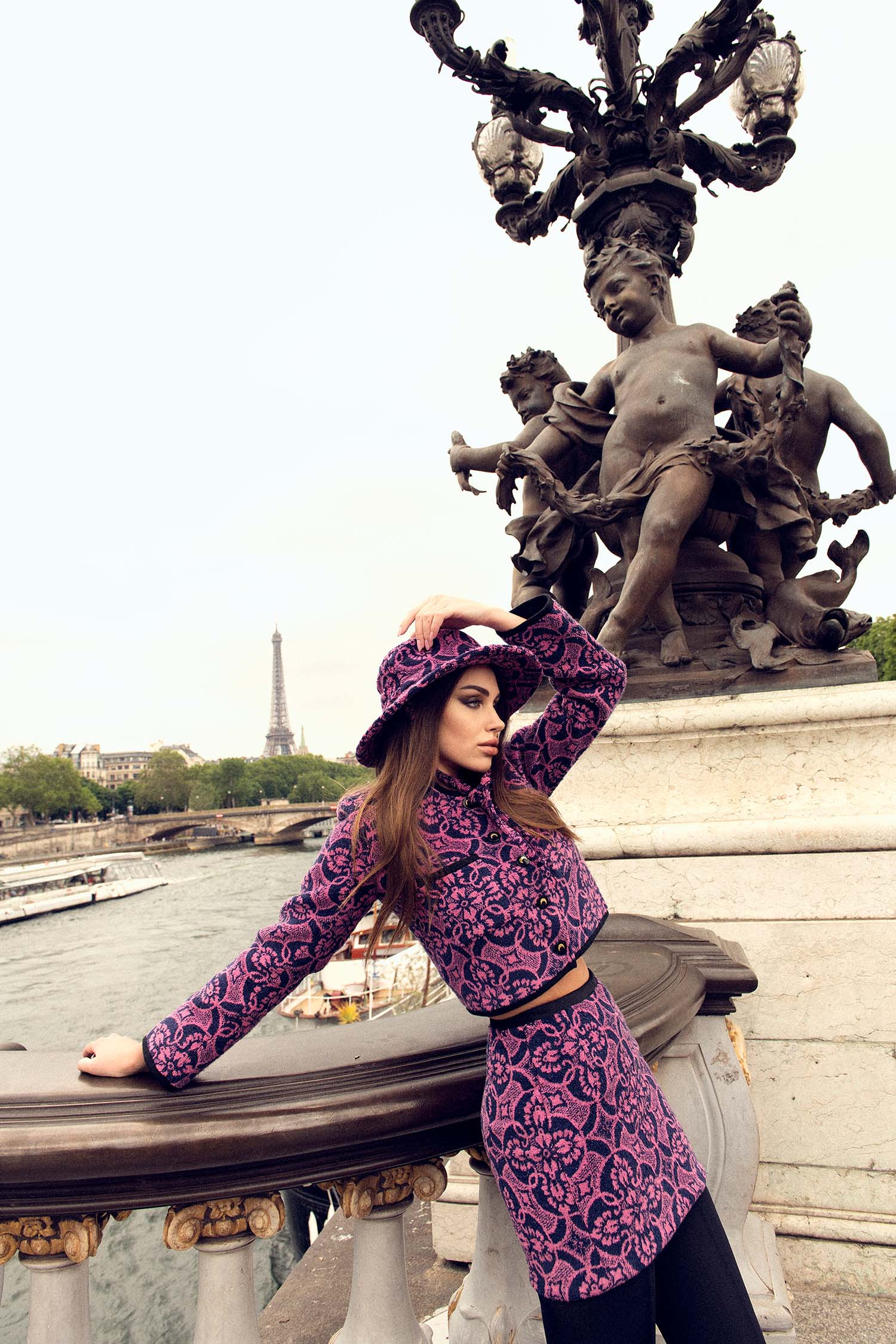
Full look MARINE SERRE
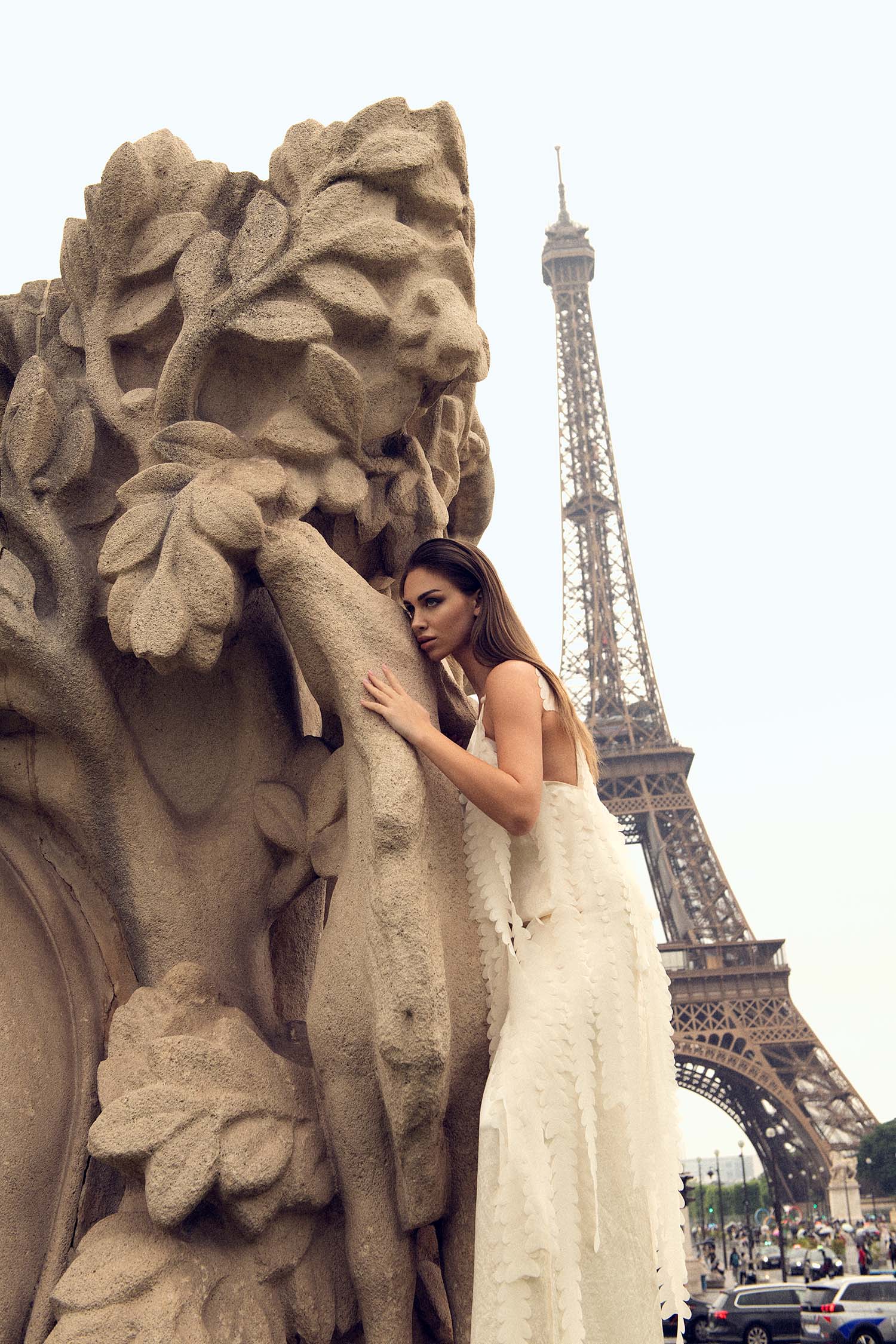
dress COMME MOI
Team credits:
photographer STEFAN IMIELSKI
model LANA TSYHANOK
stylist TANIA TUKA
Hair stylist TAAN DOAN
Make-up artist LORIANE LEGER
photo assistant SEBASTIAN JOYA
video NICOLA BELTRANDI
Location HOTEL DE BERRI
Author PRIYAM MISHRA